
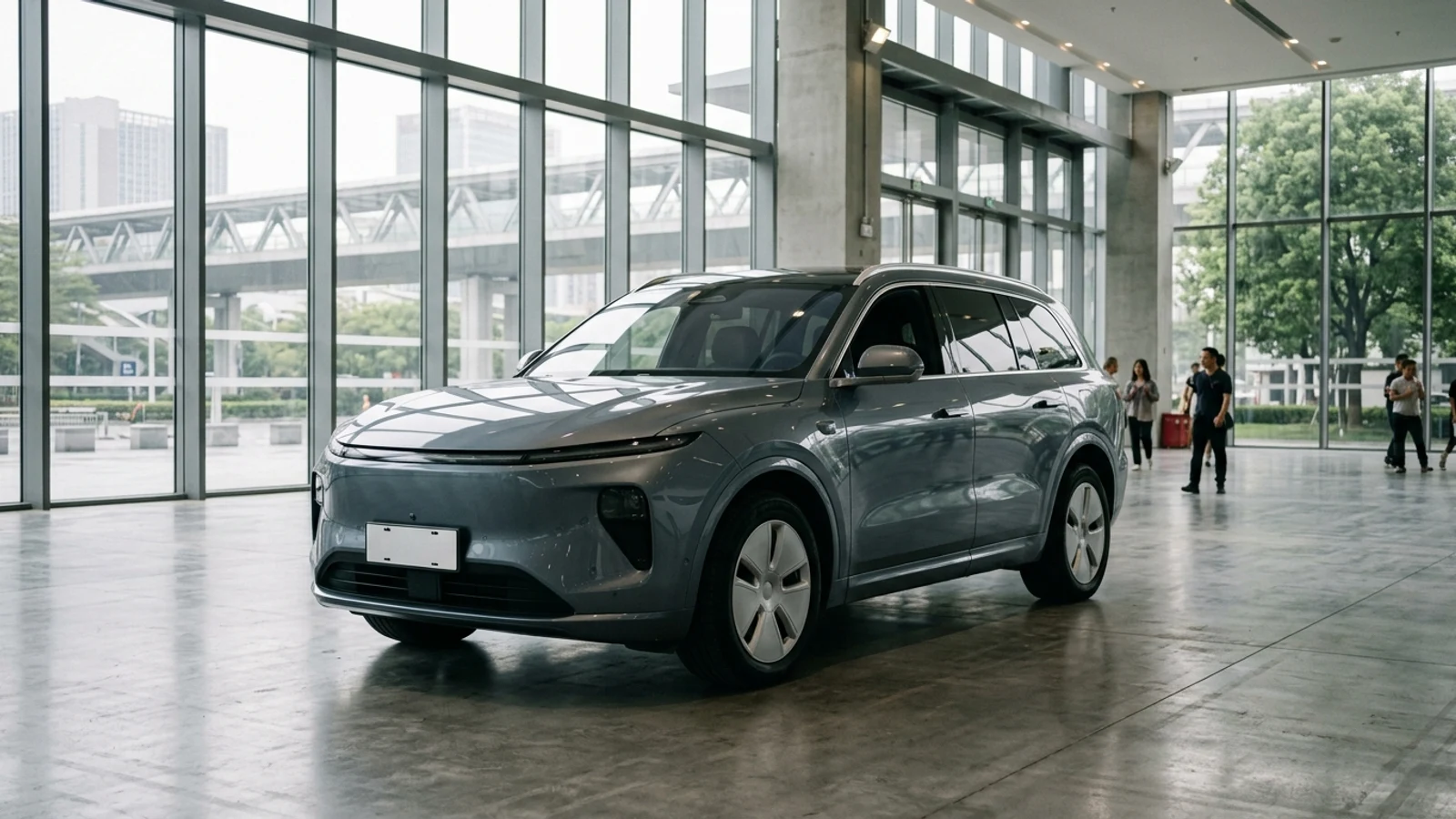
Launch and Strategic Positioning
Toyota unveiled its first extended-range electric vehicle (EREV) on November 27, 2026, during the Guangzhou Auto Show. Through its Chinese joint venture, GAC Toyota, the manufacturer confirmed that the new model will be named the Highlander 9X. This vehicle represents a new segment for the brand, serving as its fifth type of electrified vehicle alongside existing battery-electric, plug-in hybrid, conventional hybrid, and fuel-cell electric offerings. The move signifies a shift in strategy to address competitive pressure in the Chinese automotive sector. Source
The Highlander 9X utilizes a powertrain architecture where the wheels are driven exclusively by electric motors. A small gasoline engine functions solely as an onboard generator to recharge the battery pack, extending the vehicle's driving range once the battery level drops. Unlike plug-in hybrids, this internal combustion component never powers the drivetrain directly. According to reports, this configuration allows for the use of a smaller, more cost-effective battery pack compared to traditional battery-electric vehicles while maintaining an electric driving experience. Source
While official battery and powertrain specifics remain pending closer to the formal launch date, local reporting suggests the vehicle may deliver a combined CLTC range exceeding 621 miles (1,000 km) on a full tank of gas and a full battery charge. The Highlander 9X will feature advanced technology integrations, including a custom battery pack developed through a partnership with CATL, as well as an advanced driver assistance system and a smart cockpit setup provided by Huawei. Source
Toyota faces significant market headwinds in China, reporting that sales in the first nine months of 2026 totaled approximately 1.05 million vehicles, representing a 19 percent decline compared to the previous year. This downward trend reached eight consecutive months of lower year-over-year sales. Management has cited rising gasoline costs and intense price competition from domestic Chinese manufacturers like BYD, Geely, and Chery as key factors impacting the demand for its traditional internal combustion and hybrid product lineups. Source
To offset these pressures, Toyota has outlined ambitious production targets for its new EREV technology. Reports indicate the company aims to produce 200,000 EREV units in China during 2027, with plans to double that output to 400,000 units by 2028. By focusing on the EREV segment, the automaker seeks to offer premium flagship products that allow it to bypass the aggressive price wars currently centered on pure battery-electric vehicle models. Source
Regional Model Distinctions
It is important to distinguish the Highlander 9X EREV from the Highlander BEV (battery electric vehicle) slated for the North American market. The North American Highlander is a fully electric three-row SUV scheduled for production in early 2027 at the company's Georgetown, Kentucky facility. That model will offer both front-wheel-drive and all-wheel-drive configurations with distinct battery capacities. The EREV model announced for China will not be available in the United States, as it is specifically engineered to cater to the Chinese market. Source
The North American battery-electric Highlander model offers multiple configurations designed for different range and performance needs. The entry-level XLE trim features a 77 kWh battery, while the higher-tier XLE and Limited trims utilize a 95.8 kWh battery pack. These powertrain specifications provide different efficiency profiles depending on the drivetrain selected for the three-row vehicle. Source
The following table outlines the battery and range specifications currently identified for the North American fully electric 2027 Highlander models. Source
| Model Configuration | Battery Capacity | EPA-Estimated Range |
|---|---|---|
| XLE FWD | 77 kWh | 287 miles |
| XLE/Limited FWD | 95.8 kWh | 320 miles |
In addition to the Highlander BEV, Toyota is expanding its electrified portfolio globally. Other models such as the bZ series and the upcoming Lexus TZ continue to be part of the brand’s broader push toward a diverse EV lineup. While the Highlander 9X EREV remains a specific strategy for the Chinese market, analysts suggest the global interest in range-extender technology could influence future vehicle planning for other regions, should consumer demand for this specific architecture continue to grow in the coming years. Source
Beyond its EREV efforts, Toyota continues to manage the production of established hybrid and fuel-cell vehicles. The company aims to balance its portfolio between these technologies and pure electric models to satisfy various regulatory and infrastructure conditions across its global operations. The introduction of the Highlander 9X serves as a practical experiment for the manufacturer in adopting range-extension technology at a high volume, targeting a specific customer base that prioritizes the operational convenience of gasoline refueling combined with electric propulsion. Source
The development of these technologies is supported by deep partnerships with technology firms, as demonstrated by the use of Huawei and CATL components in the Highlander 9X. This approach reflects an industry trend where traditional automotive OEMs collaborate with electronics and energy firms to accelerate the development of competitive smart cockpits and battery systems. These partnerships are expected to play a major role in the overall performance and market success of Toyota’s upcoming range-extended vehicles in China. Source

