
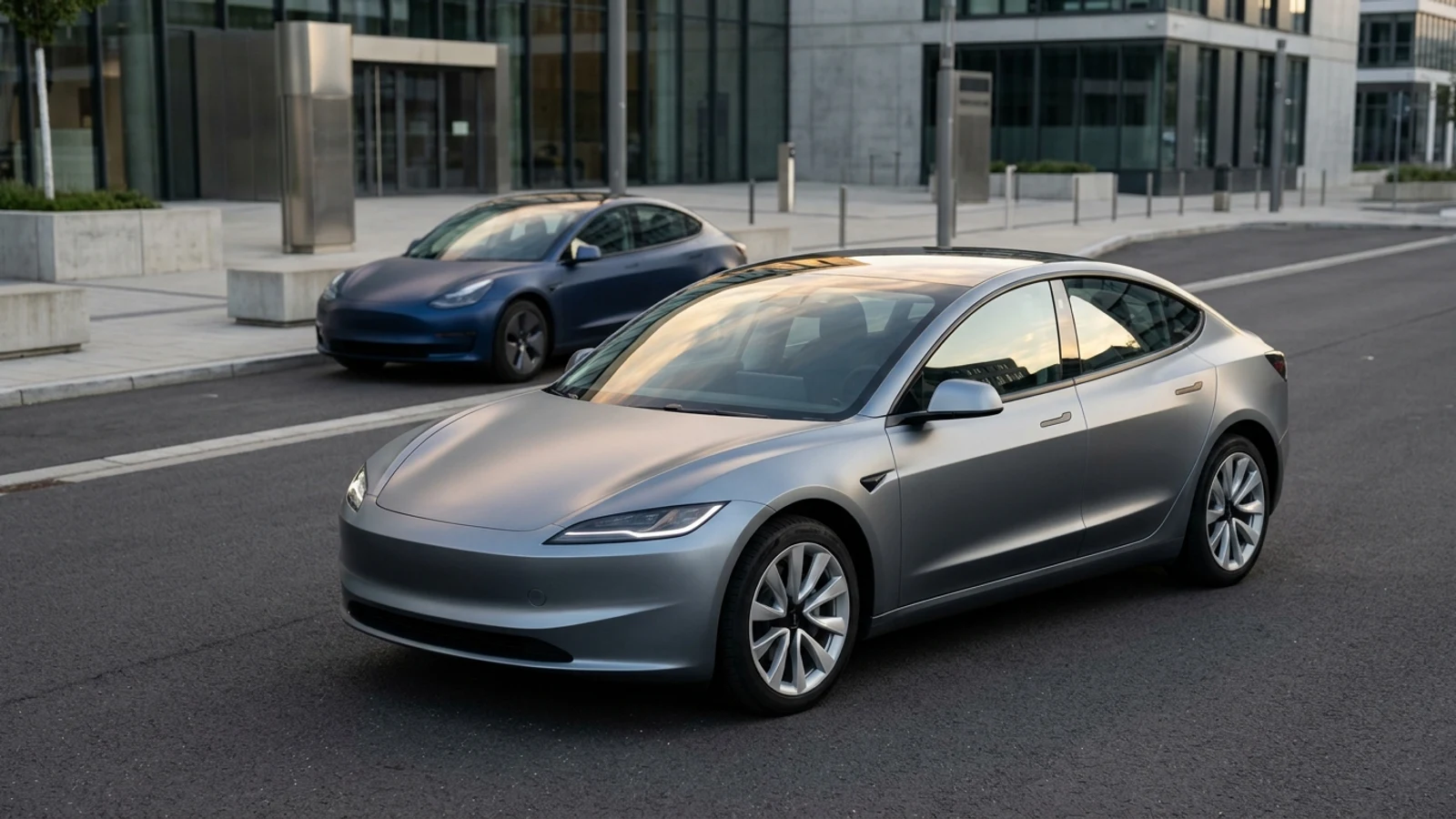
The Tesla Model 3 has established a significant presence in the electric vehicle industry by combining a competitive price point, efficient fast-charging capabilities, and a minimalist interior design. Since its initial introduction in 2017, the vehicle has set a benchmark for the sector that numerous manufacturers have since aimed to match or exceed. By 2027, the options for consumers seeking a sedan in this segment have grown substantially, with various competitors confirmed for release. Source
For 2027, the Tesla Model 3 remains available in three distinct trims. The Base model is positioned near a $35,000 price point, offering a range of 321 miles and a power output of 271 horsepower. It also features a charging profile capable of adding 170 miles of range in 15 minutes. The Premium trim includes additional interior comforts like rear seat vents and ambient lighting, while the Performance trim focuses on power, featuring over 500 horsepower and a 0–60 mph time under three seconds. Source
The Nissan Leaf continues to be a factor in the EV market as a mass-produced, cost-effective option. Its 2026 iteration features a sleek, aerodynamic design and provides over 300 miles of range in its base trim. While it does not prioritize high-performance speed or all-wheel-drive configurations like some competitors, it offers a charging time of 35 minutes and includes options for premium features such as Bose speakers and a head-up display. Source
The Hyundai Ioniq 5 serves as a direct competitor, emphasizing internal space and faster charging technology. Utilizing an 800V system, the Ioniq 5 can charge from 10% to 80% in approximately 20 minutes. Its power peaks at 320 horsepower, and the lineup includes an XRT variant designed for light off-road use with increased ride height. Although its maximum range reaches 318 miles for the rear-wheel-drive model, its tall profile offers increased utility for families. Source
Toyota's offerings include the C-HR, which adopts a tall profile and a distinct interior layout compared to the minimalist Tesla cabin. The vehicle features all-wheel drive across all trims, delivering 338 horsepower and a 0–60 mph time under five seconds. Drivers can expect a maximum range of 287 miles. The charging system supports 150 kW, allowing for a 10% to 80% charge in approximately 30 minutes, which positions it as a practical choice in the segment. Source
Mercedes-Benz is targeting the premium segment with its CLA electric series, which reports a long-range figure of 374 miles. The vehicle offers two power outputs of 268 horsepower or 349 horsepower. Meanwhile, the Chevrolet Blazer EV provides a more traditional American SUV option with an electric range of 312 miles for the front-wheel-drive model. Its SS trim variant is noted for producing 615 horsepower, achieving a 0–60 mph time of 3.4 seconds. Source
Rivian’s R2 model serves as a direct competitor in the adventure EV category. The base model features a larger battery capable of providing 345 miles of range, with 350 horsepower and a 0–60 mph time of six seconds. Furthermore, the 2026 Ford Mustang Mach-E competes in the popular performance segment. The GT version, when equipped with the performance package, delivers 700 lb-ft of torque and reaches 60 mph in 3.3 seconds, though its maximum range is capped at 280 miles. Source
The following table provides a comparison of key manufacturer-claimed specifications for several 2027-relevant models, highlighting the diversity in performance and efficiency among current competitors. Source
| Model | Max Range | Power | 0-60 mph Time |
|---|---|---|---|
| Tesla Model 3 Base | 321 miles | 271 hp | Unspecified |
| Hyundai Ioniq 5 (RWD) | 318 miles | 320 hp | Unspecified |
| Toyota C-HR | 287 miles | 338 hp | < 5 sec |
| Mercedes-Benz CLA (Max) | 374 miles | 349 hp | Unspecified |
| Chevrolet Blazer EV (SS) | 312 miles (FWD) | 615 hp | 3.4 sec |
| Rivian R2 Base | 345 miles | 350 hp | 6 sec |
| Ford Mustang Mach-E GT | 280 miles | 700 lb-ft | 3.3 sec |
Beyond traditional sedan competition, the industry is witnessing moves toward fully autonomous platforms. Tesla CEO Elon Musk has indicated plans for a Model Y variant that lacks steering wheels and pedals. This vehicle is intended for group transport of six or seven passengers. However, Tesla has not yet provided a confirmed timeline for the production of this steering-wheel-free Model Y or its potential retail availability to the general public, and the NHTSA has initiated an investigation regarding the self-certification of such vehicles. Source
Autonomous driving technology is also being pursued by Mercedes-Benz, which will launch “point-to-point assisted driving” for private owners in Germany and the United States early in 2027. Marketed as Drive Assist Pro, the system aims to guide vehicles through dense urban traffic, including stopping for red lights and negotiating intersections. The system relies on a sensor suite comprising 10 cameras, five radar sensors, and 12 ultrasonic sensors, supported by a processing capacity of 254 TOPS. Source
Tesla's Full Self Driving (FSD) system continues to be used by drivers for various transport needs. While Tesla maintains that the system is capable of navigating city environments point-to-point, the company requires that drivers remain unimpaired and ready to intervene at all times. Rivian is noted for its own automation technology, which utilizes 11 cameras and five radar sensors. While some observers note differences in point-to-point capabilities, Rivian's sensor suite is designed to eventually manage zero-visibility conditions. Source

