
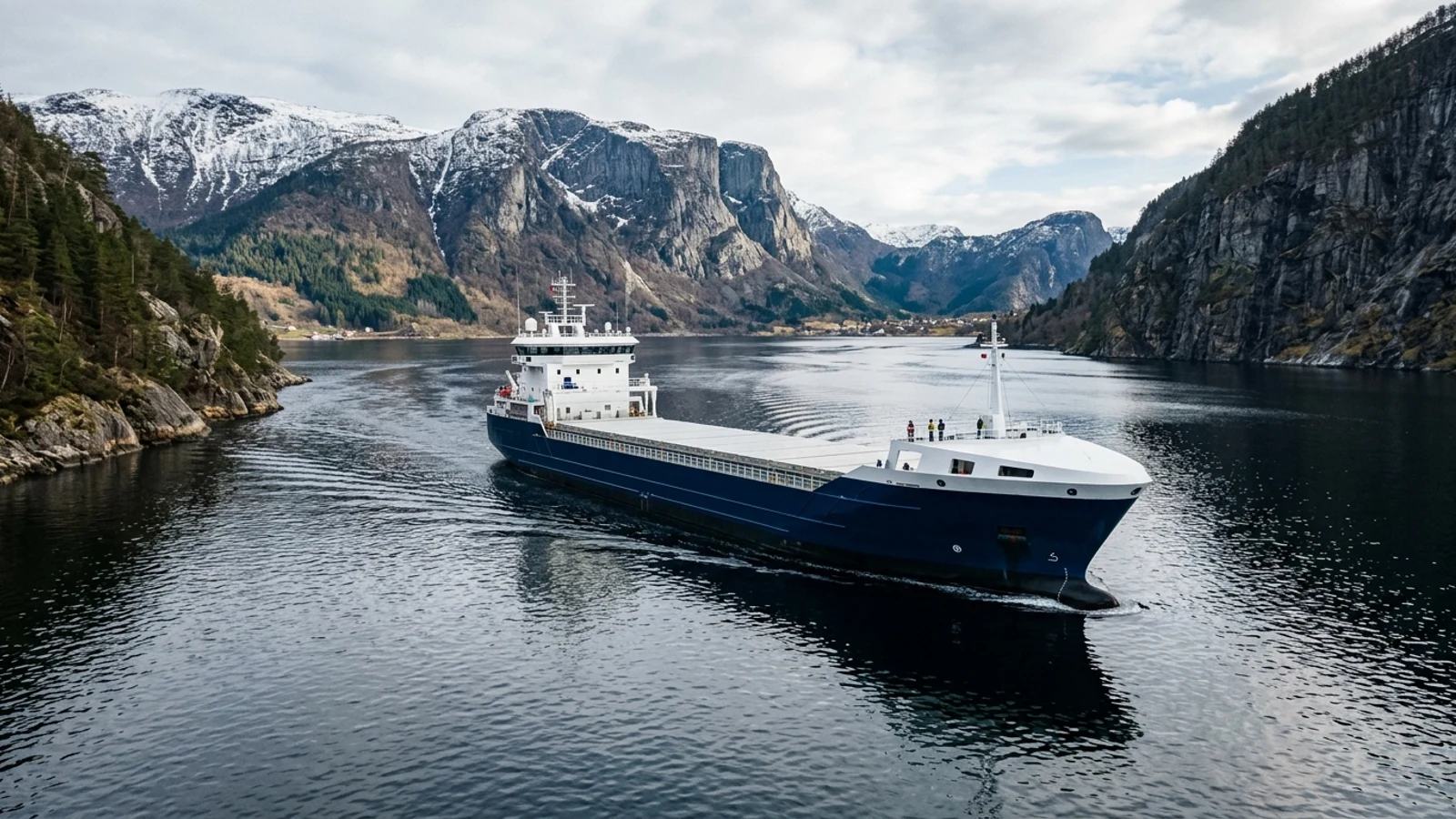
Vessel Specifications and Operational Scope
The shipping industry continues its transition toward electrification with the debut of the BRF Froan, a 130-meter bulk carrier designed for specialized hauling operations. Built by SOHO Marine Heavy Industry for the Norwegian firm Berge Rederi Future, the vessel incorporates a significant energy storage system rated at 23,500 kWh. This capacity, described by Electrek as equivalent to nearly 300 long-range electric car batteries, is intended to support the transport of 13,250 deadweight tonnes of cargo. Source
Operational plans for the BRF Froan involve a continuous back-and-forth route between the Norwegian ports of Brønnøy and Elnesvågen. According to co-owner Oivind Berge, the vessel will function similarly to a ferry service, completing a round trip within a 24-hour cycle. To sustain this frequency, dedicated charging facilities are installed at both the loading and discharge ports, allowing the ship to maintain a regular schedule without the need for traditional diesel fuel for its primary propulsion. Source
The propulsion system utilizes electric motors providing 6,000 kW of power to the propellers. Beyond the primary battery system, the ship is equipped with two rotary sails that leverage the Magnus effect. As these cylinders spin, they generate lift perpendicular to the wind, producing forward thrust. The company estimates these sails provide a savings of approximately 339 kW per trip. This integration of wind-assisted propulsion and battery energy is projected to reduce carbon emissions by 10,000 tons annually. Source
The project is estimated to have a total cost of approximately USD 52 million, or NOK 500 million, as reported by Interesting Engineering. The vessel departed the shipyard in China last week and is currently in transit to Norway. Full operations, specifically the shipping of marble, are scheduled to commence early next year. A follow-up vessel, the BRF Frøya, is already under construction at the same facility and is slated for delivery in 2027 to expand the fleet's electric capacity. Source
Comparative Infrastructure and Regional Logistics
In a separate development within the maritime sector, JT electric has supplied a large feed barge to the salmon farmer HiddenFjord, operating in the Faroe Islands. This converted 79-meter bulk carrier is designed for deployment in highly exposed North Atlantic environments. Unlike the self-propelled BRF Froan, this barge is anchored and unmanned, relying on remote shore operations. It features an 8 Line Multi-Feeding System capable of managing a feed capacity of 850 tonnes, upgradeable to 1,400 tonnes. Source
The following table outlines the comparative specifications for the electric bulk carrier and the specialized aquaculture feed barge documented in the reports: Source
| Feature | BRF Froan | JT Electric Feed Barge |
|---|---|---|
| Vessel Type | Bulk Carrier | Converted Bulk Carrier |
| Battery/Capacity | 23,500 kWh | 850 - 1,400 Tonnes (Feed) |
| Propulsion | 6,000 kW Electric | Unmanned / Anchored |
| Location | Norway | Faroe Islands |
| Status | En route to Norway | Delivered |
The JT electric barge project emphasizes stability and environmental mitigation, utilizing cabinets for blowers and generators to reduce noise pollution. Its grey color is intended to assist in visual blending with the surroundings. This delivery marks the third ship-design feeding barge provided to HiddenFjord by JT electric. The supplier, which has been in operation since 1972, maintains active feeding system installations across the Faroe Islands, the UK, Canada, and Norway as it continues to grow its presence in the global aquaculture market. Source
The logistical differences between these vessels highlight the varied approaches to maritime electrification. While the BRF Froan represents a self-propelled, port-to-port logistics solution focused on carbon emission reduction, the JT electric barge serves as a stationary industrial asset. Both projects demonstrate the trend of repurposing or designing specialized vessels for unique, localized requirements, whether for marble transport in Norwegian waters or salmon farming in the challenging conditions of the North Atlantic. Source

