Understanding Private Aviation Charter Pricing
Private aviation remains a complex area of air travel, characterized by significant variations in hourly charter pricing. In 2026, the cost to charter an aircraft spans a wide spectrum, influenced primarily by the type of jet or turboprop chosen for the mission. While smaller turboprops can be accessed for approximately $2,000 per hour, the largest ultra-long-range business jets often exceed $20,000 per hour. Understanding these diverse hourly rates is the first step for potential passengers looking to navigate the market effectively. Source
The advertised hourly rate frequently serves as a baseline rather than an all-inclusive figure. According to analyses from Simple Flying, additional costs such as taxes, fuel surcharges, positioning fees, and airport handling charges can significantly alter the final invoice. For instance, the Federal Excise Tax in the United States currently adds 7.5% to domestic charter costs. Travelers should remain aware that positioning fees, charged when an aircraft must fly empty to reach a departure location, can sometimes double or triple the total trip expense. Source
Turboprop aircraft, such as the Beechcraft King Air 350, are widely utilized for short regional connections. These aircraft are considered the most cost-effective entry point for private charter. Industry data suggests that rates for these models typically start at around $2,000 per hour. These aircraft are valued for their ability to access smaller airfields, making them a practical choice for groups needing efficient point-to-point travel between metropolitan areas without the higher overhead of midsize or long-range jet aircraft. Source
For travelers requiring longer range or higher speeds, the light and very-light jet market offers an intermediate tier. Aircraft like the HondaJet provide capacity for four to eight passengers. Industry sources indicate that charter rates for light jets typically range from $2,500 to $4,500 per hour. These jets serve as a balance between the affordability of turboprops and the cabin amenities found in larger models, appealing specifically to business travelers who require quick, reliable connections. Source
Midsize and super-midsize jets, such as the Cessna Citation Latitude and the Bombardier Challenger 350, are staples for transcontinental missions. These aircraft feature stand-up cabins and increased baggage capacity. Operators typically quote rates between $4,000 and $8,000 per hour for this category. At the premium end, heavy and ultra-long-range jets, exemplified by the Gulfstream G650ER, command the highest prices, reaching $18,000 to $20,000 per flight hour based on current 2026 market demand. Source
The Pilatus PC-12 is a specific turboprop model that illustrates the variance in market pricing. While it is often associated with a $2,000 to $3,000 hourly rate, brokers have reported quotes ranging from $1,000 to $3,500. This disparity is attributed to how different operators bundle their fees and repositioning legs. The PC-12 remains a popular choice for missions up to 1,500 miles, capable of operating from short, unpaved runways as small as 760 meters, providing high utility for regional access. Source
Beyond standard chartering, travelers looking for value may seek out empty-leg flights. These occur when an aircraft must reposition for a subsequent assignment. Operators often discount these flights by 40% to 75% compared to standard charter rates. While this creates a cost-saving opportunity, it requires significant flexibility in route and scheduling. Changes to the primary flight schedule can directly impact or cancel these empty-leg opportunities, making them better suited for travelers with adaptable plans. Source
Operational Disruptions and Regulatory Impacts
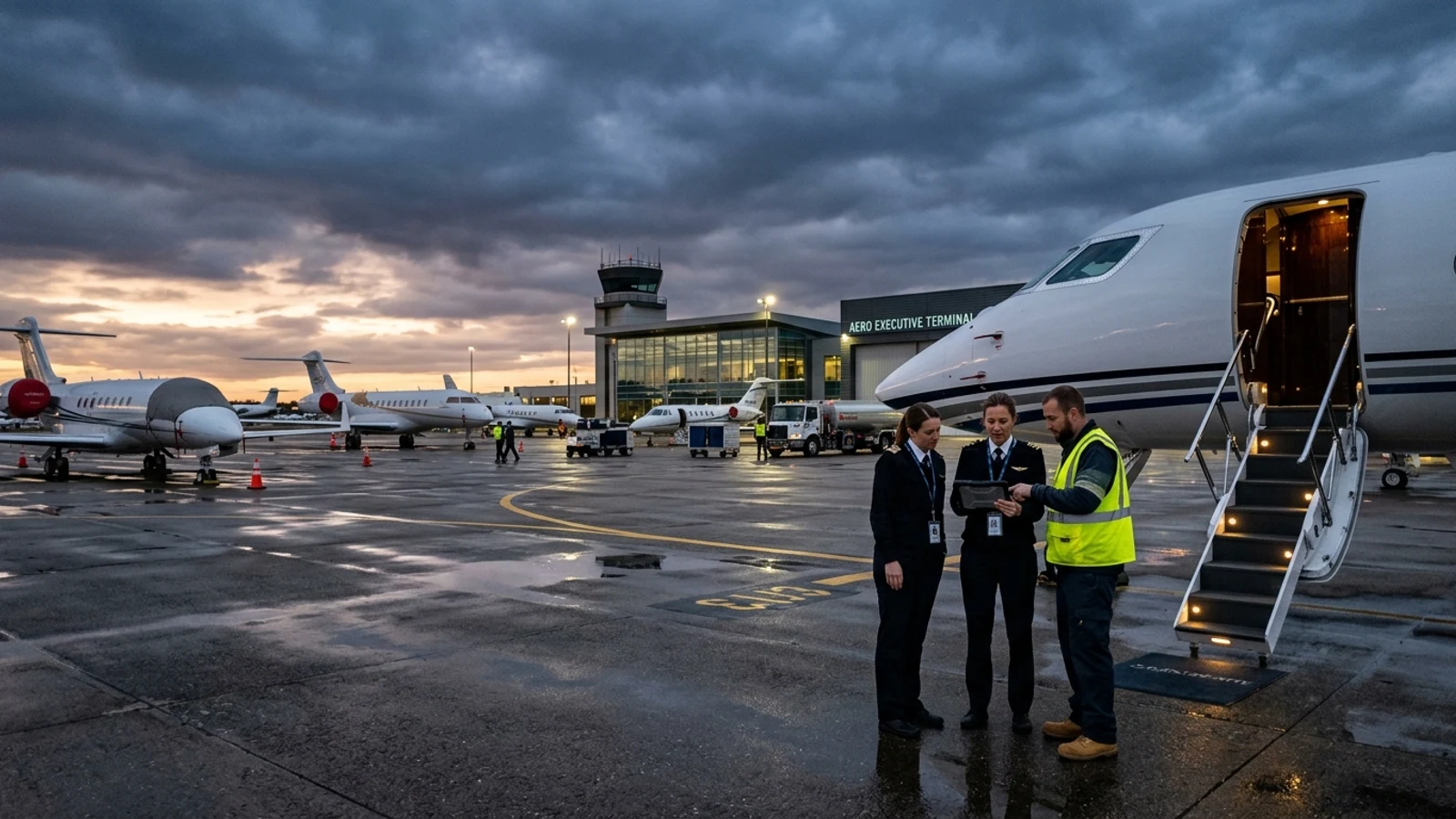
Market stability can be disrupted by external events, as seen during the FAA ground stop on November 13, 2026. Following a major telecommunications outage, the FAA halted nearly all departures, including private jet flights, for approximately four-and-a-half hours. While private jet operators initially appeared to fare better than commercial passengers due to their use of Fixed Base Operators (FBOs), the delay triggered a chain reaction that affected flight schedules and crew duty limits for several days following the incident. Source
The FAA ground stop introduced specific complications for charter and fractional flight crews. Pilots are constrained by a 14-hour duty limit per day and must have 10 hours of uninterrupted rest between duty periods. Because private jets lack the reserve pilot infrastructure common in commercial hubs, delayed flights often forced crews to hit these duty limits. This situation was exacerbated by a shortage of accommodation, as hotels in many regions were filled with commercial passengers displaced by the same outage. Source
Aircraft positioning also suffered in the wake of the November 13, 2026, order. If a jet was delayed in one city, it became unavailable for its next scheduled flight elsewhere, creating a domino effect across regional networks. FBOs at busy airports reported ramp congestion, with staffing levels struggling to keep pace with the sudden demand to fuel and service multiple aircraft simultaneously. Industry executives advised clients that flights intended to depart shortly after the system resumed might still face significant ground delays. Source
Travelers were cautioned against expecting immediate resolution following the restoration of the FAA network. A senior executive noted that while private and commercial flights are both subject to ground stops, commercial aviation is typically prioritized by the system when operations resume. Operators suggested that for non-urgent travel, postponing flights until the following weekend could be the most reliable course of action. Cancellation policies remain a concern, as many contracts may stipulate a 100% penalty for cancellations made within the period immediately following an incident. Source
Ultimately, comparing private charter to commercial travel requires assessing the full trip cost rather than just the hourly rate. When occupancy is maximized—such as filling a nine-seat turboprop cabin—the per-passenger cost can be competitive with last-minute premium commercial fares. However, for the solo traveler, private aviation typically remains a significantly higher expenditure. The value proposition of private flight, particularly in 2026, is often found in the ability to skip terminal security and access smaller airports, provided the traveler accounts for the variability of fees and the risk of operational disruption. Source