
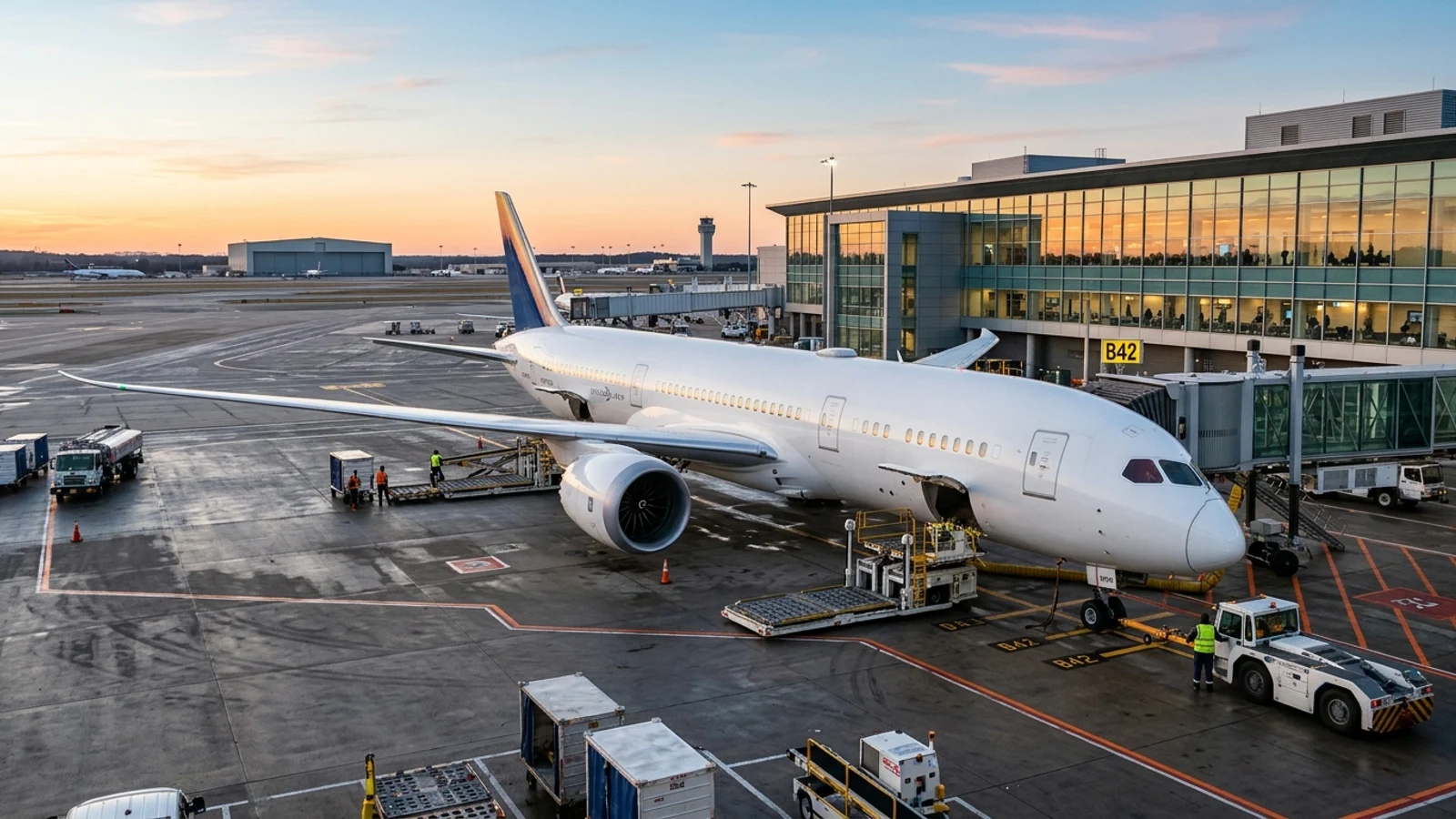
Australia’s flag carrier has significantly adjusted its international network throughout 2026, resulting in the removal of the Boeing 787-9 Dreamliner from three specific city pairs. These aircraft, which form the backbone of the airline’s long-haul operations, have been systematically redeployed to meet shifting market demands and operational requirements. This transition marks a departure from the previous schedule that utilized these mid-sized widebodies across several key East Coast departures, according to reporting by Simple Flying Aviation Discovery. Source
Network Adjustments and Aircraft Redeployment
The changes primarily affect connections from Brisbane and Sydney to various destinations across the United States and New Zealand. Among the most notable adjustments was the withdrawal of the 787-9 from the Brisbane to Auckland route. Auckland remains the largest international market for Qantas, making the decision to substitute the Dreamliner with older Airbus A330-200 aircraft in May of 2026 a significant shift for passengers traveling across the Tasman Sea, as detailed by Simple Flying Aviation Discovery. Source
In addition to the New Zealand market, Qantas modified its operations to Honolulu. The airline previously maintained regular 787-9 flights from Sydney to Daniel K. Inouye International Airport, but those services were replaced by Airbus A330-200 and A330-300 equipment starting in October 2026. This transition follows an earlier service reduction in 2025, which saw the loss of the nonstop Melbourne to Honolulu link. The fleet is now being concentrated on more critical trunkline routes across the global Qantas network. Source
The third major shift involves long-haul services to Dallas/Fort Worth. While the airline continues to serve this Texas hub, it has transitioned equipment types to better align with route capacity. As of September 2026, Qantas began operating the Sydney to Dallas/Fort Worth route using the Airbus A380 Superjumbo. Conversely, the route from Melbourne to Dallas/Fort Worth, which is also a year-round service, has been transitioned to the 787-9 Dreamliner, replacing previous equipment configurations on that specific city pair. Source
The following table summarizes the equipment changes observed across the affected international segments mentioned in the Simple Flying Aviation Discovery analysis. These changes reflect the airline's effort to manage its fleet of Boeing 787-9 and Airbus widebody aircraft to balance demand. Travelers should consult current booking platforms for specific flight availability, as these redeployments represent structural network changes implemented by the flag carrier over the course of the current calendar year. Source
Passenger Service and Future Outlook
| Route | Previous 787-9 Service | Current Aircraft Assignment |
|---|---|---|
| Brisbane – Auckland | Yes | Airbus A330-200 |
| Sydney – Honolulu | Yes | A330-200 / A330-300 |
| Melbourne – Dallas/Fort Worth | No (Previously other) | Boeing 787-9 |
The current network landscape for Qantas involves prioritizing its most popular routes. Domestic flights from Melbourne to Perth remain a primary focus, operating with seven weekly departures before continuing to London Heathrow via Singapore. Similarly, flights from Brisbane and Melbourne to Los Angeles maintain a high frequency of seven weekly 787-9 departures. Other busy routes include the Sydney to Santiago service with six weekly flights, and the Sydney to Vancouver route which records five weekly departures as of late 2026. Source
Passengers should note that the Airbus A380 deployment on the Sydney to Dallas/Fort Worth route offers a significantly different cabin experience compared to the 787-9. The A380 fleet is configured with 485 seats across four classes: first, business, premium economy, and economy. With 14 first-class suites, 70 business-class seats, 60 premium economy seats, and 341 economy seats, the capacity per flight is substantially higher than that of the smaller Dreamliner, according to the airline's provided fleet documentation. Source
The Brisbane to Auckland market remains highly competitive, with multiple carriers maintaining year-round presence. Aside from the established operations of Qantas, Air New Zealand, China Airlines, Jetstar, and Solomon Airlines, the market is set for further expansion. Simple Flying Aviation Discovery reports that Qatar Airways is preparing to enter this market next June by adding a fifth freedom service. This upcoming competition may continue to influence the capacity decisions made by the Australian flag carrier on the Tasman corridor. Source
Qantas maintains a complex operational structure, with Auckland serving as a vital hub and crew base for New Zealand operations. Auckland is also the transit point for the carrier's flagship nonstop service from Sydney to New York-JFK. These operational dependencies mean that any change in aircraft type on regional routes is often tied to broader network optimizations. The airline continues to monitor market performance, as evidenced by the frequency adjustments for other long-haul segments like Sydney to San Francisco. Source
For travelers looking at future bookings, the weekly frequency for various routes continues to fluctuate based on seasonal demand and network priorities. For instance, Sydney to Auckland (continuing to New York) and Melbourne to Dallas currently show four weekly departures in December 2026. This data, provided by aviation analytics firm Cirium, illustrates how the airline balances its widebody fleet. The integration of the 787-9 into high-demand trunklines remains a priority for the airline's long-haul strategy throughout the upcoming quarter. Source
Ultimately, the withdrawal of the 787-9 from select international routes is a calculated strategic move. By shifting the Dreamliner to higher-traffic routes like the Perth to London service or Los Angeles, the carrier seeks to optimize its asset utilization. Passengers on the Brisbane to Auckland and Sydney to Honolulu routes will experience different cabin products moving forward, reflecting the shift toward A330 family aircraft on these specific segments. The carrier's long-term network efficiency remains the primary driver behind these changes. Source

