Jet lag remains a significant challenge for passengers undertaking long-haul travel, acting as an often-unavoidable side effect of crossing multiple time zones. With the introduction of next-generation aircraft and updated cabin technologies, airlines are investigating whether intentional adjustments to the cabin environment can mitigate these physiological impacts. Simple Flying Aviation Discovery reports that Qantas has committed over a decade to researching how specific meal schedules and synchronized lighting can influence passenger wellness during ultra-long-haul flights. Source
Strategic Research and Operational Initiatives
The research is centered on Project Sunrise, an initiative designed to facilitate nonstop commercial flights between Sydney and both London and New York. To support these ultra-long routes, Qantas will introduce 12 Airbus A350-1000ULR aircraft specifically manufactured for this purpose. Since 2015, the airline has collaborated with the University of Sydney’s Charles Perkins Centre to develop these protocols, following the success of its nonstop Perth to London service that launched in 2018. Source
In 2019, Qantas conducted three dedicated research flights from New York and London to Sydney to gather empirical data from passengers. During these missions, 23 volunteers participated in 20-hour flights while fitted with wearable technology to monitor their physical responses. These participants adhered to a specialized itinerary that deviated from traditional inflight routines, focusing on adjusted lighting sequences, pre-planned sleep intervals, and designated periods for physical movement instead of the standard meal service patterns. Source
The research findings, released in 2023, indicated that restructuring the cabin experience can influence how travelers manage the physiological stresses of long-distance flight. Participants reported less severe jet lag when the inflight environment was optimized for their destination’s time zone. Key interventions included specific dietary choices and timing, such as serving foods containing tryptophan to assist in sleep, alongside light-based cues designed to manage the internal circadian clock effectively throughout the long journey. Source
Qantas has moved away from the traditional model of serving meals immediately after takeoff. Instead, the airline now explores delaying initial meal services to align with the meal times of the destination. Menus have been curated to support these shifts, utilizing high-protein and low-fat options before sleep to avoid digestive discomfort. Furthermore, the airline incorporates specific ingredients like chili and chocolate to influence alertness or relaxation, depending on the specific phase of the flight schedule. Source
The A350-1000ULR fleet will feature a dedicated Wellbeing Zone located between the economy and premium cabins, accessible to all passengers. This area is equipped with hydration stations and surfaces designed to facilitate stretching exercises. Large monitors will provide guided movement instructions developed by the Charles Perkins Centre, allowing passengers to maintain physical activity levels during extended periods in the air, which researchers identified as a critical factor for long-term comfort and alertness. Source
Cabin Technology and Lighting Scenes
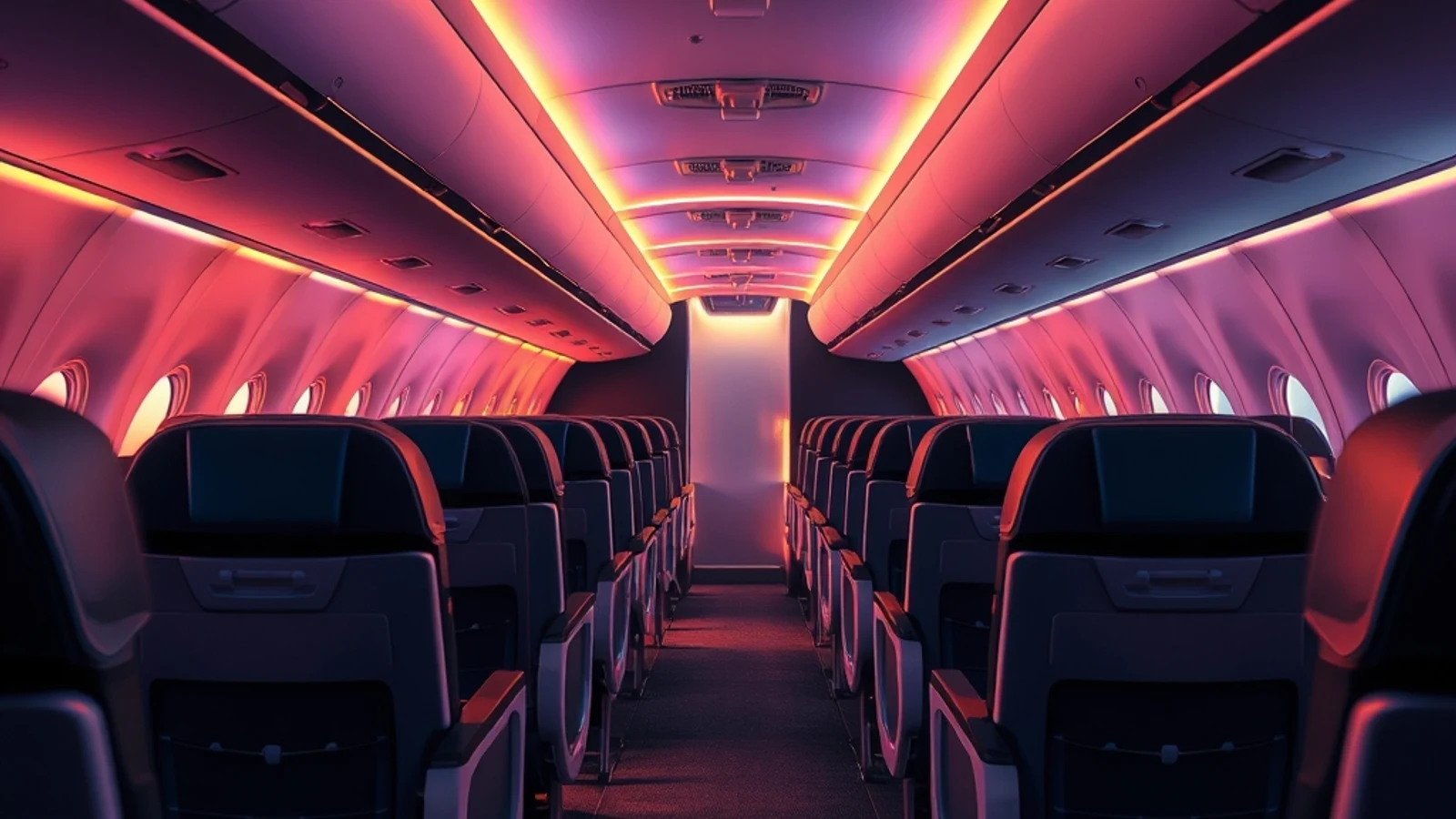
Lighting design serves as another pillar of the Project Sunrise strategy. Qantas, Airbus, and Caon Design spent over 150 hours in an A350 cabin mock-up in Hamburg to test hundreds of lighting configurations. The resulting 12 scenes are inspired by the Australian landscape and are grounded in circadian science. These include the 'Awake' setting, which uses blue-enriched light to boost alertness, and the 'Sunset' and 'Sunrise' settings designed to transition passengers into and out of sleep cycles. Source
The implementation of these lighting sequences is intended to assist passengers in adapting to their destination time zone while still in transit. Beyond the primary 'Awake', 'Sunset', and 'Sunrise' modes, the cabin will employ 'Welcome' and 'Farewell' lighting for boarding and disembarkation, as well as specific scenes for taxiing, takeoff, and landing. Qantas International CEO Cam Wallace emphasized that these light cycles were critical to the research findings, which prioritize brightness control to set the passenger's body clock. Source
The research effort extends to operational staffing as well. Recognizing that human alertness naturally decreases after 10 hours, Qantas has established rigid alternating pilot and crew shifts. These rosters include the utilization of overhead crew rest areas to ensure the flight deck and cabin staff remain well-rested during the 20-hour missions. These changes reflect an evolution in the customer experience, where the cabin design and service architecture are fundamentally different from traditional international long-haul standards. Source
Scientific experts involved in the study note that the research remains ongoing, even though preliminary results are promising. Professor Peter Cistulli from the University of Sydney stated that the interventions implemented during test flights led to better sleep quality and cognitive performance during the two days following travel. The partnership with Qantas remains a unique collaboration between engineering, sleep medicine, and nutrition experts, with no other airline having performed such a large-scale integration of human factors science into cabin design. Source
While the project aims to reduce the severity of jet lag, the researchers acknowledge that the findings are currently preliminary. Passengers in the study provided self-reported data throughout the trial period, creating a comprehensive log that tracked their well-being before, during, and two weeks after flight. Qantas maintains that these efforts to combat jet lag, alongside the reduction of total flight time by approximately four hours, will provide a competitive advantage in the future of ultra-long-haul aviation. Source
Ultimately, the A350-1000ULRs will be configured with approximately 100 fewer seats than competitors to provide additional space for passengers. This capacity reduction allows for the Wellbeing Zone and more room across all classes. By combining these environmental factors with scientifically backed nutritional recommendations, Qantas intends to revolutionize the long-haul travel experience. The airline continues to monitor participant data to refine these service protocols before the full-scale launch of its direct Sydney-to-London and New York services. Source