
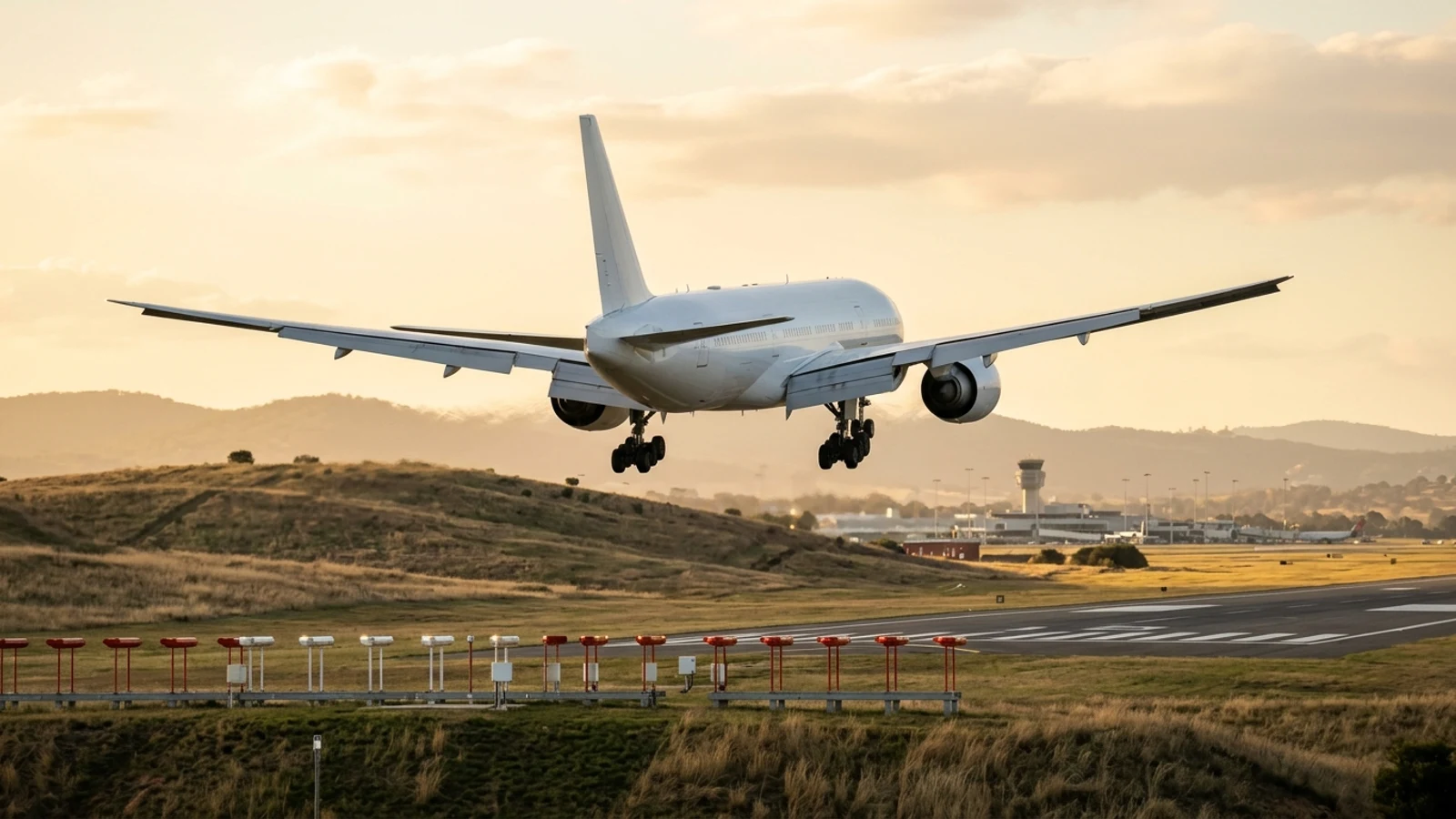
Starting December 8, 2026, Qatar Airways will officially resume its air service to the capital of Australia, Canberra. The carrier, which operates as a member of the Oneworld alliance, has not served the city since March 2020. That suspension was originally triggered by the regional impact of the war in Iran. While the airline has maintained operations in other international markets, the return to the Australian capital marks a significant development for the carrier’s long-haul network architecture and connectivity strategy. Source
Strategic Network Expansion and Regulatory Mechanics
The operational motivation for this route is rooted in regulatory strategy rather than direct market demand for Canberra itself. Qatar Airways leverages these regional service points to circumvent limits on total flight frequencies into major Australian urban centers. By incorporating a stop at a secondary destination like Canberra, the airline gains the flexibility to increase its flight counts to larger cities without violating existing bilateral air service constraints. This structural approach has been a consistent feature of its Australian market presence. Source
Service to Canberra will be provided daily using Boeing 777-300ER aircraft, configured with 354 seats. The cabin layout for this specific variant excludes both first class and premium economy, focusing instead on a two-class arrangement. Passengers can expect 42 QSuites in business class and 312 seats in the economy cabin. The timing of these flights is explicitly structured to maximize seamless passenger connectivity through the airline's hub in Doha, facilitating travel across the broader global network. Source
Upon the resumption of the Canberra service, Qatar Airways will operate two daily flights to Melbourne. This level of frequency to Melbourne was last achieved in March 2026. The new scheduling requires one of these daily departures to continue to Canberra, while the second flight will now serve Auckland. This change replaces the airline's previous one-stop service to New Zealand that operated via Adelaide. These modifications are essential for managing the airline’s allocation of 28 weekly flights into Australia's primary cities. Source
Aviation market agreements currently cap Qatar Airways' direct access to Australia’s four primary hubs—Brisbane, Melbourne, Perth, and Sydney—at 28 weekly departures. Because the airline has fully utilized this capacity, it collaborates with Virgin Australia to maintain its footprint. Virgin Australia operates flights on behalf of the Gulf carrier, leasing several Boeing 777-300ERs to ensure the Middle Eastern operator can maintain its market position without violating national aviation quotas assigned to the Australian side of the agreement. Source
Operating Schedule and Partner Coordination
Virgin Australia has adjusted its own schedule to support this partnership. The Australian operator has reduced its flights from Brisbane and Perth to ensure it remains within its 28-departure limit. Simultaneously, Virgin will increase its service frequency from Sydney to twice daily, effectively supplementing the daily offering provided by Qatar Airways. This cooperative arrangement allows the two companies to plan a combined total of up to ten daily nonstop departures to Australian destinations through October 2027. Source
The following table summarizes the primary operational characteristics of the resumed service and current fleet usage as documented by Simple Flying. These figures reflect the configuration of the Boeing 777-300ER deployed on the Canberra route and the broader frequency planning within the Australia-Doha corridor. Source
| Feature | Detail |
|---|---|
| Aircraft Type | Boeing 777-300ER |
| Total Capacity | 354 Seats |
| Business (QSuites) | 42 |
| Economy Seats | 312 |
| Frequency to Canberra | Daily |
| Combined Daily Departures | Up to 10 |
| Route Start Date | December 8, 2026 |
The decision to return to Canberra via this specific network model follows a history of similar adjustments. Historically, Qatar Airways served Canberra through Sydney before moving that stopover to Melbourne. A similar pattern was observed with the airline's previous service to Adelaide, which was also routed through Melbourne. By choosing this regional extension strategy, the airline successfully avoids frequency caps, providing a clear path to maintain its competitive stance against other international operators currently active in the Australian market. Source
While the carrier has considered other methods to grow, such as upgauging equipment or reducing flights in specific secondary airports, those options were deemed less favorable. For example, using larger aircraft like the Airbus A380 has been intermittent; the A380 was last used on the Sydney route in March 2026, while usage in Perth and Melbourne ended earlier in 2025 and 2020 respectively. Management determined that higher flight frequencies are the most effective way to protect and expand their market share. Source
Despite the resumption of the service, current traffic rights for the Melbourne-Canberra-Melbourne legs are limited. There are no eighth-freedom traffic rights—or cabotage—granted for these segments. Recent analytical data indicates that these specific domestic legs have historically experienced very low load factors, operating nearly empty. This underscores the purely strategic nature of the stopover, which functions primarily as a mechanism for the airline to access more arrival slots at major gateways while fulfilling regional connectivity requirements. Source
As the launch date nears, passengers and industry analysts are monitoring how this shift affects overall capacity. The airline’s commitment to this model ensures that the Australian capital is once again connected to the global network. With the integration of Auckland into the second Melbourne rotation, the airline has successfully redistributed its assets to optimize its reach, ensuring that the Gulf-Australia corridor remains a high-frequency service despite the complex regulatory environment that necessitates these multi-city flight paths. Source

