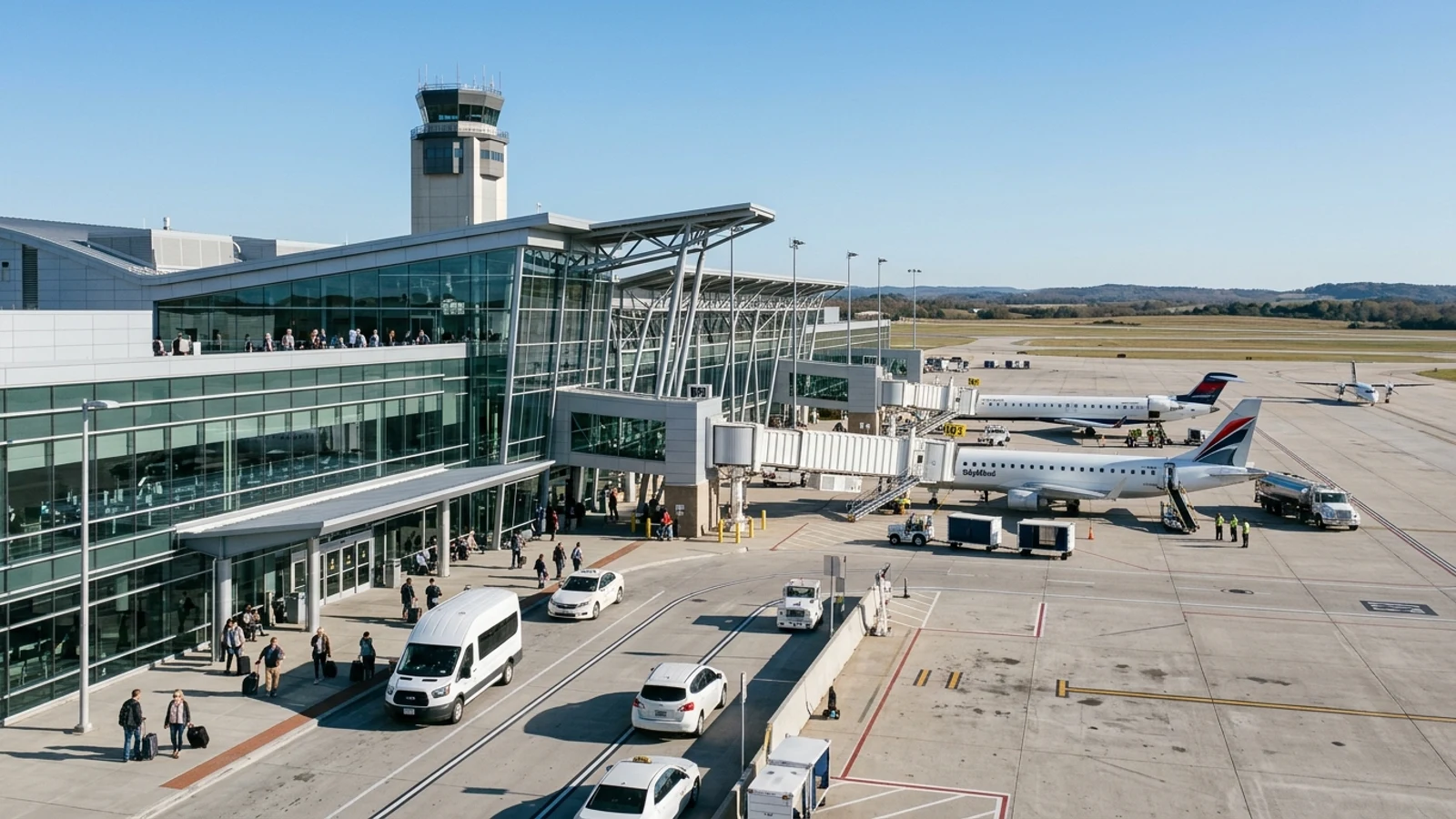
Regional Airport Operations
The Region of Waterloo International Airport, identified by the code YKF, serves as a significant access point for travellers visiting the interconnected urban communities of Kitchener, Waterloo, and Cambridge. Located near Highway 401, this facility provides a geographic alternative to Toronto Pearson International Airport for passengers moving within Ontario. Travelers frequently utilize this hub for its proximity to local technology and education centers, which draw a consistent stream of business and leisure visitors throughout the year. Source
Current airline partnerships at the facility include Air Canada, Flair Airlines, WestJet, and services operated by Sunwing. The airport publishes a range of domestic destinations, including Calgary, Edmonton, and Halifax, alongside seasonal international service to vacation spots such as Cancun and Punta Cana. In October 2026, management released its winter 2026–2027 travel schedule, which outlines connections to over 140 destinations globally, facilitating easier travel planning for both regional holidaymakers and those attending business conferences in the area. Source
The long-term development of the airport received a formal update on June 25, 2026, when the Regional Council approved the YKF Growth Plan. This 20-year strategic document defines the airport's evolution into a comprehensive mobility hub. The vision includes the integration of air travel services with GO Transit, the ION light rail system, Grand River Transit, and intercity bus connections. This plan provides an infrastructure framework for future expansion rather than confirming immediate terminal growth or new flight-slot implementation. Source
Travelers currently visiting the region rely on existing infrastructure for their transit needs. Ground transportation at the airport is limited to options such as Grand River Transit via Routes 78 and 79, licensed taxis, and standard rental car services. For those arriving by rail, the Kitchener railway station provides essential links for regional and intercity travel, connecting passengers via GO Transit and VIA Rail. These current routes facilitate transit between Kitchener, Toronto, and other external destinations for all visitors. Source
High-Speed Rail and Infrastructure Clarifications
Public discussion regarding the potential integration of high-speed rail into the Waterloo Region has surfaced alongside the Canada-wide Alto high-speed rail initiative. This separate, long-term project aims to cover the Toronto–Quebec City corridor, connecting cities like Montreal, Ottawa, and Laval through a proposed 1,000-kilometre electrified railway. However, according to Transport Canada, the final alignment of this project remains under development, and Kitchener is not among the seven cities identified for stations in the current plan. Source
Reports suggesting that the high-speed rail project includes direct links between Kitchener and Toronto Pearson International Airport are unsupported by current project documentation. The official alignment does not designate Kitchener as a node for this high-speed network. Passengers looking to travel between the Waterloo Region and Toronto should continue to rely on established regional transit services. It is recommended that all travelers consult current schedules for GO Transit and VIA Rail prior to finalizing their travel arrangements. Source
Furthermore, there are no verified reports or announcements confirming a 6.1% increase in premium hotel average daily rates within the regional hospitality sector. No accessible industry report has confirmed such a rise as of November 10, 2026. Travelers are advised to contact individual hotels directly to ascertain current room rates and availability, rather than relying on unconfirmed industry benchmarks or general market rumors circulating regarding the local convention and accommodation industry. Source
Similarly, regarding the alleged development of new convention infrastructure, there is no official confirmation as of November 10, 2026, that new eco-certified convention wings or mandatory Wi-Fi 7 meeting suites have been approved for the city. Organizers planning professional gatherings should reach out to individual venue operators to verify room capacity, specific technological capabilities, and accessibility arrangements. The region offers various spaces, but these are managed independently by local entities rather than through a centralized permit system. Source
For international professionals and digital nomads, it is essential to note that Canada utilizes a federal framework for immigration. According to Immigration, Refugees and Citizenship Canada, foreign nationals working remotely for non-Canadian employers can generally remain for up to six months as visitors, provided they do not attempt to enter the domestic labor market. There is no municipal digital nomad permit program in Kitchener, and reports of 24-hour permit approval processes are not supported by evidence. Source
International visitors are encouraged to verify all visa, electronic travel authorization, and general work eligibility requirements prior to their departure. The region continues to promote its tech-centric business environment, which features various co-working spaces and professional facilities for transient workers. However, adherence to federal entry requirements remains mandatory for all international arrivals entering Canada for the purpose of work, regardless of their status as a digital nomad or business visitor. Source
Finally, the region offers several cultural and historical attractions for visitors. These include the Kitchener Market, various heritage walking tours, and local institutions like THEMUSEUM and the Ken Seiling Waterloo Region Museum. The city also maintains over 125 kilometres of trails for outdoor recreation. While these amenities support tourism, they remain separate from the transportation infrastructure updates that currently define the region's focus on long-term mobility improvements and regional transit connectivity. Source
In summary, while the region is undergoing a 20-year transition toward becoming a more integrated mobility hub, passengers should base their travel plans on currently available services. The YKF airport continues to function as a vital transit point, with plans for future integration with existing rail and transit providers. Travelers are encouraged to verify all transport, accommodation, and entry requirements through official channels, as current updates clarify that no immediate changes to high-speed rail or local permitting have been enacted. Source