
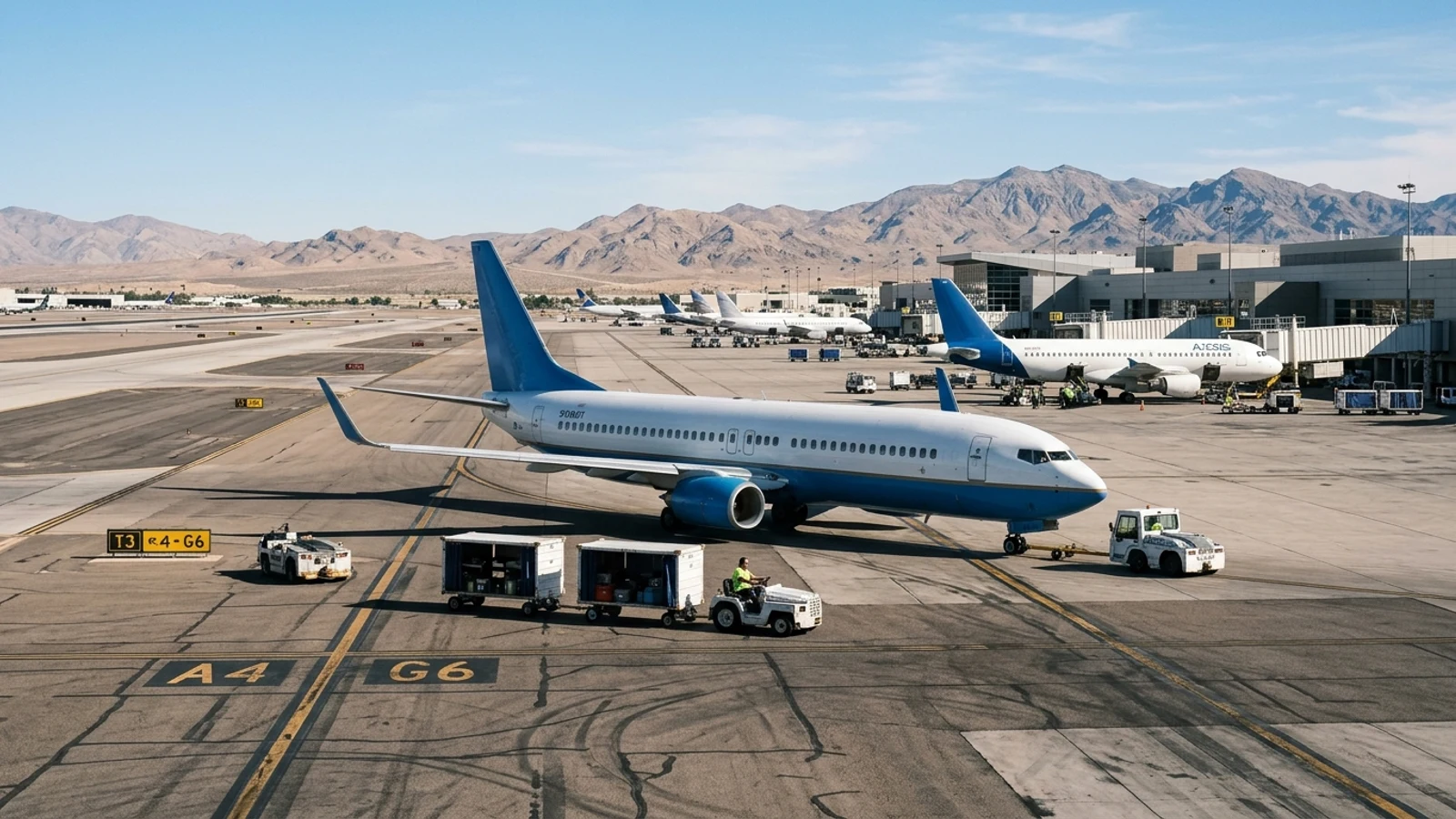
Southwest Airlines, which began operating service to Alaska on May 15, 2026, is adjusting its approach to the Anchorage market following a first season that saw disappointing results. The carrier initially launched two routes to the Last Frontier from major hubs in Las Vegas and Denver. According to Simple Flying Aviation Discovery, which cites data from the US Department of Transportation, these routes are designed to function within the airline's broader network, often relying heavily on connecting passengers. Source
Detailed performance metrics from the US Department of Transportation covering May through August 2026 indicate that the daily round-trip service between Las Vegas and Anchorage struggled to gain traction. During this period, the airline transported 26,097 round-trip passengers, but the load factor stood at only 68.7%. This figure represents a performance more than ten percentage points lower than the carrier's average load factor at Las Vegas during the same time frame. Source
Financial data analyzed by Simple Flying Aviation Discovery further highlights the challenges faced by this specific route. In the first six weeks of service, the average fare was 17% higher than the airline's network average from Las Vegas, despite the flight distance being nearly double the length of typical routes. When adjusted for distance, the route yielded revenue per available seat mile of 9.23 US cents, the lowest among Southwest's offerings from Las Vegas and the fourth-lowest across its entire system. Source
Market competition appears to be a significant factor, with the US Department of Transportation data revealing that Southwest captured only 11% of the local market between Las Vegas and Anchorage. In contrast, Alaska Airlines commanded 79% of the local market share. Furthermore, only about 25% of Southwest's passengers on this route were point-to-point travelers, meaning the airline remained heavily dependent on connecting traffic to support the service despite its specialized overnight scheduling. Source
The connectivity-focused nature of the route is evident in the top markets served via the Las Vegas connection, which include Dallas Love, Phoenix, Austin, San Antonio, Sacramento, Salt Lake City, San Diego, Orlando, Ontario, and Albuquerque. Simple Flying Aviation Discovery reports that the simultaneous launch of two similar routes to Alaska might have contributed to the lower-than-anticipated results. The airline operated 123 round-trip flights between May 15 and September 14, 2026, to establish this initial presence. Source
In response to these initial performance figures, Southwest Airlines has announced significant modifications to its 2027 seasonal schedule. The season will commence on June 3, which is three weeks later than the 2026 start date, and conclude on September 13. The total volume of flights will be reduced to 103 movements, representing a 16% year-over-year decrease in operational activity. These shifts signal an effort to optimize performance and improve load factors for the upcoming summer season. Source
Operational Adjustments and Capacity Reductions
Beyond schedule reductions, the airline is implementing a fleet change to better match capacity with demand. For the 2027 season, the 175-seat Boeing 737 MAX 8 aircraft previously utilized will be replaced by the smaller 137-seat Boeing 737-700. This equipment change results in a 34% reduction in available seats, amounting to the removal of more than 14,000 seats from the route schedule. It remains possible that further aircraft adjustments, such as the use of the MAX 7, could occur prior to the season's start. Source
The following table illustrates the key operational changes between the 2026 inaugural season and the planned 2027 summer schedule based on reported figures: Source
| Metric | 2026 Season | 2027 Season |
|---|---|---|
| Start Date | May 15 | June 3 |
| End Date | September 14 | September 13 |
| Total Movements | 123 | 103 |
| Primary Aircraft | 737 MAX 8 | 737-700 |
| Total Seats | 21,525 | 14,111 |
While the 2026 data provides a snapshot of the initial performance, observers note that it is limited as it does not capture the full seasonal impact. Because the airline is relatively new to the Alaska market, some variability in initial results is expected. Simple Flying Aviation Discovery emphasizes that Southwest is taking these actions, including the 16% reduction in movements and the 34% reduction in seat capacity, to specifically address yield and load performance targets moving into the second year of operations. Source
Strategic Implications for Future Operations
The reliance on connecting traffic remains a defining characteristic of this route. The overnight service from Anchorage is timed to facilitate connections at Las Vegas, but the overall load factor of 68.7% suggests this model has yet to reach desired efficiency levels. Analysts continue to monitor these developments as the airline refines its strategy in the Pacific Northwest. Further updates regarding equipment or potential frequency adjustments remain subject to future internal airline reviews as the carrier moves closer to the June 2027 restart date. Source
The reduction in capacity is a clear indication that Southwest is prioritizing profitability metrics over raw market coverage in Alaska for the 2027 season. By swapping larger aircraft for smaller ones, the airline aims to balance its seat count with realized passenger demand. This strategy serves as an attempt to elevate revenue per available seat mile, which was significantly challenged during the inaugural 2026 season. Observers will be looking to see if these specific capacity adjustments result in improved financial outcomes for the carrier. Source

