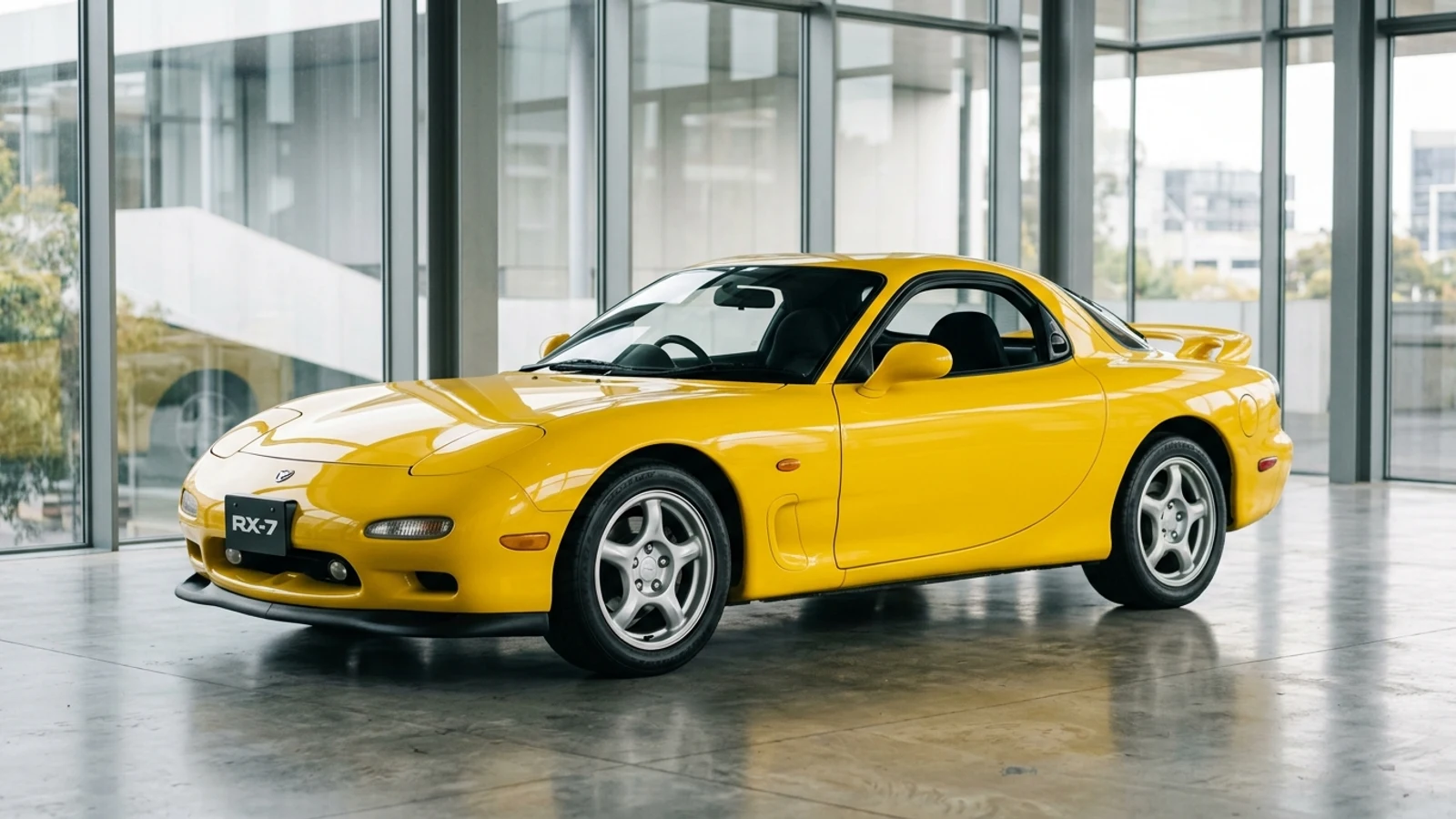
A 1993 Mazda RX-7 R1, finished in the rare Competition Yellow Mica paint, recently achieved a hammer price of $112,000 on the online auction platform Bring a Trailer. This transaction highlights a notable peak in the market for the third-generation FD platform. While many performance vehicles from the 1990s have seen increased collector interest, this specific sale reflects a combination of factors including low mileage, the scarcity of the R1 trim, and the pristine, mostly original condition of the vehicle. Source
Specifications and Rarity Factors
According to CarBuzz, the R1 package was a specialized trim level for the 1993 model year, which limited production and restricted the availability of the Competition Yellow color. The R1 features a distinct set of performance-oriented equipment that sets it apart from standard models of that era. This specific example had traveled only 18,829 miles under the care of its second owner, who maintained the car in what is described as showroom condition prior to the auction sale. Source
The 1993 R1 trim level specifically included a front splitter, rear spoiler, dual oil coolers, and front brake ducts designed for improved track performance. Inside, the vehicle featured microsuede bucket seats, while the factory engineering team removed the sunroof and rear wiper to reduce weight. The suspension system was upgraded with specific Showa shock absorbers to provide a more focused handling experience. These features, combined with the exclusive paint, make the 1993 R1 a highly sought-after configuration. Source
Under the hood, the RX-7 retains a 1.3-liter twin-turbocharged rotary engine. When the vehicle was new, this powerplant was rated by the manufacturer at 255 horsepower and 217 lb-ft of torque. This particular unit has been further modified with an Apexi intake, a Greddy stock-mounted intercooler, and a cat-back exhaust system. It also features ECU tuning developed by Peter Farrell, a figure known for his historical racing experience and development of aftermarket performance kits for the rotary platform. Source
Although performance parts were installed, the auction listing did not provide specific figures regarding the current power output. The vehicle includes a 5-speed manual transmission paired with a Torsen limited-slip differential. Maintenance records provided at the time of sale indicate that the engine oil, coolant, transmission fluid, and differential fluid were replaced shortly before the auction closed, ensuring the vehicle remained in operational condition despite its collector status. Source
Market Trends and Collector Valuation
The market for third-generation RX-7s has historically been bifurcated between heavily modified examples and stock, unmolested vehicles. While modified models often serve as projects for enthusiasts, stock RX-7s command significantly higher premiums. CarBuzz reports that typical well-maintained examples generally trade between $35,000 and $60,000. However, the unique combination of the R1 trim, the specific yellow exterior, and low mileage allowed this vehicle to far exceed those standard ranges. Source
The 1990s sports car market is influenced heavily by specifications, color, mileage, and the level of aftermarket modification. This specific RX-7 satisfied these criteria, contributing to its high final price. While movies like The Fast and the Furious brought visibility to Japanese tuning culture, the most valuable vehicles currently are those that remain close to their original factory specifications, as these become increasingly scarce due to the widespread modification practiced by previous owners. Source
The rotary engine, while celebrated by enthusiasts for its unique characteristics and high-revving performance, requires specialized maintenance. Owners must manage oil consumption and perform routine checks at intervals more frequent than traditional piston-engine vehicles. For collectors, these requirements are viewed as inherent parts of the ownership experience. The emotional appeal of the engine's design contributes to the sustained demand for these vehicles despite the mechanical attention they demand. Source
The 1993 R1 model is rare, with Hagerty estimating that only 350 units were produced in the Competition Yellow finish. Because of this rarity, the vehicle represents a significant find for collectors who prioritize authenticity and production totals. While the high sale price of $112,000 may surprise those looking at more common sports cars, it underscores the value placed on factory-stock configurations of limited-production Japanese performance cars from the 1990s. Source
For comparison, other performance vehicles such as the Cadillac CT5-V Blackwing or various used Porsche 911 Carreras occupy similar price brackets in the current market. The decision by the buyer to select the RX-7 over these newer, more modern-capable cars points to the strong influence of nostalgia and the specific appeal of the rotary engine design. The vehicle is expected to be maintained as a collector piece, potentially limiting its future road usage to ensure its continued pristine state. Source
The following table summarizes the key features of the 1993 RX-7 R1 model as described in the sales documentation. Source
| Feature | Specification |
|---|---|
| Model Year | 1993 |
| Trim Level | R1 |
| Engine | 1.3-liter Twin-Turbo Rotary |
| Original Power | 255 hp / 217 lb-ft |
| Mileage at Sale | 18,829 miles |
| Notable Features | Competition Yellow, Showa Shocks, Torsen LSD |