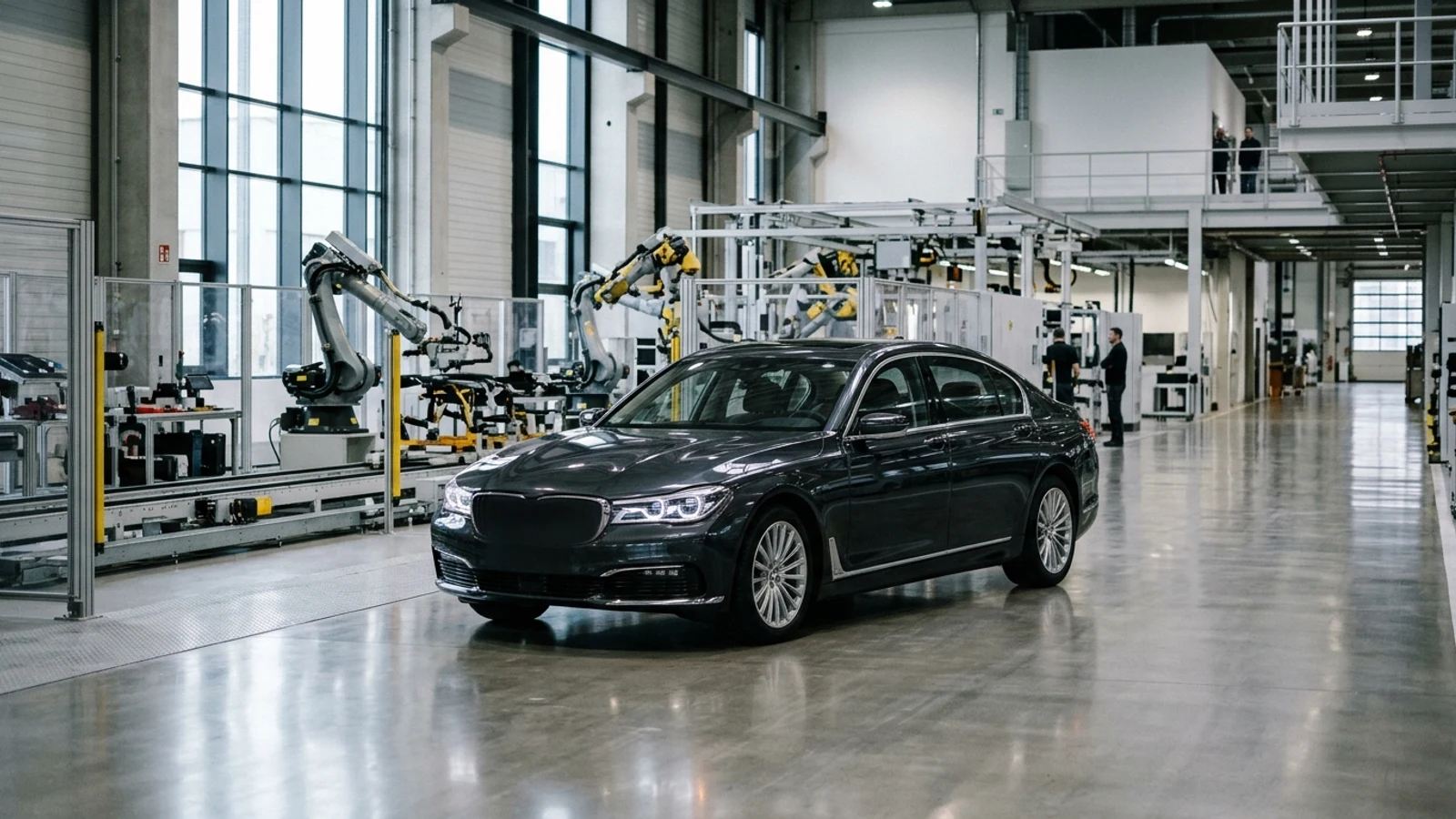
The long-standing Audi A8 flagship sedan has reached the conclusion of its manufacturing cycle at the company's production facility in Neckarsulm, Germany. Audi officially stopped building the vehicle in October 2026, marking the end of a model line that first arrived on the market in 1994. The factory space formerly dedicated to the executive sedan is already being repurposed for the production of the newer A5 model, as part of a wider strategic shift in the company's manufacturing footprint. Source
While production has halted internationally, the US market retains access to current stock. According to information provided to CarBuzz by Audi USA, the A8 model family will continue to be offered for the 2027 model year. While the brand has ceased accepting new factory orders, company representatives have confirmed that all previously confirmed and booked customer orders will be fulfilled. This ensures a final supply of units remains available to American buyers even after the assembly line has been decommissioned. Source
Current inventory levels in the US suggest a stable availability for the near term. Audi reports having 576 A8 sedans in stock, comprised of 463 vehicles from the 2027 model year and 113 units from the 2026 model year. Additionally, 223 units are listed as in transit from Germany to local dealerships. The high-performance S8 variant is also represented with 272 vehicles in stock and another 107 units currently making their way to the US through international logistics channels. Source
US Inventory and Availability
The following table details the status of A8 and S8 inventory currently tracked by Audi in the United States as reported by CarBuzz: Source
| Vehicle Model | In-Stock Units | Units In-Transit | Total Available |
|---|---|---|---|
| A8 (All) | 576 | 223 | 799 |
| S8 | 272 | 107 | 379 |
Based on sales performance during the third quarter of 2026, the existing US inventory represents approximately two quarters of supply. Market analysts suggest that higher-specification models are likely to sell first, potentially leaving less-equipped variants to move more slowly, which could influence future pricing strategies at the dealership level. As the existing inventory is liquidated, buyers seeking specific configurations may find diminishing options, as no new production will replenish the stock. Source
The timeline for this transition began earlier in 2026, when speculation regarding the sedan's future intensified. In March 2026, Audi officially closed order books for the A8 in its home market of Germany. Although rumors of an imminent global discontinuation surfaced at that time, Audi US representatives stated during the initial inquiry that the model would remain on sale for some time without a defined end date. The subsequent October production halt confirms the conclusion of the German line. Source
Future plans for the flagship segment remain largely unconfirmed by official company channels. While various reports suggest a potential return for the A8 around 2030, possibly sharing a platform with the Porsche Panamera, Audi has not corroborated these claims. Similarly, previous industry discussions regarding an electric version of the A8 have seen no recent updates. Audi USA maintains that details regarding a potential successor will be shared when the timing is appropriate for the company. Source
Market Context and Strategy
The decision to end the A8 line reflects broader shifts in consumer preference toward high-end SUVs, such as the Audi Q9. Historically, the A8 faced intense competition from the BMW 7 Series and Mercedes-Benz S-Class, which maintained significantly higher sales volumes. Despite the introduction of various engine configurations over its life, including V10 and W12 powerplants, the sedan consistently trailed its peers in total market share, leading the manufacturer to reallocate resources toward more popular segments. Source
European markets have already experienced a more rapid removal of the A8 from dealership availability. A review of the company's regional websites indicates that the model has effectively disappeared from most listings. In Germany, inventory is limited to a small number of units, including four standard sedans, one long-wheelbase A8 L, and four S8 vehicles. This contrasts sharply with the US strategy of maintaining supply through the 2027 model year, highlighting regional differences in inventory management. Source
The consolidation of production facilities suggests a focus on cost-cutting measures within the organization. By transitioning factory output toward high-demand SUVs and away from lower-volume executive sedans, the manufacturer seeks to optimize efficiency. This strategy aligns with current automotive industry trends where internal combustion sedans in the flagship segment are increasingly replaced or marginalized by SUV alternatives, reflecting a long-term change in executive vehicle demand and regional manufacturing requirements. Source
While the end of the A8 signals a significant moment for the brand, the immediate impact on customers is limited to the conclusion of factory-ordered configurations. Audi’s shift indicates that buyers will rely on existing dealer stock until the inventory is fully depleted. With no definitive replacement yet announced, the A8 stands as a concluded chapter in Audi’s historical executive sedan offering, leaving a vacuum in the company's product lineup that has yet to be addressed through official communications. Source