
Holiday Travel Forecast and Trends
The American Automobile Association (AAA) has released updated projections regarding holiday travel trends for the 2026 Thanksgiving period. According to research released on November 16, 2026, the organization anticipates that 81.5 million Americans will travel at least 50 miles away from their primary residence between November 24 and November 30, 2026. This projection represents a slight decrease compared to the 81.6 million individuals who participated in similar travel during the previous year. Source
This anticipated decline marks a notable change in long-term travel patterns. Aside from the anomaly of 2020, this year represents the first time since the 2008 recession that AAA has forecasted a reduction in Thanksgiving holiday travel volume. While the overall dip is quantified at 0.1%, or approximately 121,000 fewer travelers than the 81.6 million recorded in 2025, the organization notes that travel volumes remain near historic highs, suggesting roads and airports will stay congested. Source
Stacey Barber, vice president of AAA Travel, stated that the slight decrease in participation is linked to higher travel costs. Among the total number of projected travelers, 72.9 million are expected to drive to their holiday destinations. This figure is a reduction of 200,000 drivers from the 73.1 million who drove for the 2025 holiday. Despite these costs, the vast majority of travelers, roughly nine out of ten, continue to choose personal vehicles as their primary mode of transportation. Source
Persistent fuel prices have been identified as a significant factor influencing these travel decisions. Gas prices reached monthly peaks during August, September, and October of 2026. Data from AAA indicates the national average gas price on November 16, 2026, was $3.81 per gallon, an increase over the $3.07 average recorded on November 16, 2025. Between April and early November 2026, the national average remained above $4 per gallon, a trend largely attributed to the regional conflict involving Iran. Source
The impact of the ongoing conflict on the energy sector remains a focus of industry analysis. Military actions launched in February 2026 were followed by fluctuations in energy costs. Before these events, GasBuddy had forecasted a 2026 annual average gas price of $2.97 per gallon. However, the national average on February 28, 2026, the day the United States initiated military strikes against Iran, was $2.98. The weekly average price of gasoline has not been below $3.50 since the week of March 16, 2026. Source
While prices have remained elevated throughout much of the year, recent observations indicate a shifting trend in fuel costs. Patrick De Haan, head of petroleum analysis at GasBuddy, reported that gasoline prices decreased in every state during the week leading up to the holiday, with 12 states experiencing declines of more than 25 cents per gallon. Diesel prices have also fallen, dropping below $6 per gallon for the first time since September 10, 2026, offering a slight reprieve for both logistics and consumers. Source
Road Travel and Congestion Projections
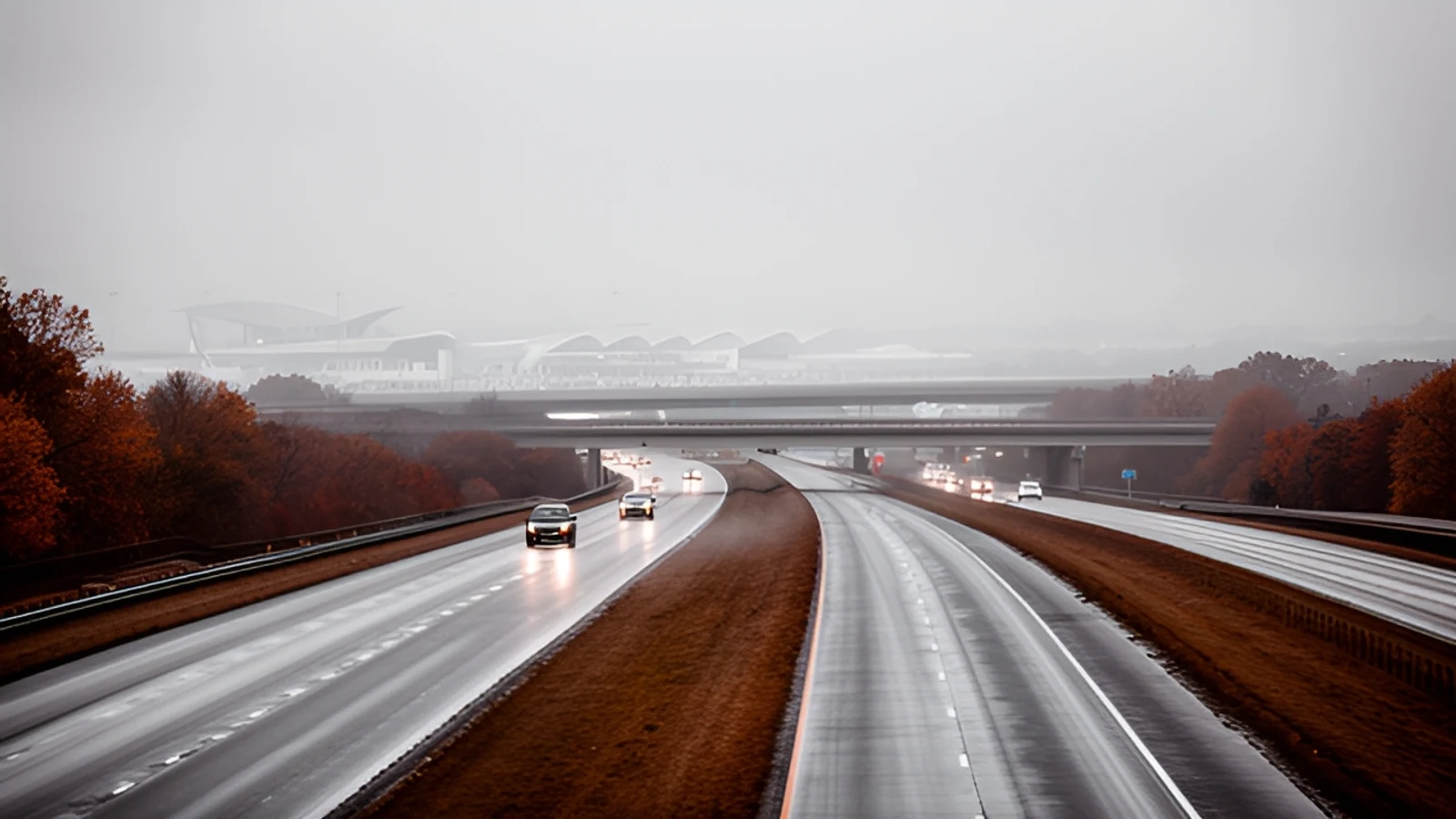
Transportation data firm INRIX indicates that despite the marginal decrease in total travel numbers, congestion will remain high. Major urban centers, including New York, Washington, Los Angeles, and Boston, are expected to experience traffic delays that could exceed double their typical levels. The most significant congestion is projected for the Tuesday and Wednesday immediately preceding Thanksgiving, with a secondary surge expected on the following Sunday and Monday as individuals return home from their holiday gatherings. Source
Rental car services are also anticipating high demand. According to AAA's partner Hertz, the cities of Orlando, Phoenix, Las Vegas, Atlanta, and Denver are seeing the highest volume of reservations. Travelers utilizing rental vehicles are advised to anticipate extended processing times at counters during the Tuesday and Wednesday before the holiday. AAA suggests that those choosing to drive should perform maintenance checks on tires, batteries, and essential vehicle fluids before departing to avoid common road-side issues. Source
To assist with travel logistics, AAA provides specific recommendations for those who have not yet finalized their plans. Travel advisors suggest that flexibility is an important component of managing travel costs during the holiday week. For air travel, selecting flights on Tuesdays or Wednesdays rather than weekend days can potentially result in reduced ticket prices. Additionally, exploring travel options through smaller or secondary regional airports may provide access to more competitive fares compared to larger hubs. Source
The following table summarizes the travel volume comparisons provided by AAA regarding the 2025 and 2026 Thanksgiving holiday periods. All figures represent Americans traveling at least 50 miles from home during the defined holiday window. Source
| Travel Category | 2025 Volume | 2026 Volume | Change |
|---|---|---|---|
| Total Travelers | 81.6 Million | 81.5 Million | -0.1% |
| Total Drivers | 73.1 Million | 72.9 Million | -200,000 |
Regarding potential future trends, the International Energy Agency has increased its oil production forecast, which may influence fuel pricing pressures as maritime shipments through the Strait of Hormuz proceed. GasBuddy projects that the national average for gasoline may continue to fall, potentially dropping below $3.72 per gallon during the week of November 16, 2026. However, analysts suggest that prices are unlikely to return to the levels observed during the 2025 Thanksgiving period in the immediate term. Source

