
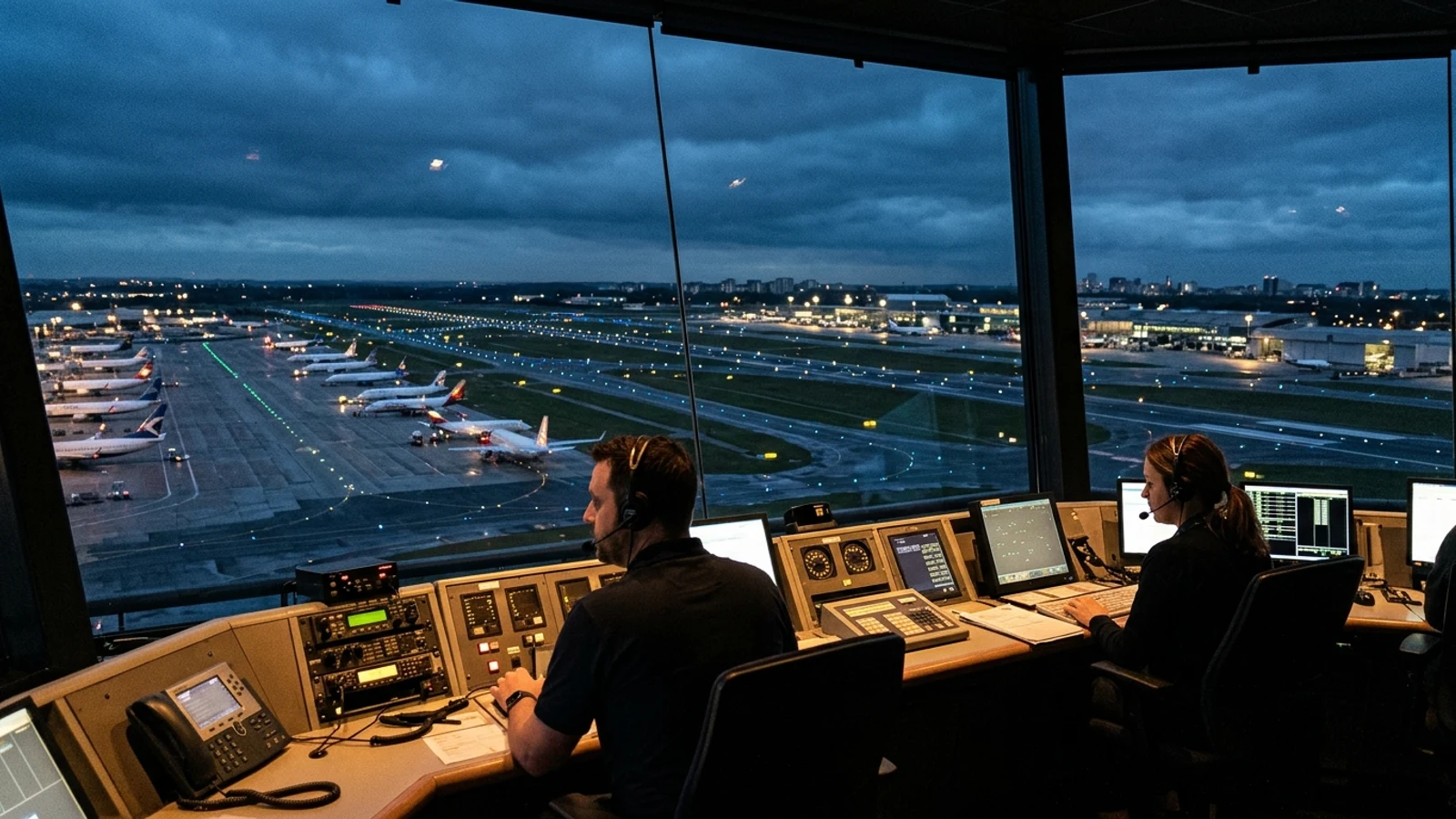
The November 13 Nationwide Ground Stop
The Federal Aviation Administration (FAA) halted air departures across the United States for over four hours on November 13, 2026, following a severe communications disruption at regional traffic control centers. According to the aviation news outlet AeroTime Aviation Discovery, this rare event—only the second nationwide ground stop since the September 11, 2001, attacks—prompted immediate scrutiny from industry personnel and former safety officials regarding the agency's provided explanation for the failure. Source
Transportation Secretary Sean Duffy initially stated that the outage resulted from overloaded switches and routers within the aging air traffic control infrastructure. By the following day, the FAA refined its account, identifying that contractor L3Harris Technologies had been performing fiber-optic upgrades at remote radio sites in El Dorado, Arkansas, and Amarillo, Texas. The agency reported that this installation caused data flooding across the network, ultimately impacting radar and communications feeds at 17 of 22 en route centers. Source
Despite the FAA's identification of these sites, aviation professionals remain skeptical. AeroTime reports that as of November 17, 2026, the National Air Traffic Controllers Association had not received a formal briefing on the specifics of the incident. This lack of transparency has caused concern among controllers, with some supervisors expressing anxiety over their responsibility for infrastructure that they reportedly cannot independently assess for reliability or potential failure points. Source
The timing of the maintenance has become a primary point of contention. Journalist Anna Giaritelli, who communicated with approximately 60 air traffic controllers, reported that the workforce rejects the FAA's narrative, particularly because the work was conducted during a busy Friday afternoon. Standard protocol in aviation maintenance typically schedules such critical infrastructure updates during late-night or midweek windows when traffic volumes are lower, a practice that the FAA has since stated it will reconsider. Source
Gregory Feith, a former senior air safety investigator with the National Transportation Safety Board (NTSB), questioned the fundamental architecture of the system that allowed a local installation to cascade into a nationwide shutdown. He emphasized that aviation systems are historically certified to avoid single-point failures, noting that it is baffling how a single router could trigger such an expansive disruption to critical radar and communication links. Source
Secretary Duffy and other officials have explicitly denied that the nationwide rollout of the Strategic Management of Airspace, Routes, and Trajectories (SMART) artificial intelligence tool contributed to the failure. Duffy stated that the system was not active during the outage. While Homeland Security Secretary Markwayne Mullin previously suggested investigators look into potential connections with AI initiatives, FAA Administrator Bryan Bedford maintained that there was no evidence of AI-related involvement. Source
The disruption affected more than 3,500 flights that were already airborne at the time of the order, with over 4,100 additional flights canceled the following Saturday. The incident prompted renewed political pressure regarding the FAA’s modernization strategy. Reports from the Government Accountability Office in September 2026 had previously warned that fragmented and accelerated upgrades to aging systems could introduce risks of service disruptions, providing context for the current industry debate. Source
Manufacturer Hewlett Packard Enterprise, which owns Juniper Networks, stated that the equipment operated exactly as configured by the installer. The FAA has taken precautionary measures by pausing further Juniper installations and disabling specific broadcasting functions on over 60 additional routers. As of November 17, 2026, the investigation into whether the cause was contractor error or a broader systemic vulnerability remained ongoing, with no official final determination released to the public. Source
The confusion surrounding the cause has been compounded by a series of unrelated technology outages across various sectors. These included failures at Microsoft and the financial service provider Workday, as well as transaction delays at JPMorgan Chase and a computer problem at United Airlines related to aircraft weight calculations. While some officials suggested theoretical threats from AI-based code modification, these were largely categorized as independent events, and cybersecurity officials ruled out direct cyberattacks. Source
Operational Impact and Recovery
While the ground stop was lifted on the evening of November 13, the operational impact lingered throughout the weekend. As of Sunday evening, thousands of cancellations and delays were reported, and travelers were advised that schedule recovery would likely continue for several days. The incident has intensified calls for an independent investigation into the management of the air traffic control network and the oversight of contractors performing sensitive infrastructure updates. Source
The following table outlines the sequence of the November 13 event as reported by industry and official sources. Source
| Event Date | Description | Status |
|---|---|---|
| Nov 13, 2026 | Nationwide Ground Stop issued due to comms failure | Grounded |
| Nov 13, 2026 | Ground Stop lifted approx 8:15 PM Eastern | Resumed |
| Nov 14, 2026 | Secretary Duffy identifies router/contractor issue | Investigating |
| Nov 17, 2026 | Workforce remains unbriefed on final cause | Ongoing |

