
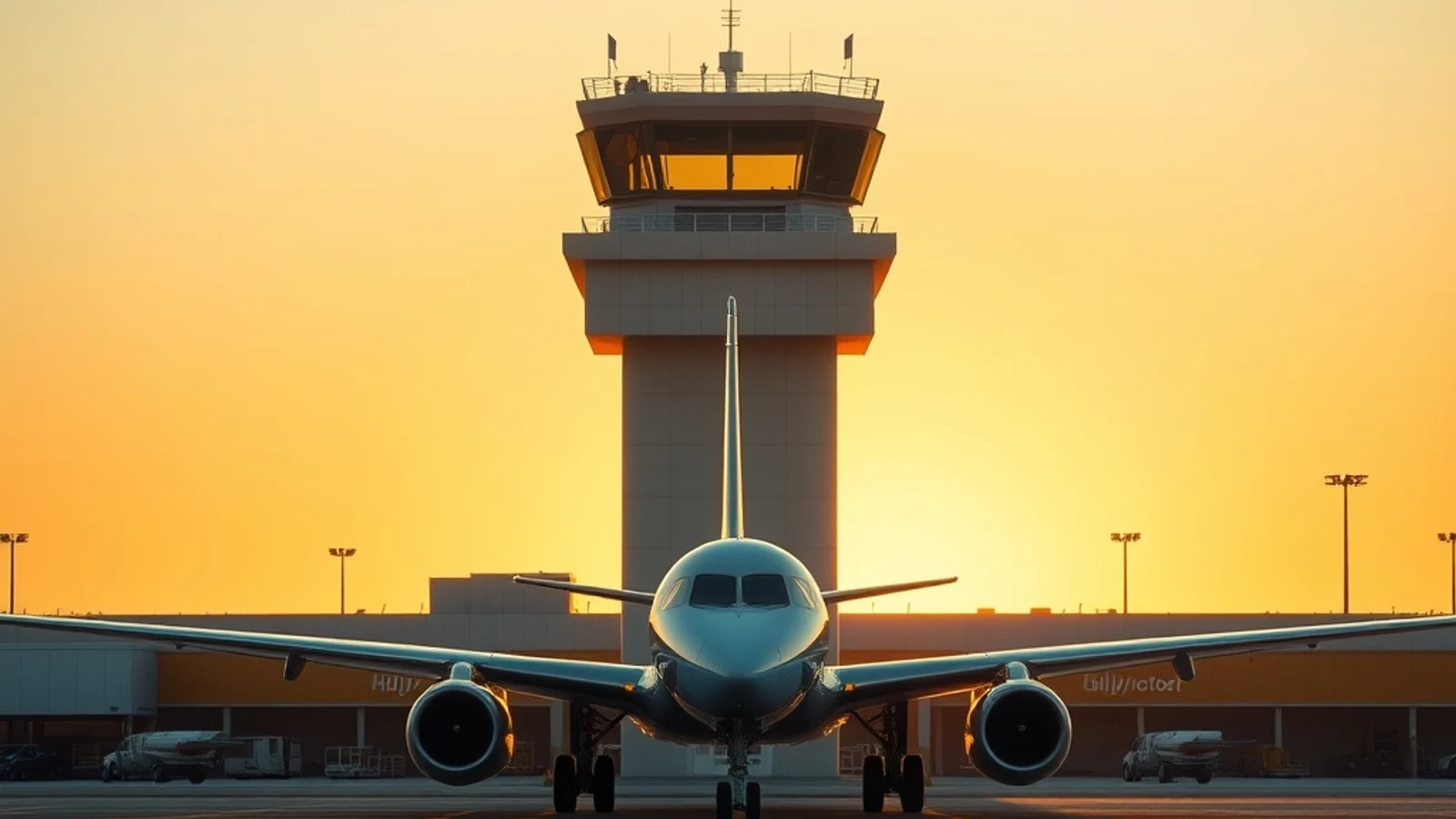
On the evening of Wednesday, November 18, 2026, air traffic control operations at Hollywood Burbank Airport (BUR) experienced a significant disruption. The facility entered a status designated as "ATC Zero," indicating that no air traffic controllers were on duty in the tower. Consequently, pilots arriving at and departing from the airport were required to manage their own takeoffs, landings, and ground movements, a process that necessitated close coordination between aircraft crews to ensure safety within the airport's vicinity. Source
During the outage, flight crews communicated their positions and intended maneuvers over a common radio frequency known as the Common Traffic Advisory Frequency (CTAF). This procedure is typically reserved for airports that lack a permanent control tower. According to radio recordings, pilots from carriers such as Southwest Airlines and Alaska Airlines actively announced their taxiing, takeoff, and landing statuses to other aircraft operating in the immediate airspace to maintain visual awareness of surrounding traffic. Source
The FAA confirmed on Thursday that the disruption was rooted in staffing issues. While the specific details regarding the cause of the staffing absence were not fully disclosed by airport or aviation authorities, there have been suggestions that the periods of inactivity were linked to mandatory rest breaks required for a sole controller working the evening shift. Neither the FAA nor Burbank Airport representatives have provided an official, finalized explanation for the repeated closures observed throughout the evening. Source
Operational Procedures During Tower Unavailability
Although the local tower was unmanned, aircraft were not entirely devoid of external air traffic control support. Regional control services were managed by the Southern California Terminal Radar Approach Control (TRACON), which assumed responsibility for the tower’s airspace according to standard protocols. Regional approach controllers continued to guide aircraft toward the Burbank area before instructing pilots to transition to the CTAF for the final, local phase of their approach and landing. Source
Reports indicate that the tower was left without controllers for multiple intervals of approximately 30 minutes each during the Wednesday evening timeframe. An aviation notice had designated 118.7 MHz as the operational frequency for monitoring airport activities from 10:30 p.m. Wednesday through 5:30 a.m. Thursday. However, this notice did not serve as evidence that the tower remained continuously unstaffed during the entire seven-hour period; rather, it reflected a contingency plan for the duration of the staffing shortage. Source
Burbank airport, a Class C commercial field, has previously encountered similar staffing interruptions. A notable incident occurred on October 6, 2025, when the tower remained unstaffed for nearly six hours. That event took place during a 43-day federal government shutdown, a period when controllers were working without compensation. During the 2025 closure, Southern California TRACON also managed operations remotely from San Diego, which resulted in average departure delays of 151 minutes for flights originating from Burbank. Source
Comparison of Burbank Tower Staffing Disruptions
The following table outlines the operational differences between the recent 2026 staffing event and the 2025 government shutdown event at Hollywood Burbank Airport: Source
| Feature | October 6, 2025 Event | November 18, 2026 Event |
|---|---|---|
| Primary Cause | Federal Government Shutdown | Staffing/Rest Break Issue |
| Duration | Nearly 6 hours | Multiple 30-minute intervals |
| Management | TRACON (San Diego) | TRACON (Regional) |
| Delay Impact | Average 151 minutes | Not immediately clear |
Burbank’s airspace is frequently cited as a high-risk area, often referred to as a "hotspot" due to the dense combination of commercial airline traffic, general aviation activity, and helicopter movements. The proximity of the airport to Van Nuys Airport further complicates the regional traffic patterns. In recent months, safety concerns have been raised by federal officials, including the National Transportation Safety Board (NTSB), regarding the potential for mid-air collisions in this crowded airspace, leading the FAA to implement modified traffic patterns. Source
The structural reliance on a single controller during evening shifts at the Burbank tower creates a scenario where there is minimal buffer to accommodate absences, whether they are planned or unexpected. When the facility is operating on such a lean roster, any deviation in the schedule can result in an immediate transition to "ATC Zero" procedures. This necessitates that airlines and charter operators maintain protocols for their flight crews to handle potential tower closures while operating at commercial airports. Source
According to the FAA, operations at the airport had returned to normal as of the morning of Thursday, November 19, 2026. While the agency stated that it manages safety during staffing issues by actively slowing the rate of aircraft arrivals, the specific number of flights impacted by the Wednesday evening occurrences remains unknown. The lack of an official, detailed post-incident report from the FAA regarding the latest interruption has left several questions regarding the exact root cause and duration of the event. Source

