
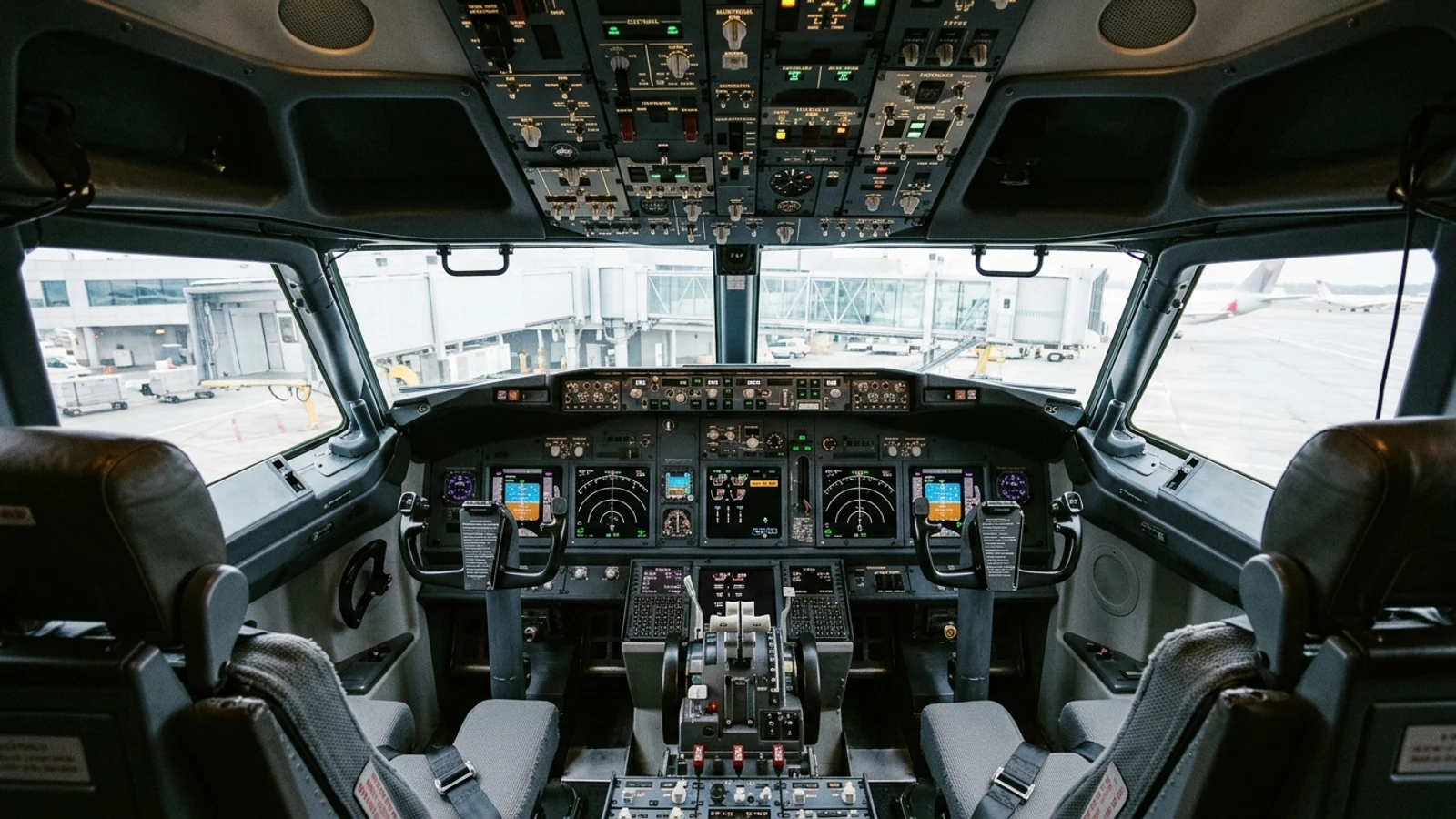
Advancements in Cockpit Automation and Safety
The year 2026 marks significant progress in aviation technology, with a concerted industry move toward flight decks that prioritize enhanced situational awareness. Across various platforms including long-range airliners, business jets, and military fighters, developers are implementing automation that serves as a partner to the pilot rather than a mere tool. By integrating sophisticated software and ergonomic design, the current generation of flight decks is designed to manage pilot workload more effectively during complex operations. Source
The Gulfstream G700 stands out in business aviation for bringing airliner-grade automation to private aircraft through its Symmetry Flight Deck. This system features electronically linked active control sidesticks that provide tactile feedback, ensuring the non-flying pilot receives a physical cue regarding control inputs. In addition to these controls, the G700 includes dual heads-up displays and a Combined Vision System that enhances visibility in adverse weather conditions, contributing to a high safety standard for corporate travel. Source
Furthering its commitment to performance and pilot alertness, the G700 offers a pressurized cabin environment maintained at an equivalent altitude of 2,840 feet. By avoiding air recirculation and replacing the cabin environment with fresh, sterilized air every two to three minutes, the design aims to keep flight crews oxygenated and sharp. Combined with the Predictive Landing Performance System, which estimates the specific stopping point on a runway, these features define the G700’s reputation among modern private jets. Source
The Airbus A380 remains a landmark in commercial aviation, having pioneered the paperless flight deck. Pilots rely on an Onboard Information System for manuals and performance calculators, a practice that evolved into the now-ubiquitous electronic flight bag. The cockpit utilizes eight large LCD screens and sidestick controls, moving away from the traditional central control yoke. To assist in maneuvering the heavy jet, pilots access live video feeds from cameras mounted on the nose-gear and tail-fin for improved visibility. Source
Safety systems on the A380 are characterized by Normal Law automation, which includes protections such as refusing to stall the aircraft, regardless of extreme sidestick inputs from the crew. If both pilots input commands simultaneously, the system sums these inputs unless one pilot asserts priority. Additionally, the A380 introduced the Brake-to-Vacate automation, which assists in taxiing efficiency. Despite its massive size and weight exceeding 500 tons, the aircraft is widely described by operators as remarkably stable and agile. Source
In the fighter aircraft sector, the F-35 represents a departure from traditional glass-based heads-up displays. The pilot utilizes a helmet-mounted visor that projects a virtual screen, following the pilot's eye movements to ensure flight data is visible even when the pilot looks away from the forward dash. Furthermore, the F-35’s Distributed Aperture System uses six infrared cameras in the fuselage to provide 360-degree awareness, effectively allowing the pilot to see through the floor of the cockpit during flight operations. Source
The Airbus A350XWB continues the trend of advanced glass cockpits, featuring six large, high-resolution displays. Unlike Boeing’s conventional approach, the A350 employs fighter-style sidesticks, creating space for a large fold-out table and integrated keyboard. The aircraft’s avionics function as a strict safety net, with the computer interpreting pilot inputs as requests that must pass internal safety validation. This includes preventing stalls or bank angles exceeding 67 degrees and utilizing wing flexibility to mitigate turbulence. Source
The Boeing 787 Dreamliner is frequently recognized for its Required Navigation Performance 0.1 capability, allowing the aircraft to maintain an extremely precise flight path. By monitoring performance and alerting pilots if navigation accuracy drifts beyond 0.1 nautical miles, the 787 can fly point-to-point without traditional ground navigation aids. The flight deck also features five 15-inch screens and automated smooth-ride technology, which counters turbulence by adjusting flight controls based on real-time sensor data processed by the avionics suite. Source
Ground Infrastructure Modernization
Complementing these airborne systems, Nadi International Airport in Fiji is modernizing its ground infrastructure through the installation of four Advanced Visual Docking Guidance Systems. These units, which were donated by Canberra Airport, are designed to measure aircraft speed and detect deviations from the centerline with centimeter-level precision. This addition aims to improve turnaround efficiency and enhance parking accuracy for airlines operating into the airport, marking a significant upgrade to existing ground service equipment. Source
The integration project at Nadi involved technical personnel from Canberra Airport working alongside experts from global aviation technology provider ADB SAFEGATE. The installation is part of a broader ten-system donation facilitated by the Australian Government through the Australia-Pacific Partnerships for Aviation Program. This collaboration serves as a practical model for extending the operational lifecycle of proven aviation hardware while fostering stronger regional ties and technical expertise sharing across the Pacific aviation sector. Source
Following the completion of the installation for the first four systems, Fiji Airports plans to integrate the remaining six units from the original donation. Acting Chief Executive Kelepi Dainaki stated that this infrastructure upgrade aligns with the organization's goal of becoming a future-ready operator. While the initial four systems are installed, they are expected to become fully operational in the upcoming year, providing airlines with consistent guidance for maneuverability within the busy apron at Nadi. Source
Both the advancements in flight deck software and the deployment of new docking guidance systems underscore a broader theme of efficiency in aviation. While the cockpit technology focuses on reducing pilot fatigue and maintaining optimal safety margins, ground-side improvements like the ones in Fiji focus on precision during the final phases of parking. Together, these technological leaps illustrate how both manufacturers and airport operators are leveraging automation to ensure safer and more reliable operations for passengers and crew alike. Source

