On November 7, Alaska Airlines flight AS322, operating from Dallas Fort Worth International Airport to Seattle-Tacoma International Airport, encountered significant difficulties due to adverse weather conditions. The Boeing 737-900ER aircraft, registered as N277AK, was forced to abandon its planned approach into Seattle-Tacoma. According to reporting from Simple Flying Aviation Discovery, the crew made the decision to divert the flight to Yakima Air Terminal, located approximately 100 miles from the intended destination, to land safely around 9:25 PM. Source
The situation for the 127 passengers and crew on board deteriorated shortly after the landing in Yakima. While the aircraft was undergoing refueling procedures, ground crews identified a faulty fuel indicator. This mechanical issue necessitated the grounding of the Boeing 737-900ER for the duration of the night. As reported by News Talk KIT, the aircraft remained on the ground because the indicator malfunction required specialized inspection from engineers who needed to travel from Seattle to perform the assessment. Source
Passengers were held on the aircraft for more than two hours following the arrival at Yakima, not being permitted to disembark until approximately 12:15 AM on the following day. Once they were allowed to leave the plane, they were informed that the flight would not be resuming its journey until a later date. This delay left the 127 passengers without immediate lodging or onward transportation as the airport and local rental car facilities were already closed for the night. Source
The operational response faced significant challenges regarding passenger accommodation. Although a representative for Alaska Airlines reportedly offered to provide rooms initially, no hotel bookings or meal vouchers were ultimately issued. Simple Flying Aviation Discovery notes that the carrier classified the disruption as weather-related, which the airline treats as a circumstance outside of its control according to its stated policies on passenger assistance. Consequently, the airline did not facilitate alternative lodging for the stranded travelers. Source
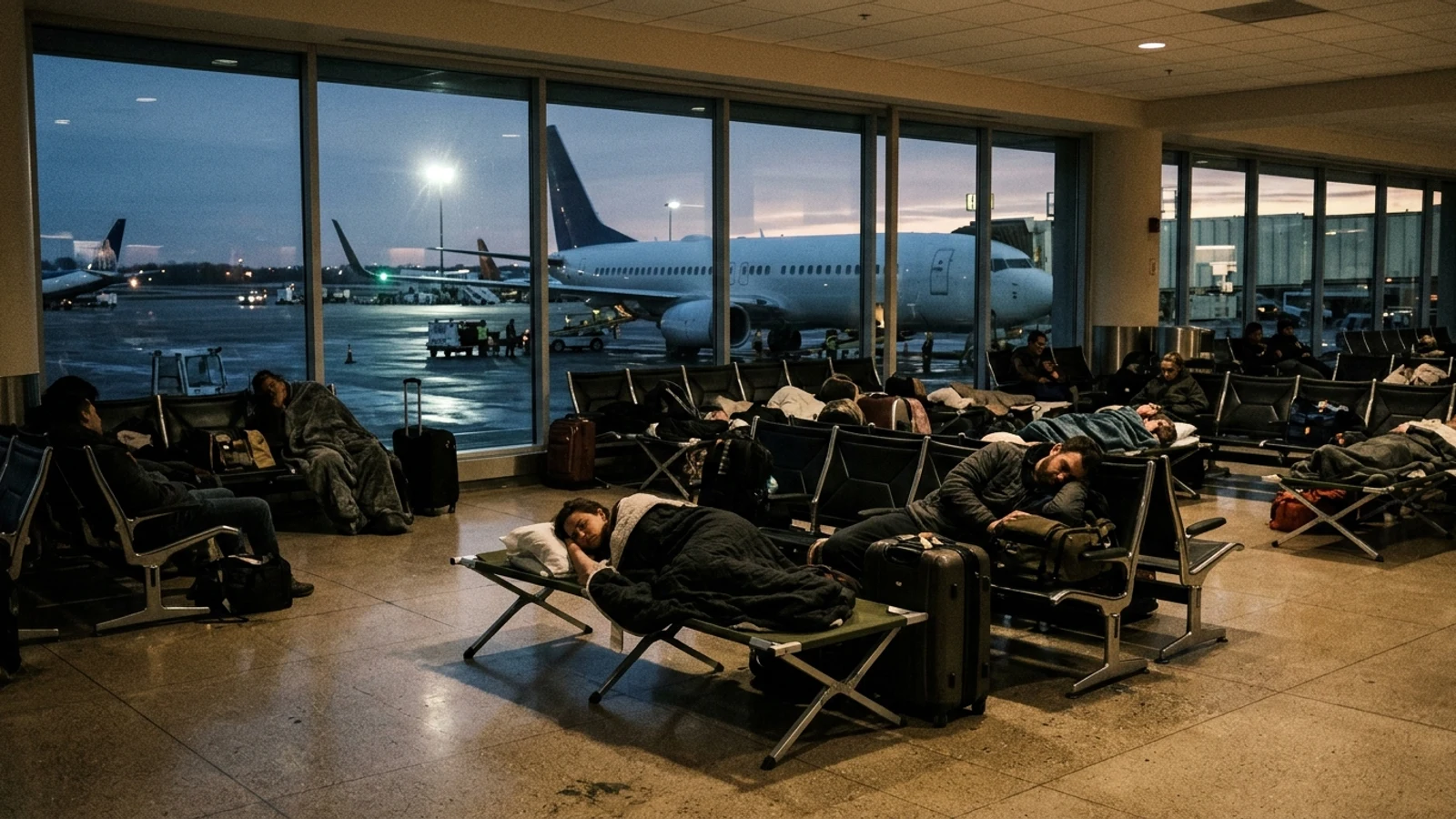
In response to the growing concern among the passengers, Yakima Air Terminal Director Christopher Hopkins initiated a call for emergency support. This action led to the arrival of the American Red Cross, which provided essential supplies including cots, blankets, toiletries, water, and infant formula. Tony Miller, the director of the Yakima County Office of Emergency Management, arrived on-site within 20 minutes to coordinate the distribution of aid to those remaining in the terminal throughout the night. Source
Not all passengers spent the night within the terminal facility. It is reported that approximately 50 individuals utilized the cots provided by the Red Cross, while the remaining passengers likely made their own arrangements for alternative transportation or local accommodation. For those who stayed at the terminal, the experience was further complicated by the fact that their luggage remained locked in the cargo hold of the aircraft, and they were informed that re-entry into the secure area would be impossible. Source
Conditions within the terminal changed again at approximately 4:00 AM when passengers were required to vacate the secure area of the terminal. Many of the travelers were forced to relocate to an under-construction office and meeting space within the terminal building to complete the night. While the airline did not provide the initial hotel accommodations, staff from the airline's subsidiary, Horizon Air, provided assistance by purchasing fast food for the passengers during the night. Source
The mechanical issues were not addressed until the following day. Maintenance teams from Alaska Airlines arrived at the Yakima Air Terminal on Sunday morning to inspect the aircraft. Following the successful repair of the faulty fuel indicator, the aircraft finally departed from Yakima at 2:02 PM on Sunday as flight AS9230. The flight landed at its original destination, Seattle-Tacoma International Airport, approximately 30 minutes after its departure from the diversion airport. Source
The incident highlights the operational complexities of regional airports during unscheduled diversions. Yakima serves as a secondary airport for flights destined for Seattle that are forced to divert due to weather. The airport has seen significant influxes of passengers during prior diversions, including two Delta Air Lines flights in March 2026 that carried over 300 passengers. These events have prompted local officials to refine their readiness program and coordination with the Red Cross. Source
Under current standard practices for major US airlines, accommodations are provided only when a disruption is determined to be within the carrier's control. Alaska Airlines maintains that incidents resulting from weather, air traffic control, or other external factors are excluded from their obligation to provide hotel or meal vouchers. The ambiguity in the Yakima case stemmed from the fact that the initial diversion was weather-related, but the subsequent delay was caused by a mechanical failure of the fuel indicator. Source
Looking ahead, the landscape for passenger compensation is expected to evolve. New Department of Transportation (DOT) rules are set to clarify which scenarios exempt airlines from providing assistance. Under these upcoming regulations, ten specific causes for disruption will be excluded from airline responsibility, including cases of unscheduled maintenance that cannot be deferred. This regulatory shift may impact the frequency with which passengers receive complimentary hotel rooms or other assistance during future mechanical-related flight groundings. Source
The event serves as a case study for the limited facilities available at small regional air terminals. With only two daily flights to Seattle currently scheduled at Yakima by Horizon Air, the terminal is not structured for the overnight housing of 127 travelers. The coordination between airport management, county emergency services, and the Red Cross was essential in managing the immediate welfare of the stranded passengers after the airline's own representatives left the terminal during the overnight period. Source