
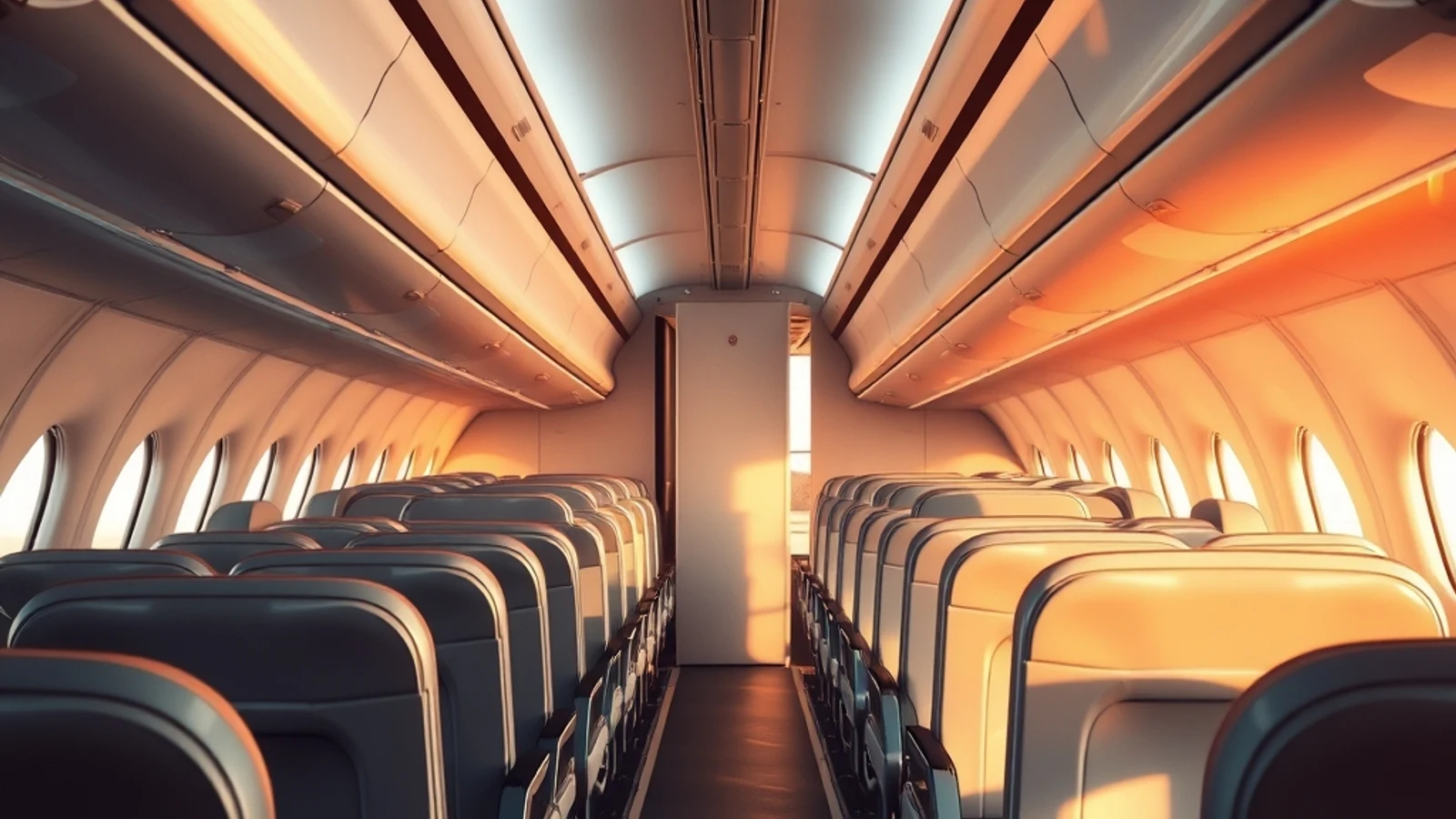
The Safety Rationale Behind Aft-Facing Seating
The practice of cabin crew sitting in rearward-facing jumpseats during takeoff, landing, and taxiing is a deliberate design choice rooted in aviation safety. According to Simple Flying Aviation Discovery, these positions are critical for protecting staff during the most vulnerable phases of flight. Because sudden forward deceleration or impact is more likely during these times, a rear-facing seat acts to distribute crash forces more effectively across the head, neck, and torso of a crew member compared to forward-facing alternatives. Source
Simple Flying Aviation Discovery notes that a rear-facing seat backrest functions similarly to child safety car seats, absorbing impact force rather than concentrating it solely on a chest strap. This orientation helps prevent severe strain on the spine and neck during sudden stops. By remaining secure and uninjured, crew members maintain the ability to stay conscious and mobile, which is essential for initiating emergency evacuations, directing passengers, and utilizing safety equipment located near exit doors. Source
Jumpseats are strategically situated near emergency exits to ensure rapid response times. While the standard configuration typically faces the tail of the aircraft, some jumpseats are oriented forward or sideways due to specific cabin layouts or door positions. Regardless of orientation, these seats must meet stringent certification rules, often employing multipoint harnesses. On a typical commercial jet, a four-point harness secures the crew member, and the seat base is designed to retract automatically to keep the aisle clear during an emergency. Source
Beyond physical impact protection, the rearward orientation provides cabin crew with a panoramic view of the cabin. Simple Flying Aviation Discovery reports that this perspective allows staff to monitor passengers, detect potential hazards, and confirm that all safety protocols—such as remaining seated when seat belt signs are illuminated—are followed. This vantage point is particularly useful for spotting unruly behavior or identifying passengers who may be experiencing medical emergencies during critical flight phases. Source
While aft-facing seats offer distinct safety advantages for crew, their use for passengers remains rare. According to Simple Flying, most airlines prioritize forward-facing configurations due to passenger preferences, concerns regarding motion sickness, and the added weight of rear-facing seats, which can increase overall fuel consumption. Furthermore, many passengers report feeling uncomfortable in configurations where they are forced to sit directly opposite strangers, as noted in reports regarding unconventional seating layouts. Source
Instances of passenger-facing aft seats are primarily limited to business-class cabins on certain widebody aircraft. Carriers such as American Airlines, United Airlines, Qatar Airways, and British Airways occasionally incorporate these seats, though they represent a small percentage of total fleet seating. Simple Flying notes that these arrangements are often chosen to maximize space in premium cabins rather than specifically for passenger crash safety, even though the safety benefits of rear-facing positions are well-documented in historical aviation research. Source
The discomfort associated with passenger-facing-passenger layouts has gained social media attention. For example, a traveler on a regional flight in Sweden shared a viral account of being seated face-to-face with other passengers. The report from the New York Post highlights that while such configurations might theoretically allow for more legroom, travelers often perceive the lack of privacy and the resulting awkward social interactions as significant downsides to the arrangement during commercial flights. Source
Historically, the concept of aft-facing passenger seats has been studied for its potential to improve survivability in accidents. A 1952 edition of Naval Aviation News, cited by the New York Post, suggested that passengers on Navy transport planes had a ten-fold better chance of surviving crashes in rear-facing seats. Despite these findings, the infrequency of major commercial aviation accidents has meant that the widespread adoption of rearward-facing passenger seats has not been a high priority for commercial carriers. Source
Passenger experience on these seats is often mixed. As observed in reviews of British Airways business-class products, the primary benefits include improved window views without neck strain. However, drawbacks frequently cited include increased susceptibility to motion sickness, the inability to easily work on laptops, and, for many, a lingering sense of uneasiness when facing fellow passengers for the duration of a flight. Airlines continue to balance these factors as they innovate with new cabin designs like lie-flat options. Source
Comparative Overview of Aft-Facing Seating
The following table summarizes common observations regarding rear-facing seat configurations as documented across the sources. Source
| Feature | Crew Jumpseats | Passenger Aft-Facing Seats | Source
| :--- | :--- | :--- | Source
| Primary Purpose | Safety and emergency response | Space maximization | Source
| Commonality | Industry standard | Rare/Premium cabin only | Source
| Reported Pros | High impact force absorption | Superior window visibility | Source
| Reported Cons | N/A | Motion sickness/Lack of privacy | Source
Ultimately, while the physics behind aft-facing seating remains a validated safety measure for protecting the human body during rapid deceleration, the commercial implementation for passengers is constrained by human factors. Airlines are tasked with managing both the physical safety requirements defined by regulators and the subjective comfort of their customers. As cabin design evolves, the industry continues to weigh these safety merits against the passenger demand for privacy and orientation in long-haul travel environments. Source

