
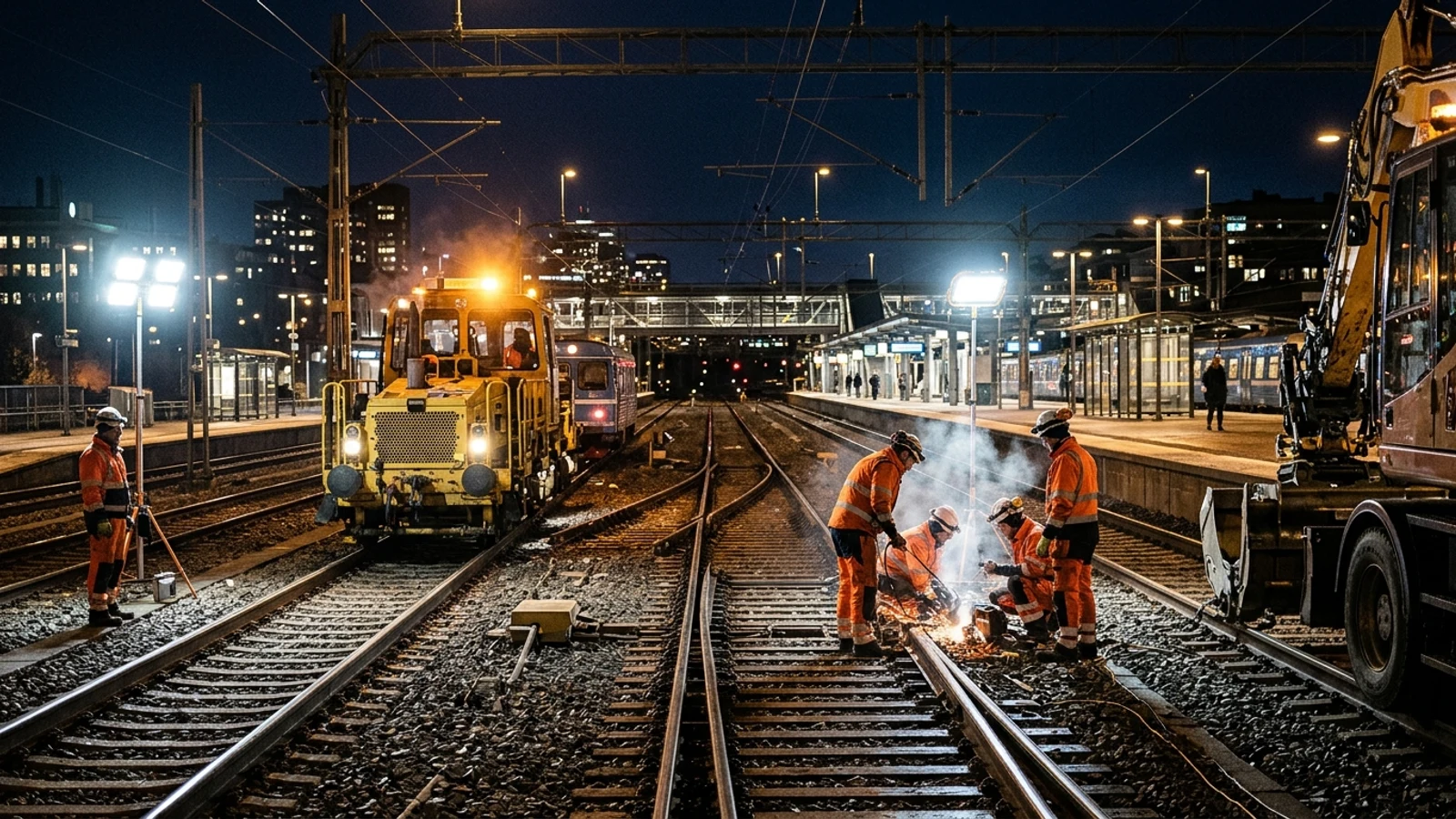
Operational Changes and Scheduled Diversions
The Swedish Transport Administration, known as Trafikverket, has released an official traffic notice regarding scheduled engineering works within the Stockholm railway network. These infrastructure improvements are set to take place over four consecutive days, specifically from 24 November 2026 to 27 November 2026. During this period, passenger travel on SL commuter train services will face operational adjustments, necessitating changes to standard routes for those moving through the city center during designated late-night and early-morning hours. Source
According to the transit notice, the impacts are confined to a specific window each day between 00:45 and 04:30. Throughout these nightly intervals, affected commuter trains will be redirected to terminate or pass through Stockholm Central Station. This is a departure from the standard routing, which typically features Stockholm City as a primary hub for commuter services. Travelers are advised that the disruption is localized to these specific times and does not constitute a full network closure. Source
A critical component of this diversion is the suspension of stops at three major locations: Årstaberg, Stockholm Södra, and Stockholm Odenplan. Passengers who usually rely on these stations to reach workplaces, residential districts, or other transport connections will be required to seek alternative SL services. Because these specific platforms will remain unserved by the rerouted trains, commuters must plan their journeys well in advance to account for the absence of these stops and potential transfers. Source
Guidance for Travelers and Tourists
The transition from Stockholm City to Stockholm Central Station introduces new complexities for both local commuters and international visitors. While both stations are central, they function as separate entities within the metropolitan transport framework. Passengers should not assume that the shift to Stockholm Central provides identical connectivity to their standard intended routes. Navigating this change requires understanding which alternative connections are available from the central station to reach final destinations efficiently during the overnight hours. Source
International tourists unfamiliar with the local transport layout may find these modifications particularly challenging. Relying on commuter rail to move between hotels, tourist attractions, and major transport hubs, visitors are encouraged to verify their routes before departure. Since no universal alternative replacement bus route has been established for all passengers, identifying the correct public transport connection requires personal initiative and consultation with official travel planning resources before beginning a late-night or early-morning journey. Source
Trafikverket has explicitly advised that passengers should allocate additional time for their journeys while these works are in progress. The potential for missed connections increases for travelers who work with tight transfer windows or those who have limited experience with Stockholm's transit network. While the authority has not provided a specific estimate of the total additional time required for every trip, the consensus remains that early preparation is necessary to manage the impact of the temporary routing changes effectively. Source
It is important to note that the scope of this announcement is limited to the identified commuter train disruptions. The official notice does not confirm any resulting changes to international flight schedules, airport operations, or long-distance railway timetables within Sweden. However, those arriving at or departing from the city during these windows who need to connect to other forms of transport are encouraged to assess how the rail diversion might influence their overall itinerary, particularly if traveling with luggage or children. Source
Travelers requiring specific accessibility arrangements should exercise caution, as the current announcement lacks detailed information regarding modified accessibility at the diverted stations. Because each journey's requirements can vary, verification through official channels remains the best course of action. The situation highlights the inherent challenges of maintaining critical rail infrastructure in a busy capital, where temporary service adjustments remain a necessary part of ensuring the long-term reliability and functionality of the public transport system. Source
In summary, the period from 24 to 27 November 2026 will see specific operational shifts designed to accommodate railway engineering requirements. By utilizing Stockholm Central Station as a temporary alternative to Stockholm City and bypassing intermediate stops, the authorities aim to complete the necessary work while maintaining the flow of traffic. Passengers who remain informed and prepare for the modified service are better positioned to complete their travels without significant complications during these four specific overnight shifts. Source
Ultimately, the responsibility rests with the passenger to identify the most suitable alternatives based on their specific origin and destination. By consulting the latest updates from both Trafikverket and SL, individuals can manage their expectations and travel times. While these infrastructure projects contribute to the eventual improvement of the network, they necessitate a temporary departure from familiar routines that travelers have come to expect when using Stockholm’s commuter train services during normal operation hours throughout the year. Source
The following table outlines the key constraints and affected areas of the planned railway maintenance to assist passengers in planning their late-night journeys across the affected four-day window in November 2026. Source
| Feature | Details |
|---|---|
| Maintenance Dates | 24–27 November 2026 |
| Affected Hours | 00:45 – 04:30 daily |
| Primary Hub Change | Diverted to Stockholm Central (from City) |
| Skipped Stations | Årstaberg, Stockholm Södra, Stockholm Odenplan |

