
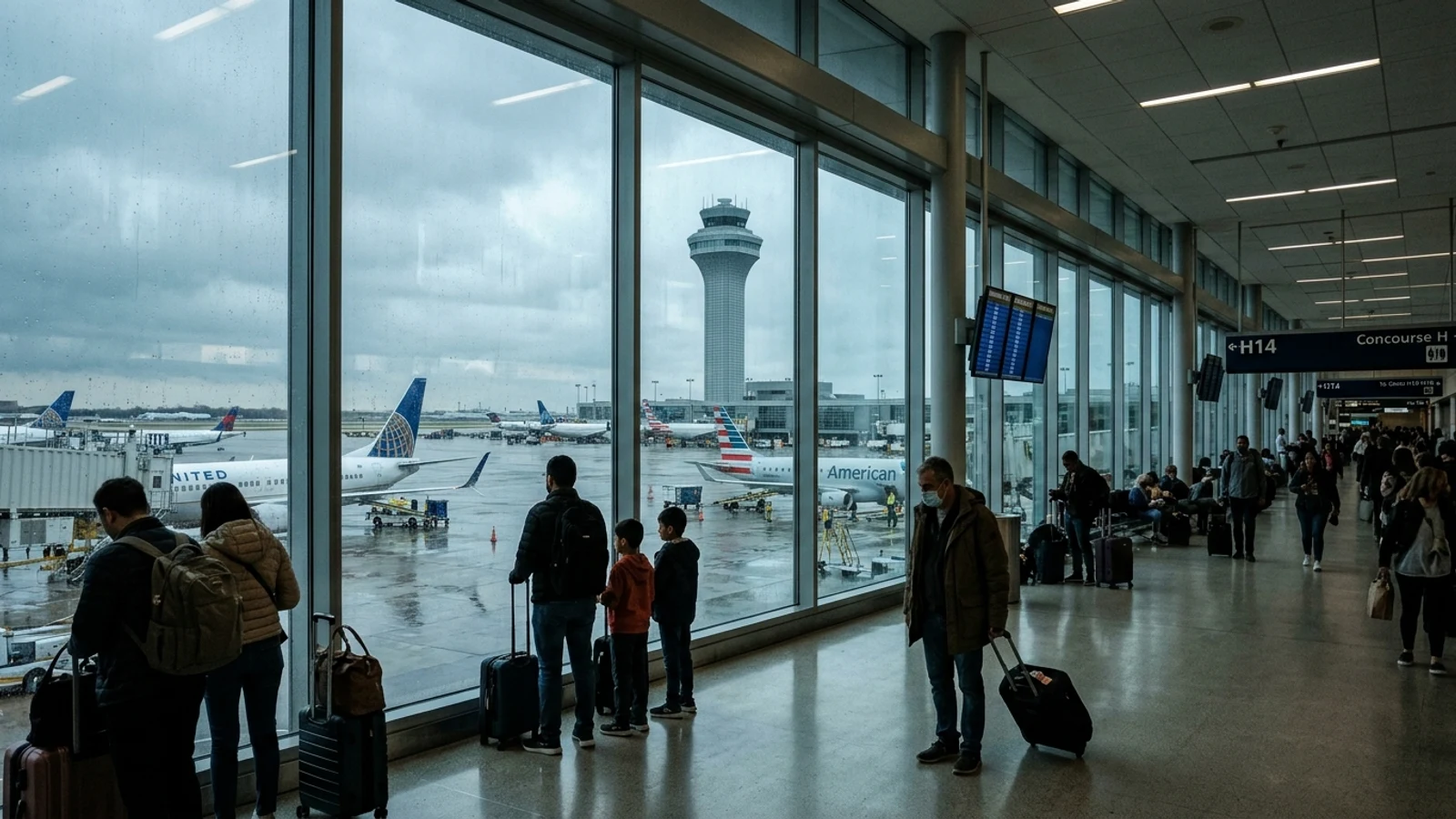
The Federal Aviation Administration (FAA) implemented a temporary restriction on incoming flights at Chicago O'Hare International Airport on Monday, 23 November 2026. According to reporting from Travel And Tour World Aviation Discovery, this interruption was driven by staffing constraints within the air traffic control environment. While the restriction caused significant concern for holiday travelers, it did not constitute a complete closure of the airport facility, as departing flights continued to operate throughout the period of the restriction. Source
This incident occurred just as millions of Americans prepared for travel during the Thanksgiving week. The American Automobile Association (AAA) projected in its November 2026 forecast that approximately 81.5 million Americans would travel at least 50 miles from their homes for the holiday. As families contend with these travel volumes, they are also navigating a 17% increase in average domestic return airfares compared to 2025 levels, heightening the need for consistent and reliable aviation performance across the domestic network. Source
Chicago O'Hare remains a critical hub for international and domestic connectivity. The airport links travelers across various regions, including Asia, Europe, and other international destinations, often serving as a gateway for visitors entering the United States. Because of this strategic role, even localized disruptions can have a cascading impact on passenger itineraries. Travelers connecting through O'Hare often have tight windows for their next departures, and delayed arrivals can lead to missed connections and additional costs. Source
The operational challenges facing the airport are part of a broader discussion regarding the FAA's air traffic control workforce. Current strategies from the agency include balancing recruitment with the extensive training required for controllers to manage complex airspace independently. The 2026 workforce plan from the FAA noted a base of approximately 11,000 fully certified controllers, with an stated goal of reaching 12,563. These figures underscore the time-intensive nature of maintaining staffing levels for safety and operational efficiency. Source
FAA Air Traffic Control Workforce Targets
The following table outlines the current FAA staffing parameters as referenced in the 2026 workforce planning documentation to provide context on the current industry recruitment objectives. Source
| Workforce Category | Stated Figure |
|---|---|
| Current Certified Controllers | ~11,000 |
| Target Controller Count | 12,563 |
Operational reliability has faced recent challenges beyond the Chicago incident. On 13 November 2026, a separate nationwide aviation event occurred due to a telecommunications failure within FAA systems, which necessitated a nationwide ground stop. The agency subsequently reported that this event resulted in approximately 12,462 flight cancellations across the national system. These events illustrate how the integration of aviation technology, scheduling, and control infrastructure can create systemic pressure when individual components experience failures. Source
Beyond technological and staffing issues, the Thanksgiving holiday period faces environmental risks. The US National Weather Service has issued forecasts anticipating unsettled conditions across the East and West Coasts. The presence of heavy rain and strong winds could potentially impact airport operations. Chicago, as a central node, faces the prospect of indirect delays if incoming aircraft from weather-affected regions are grounded or delayed. This interaction of weather and infrastructure requires passengers to monitor status updates closely. Source
The tourism industry at large feels the effects of these operational fluctuations. Airlines are often tasked with managing scheduling adjustments and rebooking passengers affected by connectivity issues. Hotels and tour operators also face potential logistical shifts when arrival times are delayed or flights are cancelled, as fixed itineraries are disrupted. For local economies like Chicago's, which rely heavily on the consistent influx of business and leisure travelers, the reliability of airport operations is a significant economic factor. Source
Passenger Guidance and Operational Stability
Passengers are advised to prioritize information directly from their respective airlines rather than relying on generalized assumptions about the status of the airport. While the O'Hare ground stop was temporary and operations resumed, the frequency of recent disruptions has increased the necessity for traveler preparation. Checking the status of both original and connecting flights is a recommended step for those navigating the airspace during this high-volume period to mitigate the impact of unforeseen delays. Source
The broader impact of these developments suggests that aviation network resilience is being tested by concurrent factors. Whether through technological reliability or workforce sufficiency, the system's ability to handle peak demand periods remains under intense scrutiny. As the industry moves forward, the focus remains on closing the gap between current staffing levels and the established targets set by the FAA, while simultaneously protecting the integrity of the national airspace against isolated technological failures. Source
Ultimately, the stability of American aviation depends on the convergence of reliable communication, trained personnel, and adaptive management of weather-related risks. While the incident at O'Hare on 23 November did not result in systemic failure, it served as a indicator of the current stresses within the network. Travelers are encouraged to maintain flexibility in their holiday plans and utilize official carrier channels for real-time information as the holiday travel season continues across the United States. Source

