
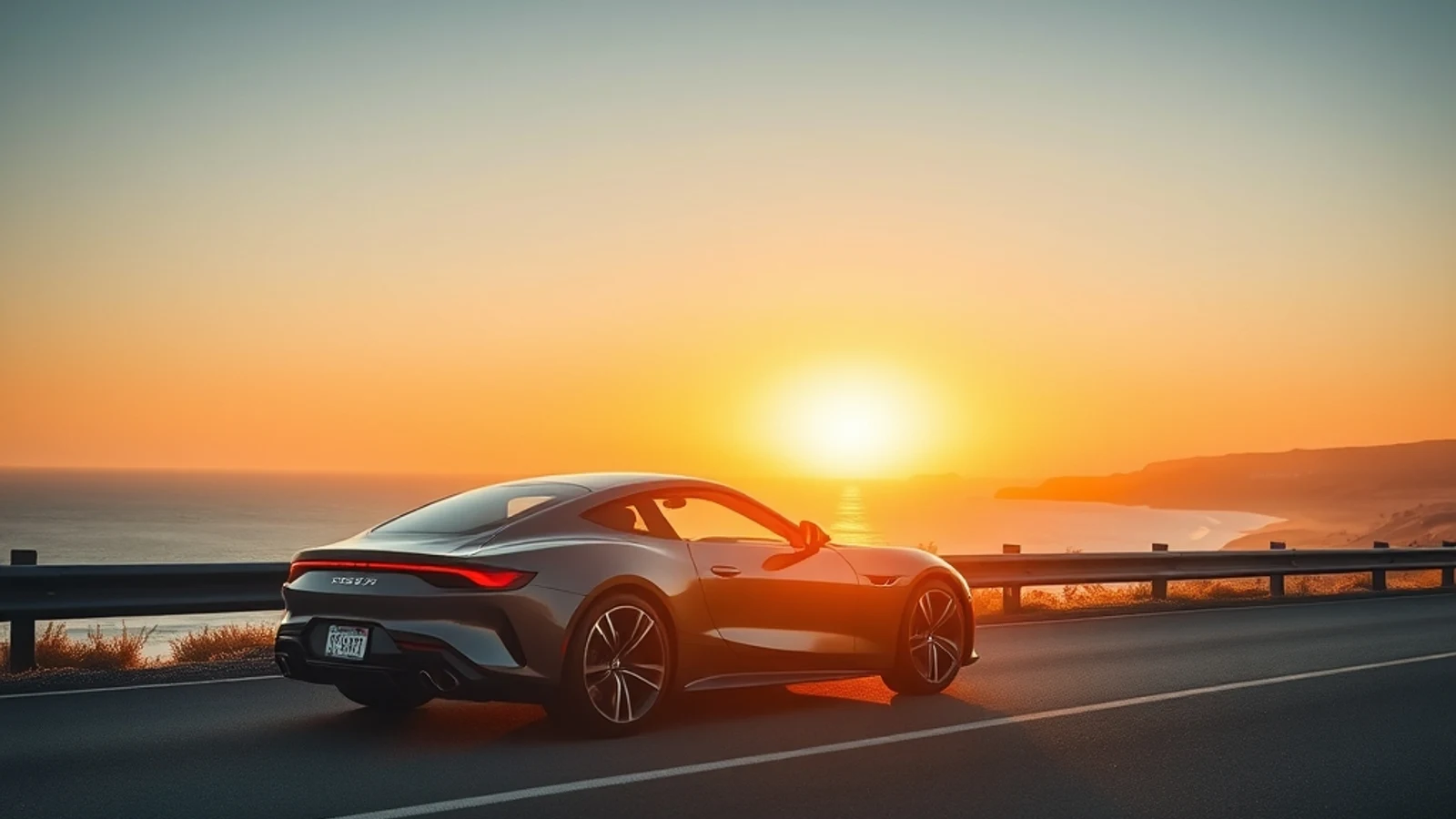
The Lotus Evora was initially introduced to the market in 2009, with sales beginning in the United States in 2010. Positioned as a direct challenger to the Porsche Cayman, the vehicle was designed on an all-new platform intended to restore company profitability. It distinguished itself within the Lotus lineup as a mid-engined 2+2 configuration, offering greater size and daily usability compared to the smaller, more focused Elise model that was available concurrently during its early production years. Source
Market positioning for the Evora emphasized a balance between practicality and performance. Designers incorporated a large trunk capable of carrying golf clubs alongside a rear seating area intended for children or smaller adults. Featuring a swept windshield and a distinct visor-like side window aesthetic, the car was characterized by its staggered wheel setup, which contributed to a performance-oriented stance. These design choices aimed to capture buyers interested in both daily convenience and high-speed track capability. Source
At the core of the Evora's mechanical setup is a Toyota-sourced 3.5-liter V6 engine. Power outputs for this powerplant have varied significantly across model variants, ranging from 280 horsepower up to 420 horsepower in higher-performance iterations. Transmission options included a six-speed manual or an automatic gearbox. With a curb weight maintained below 3,000 pounds, all versions of the vehicle were capable of reaching 60 miles per hour in under five seconds, prioritizing handling dynamics for diverse road conditions. Source
The Evora 400 variant, which debuted in 2015, represents a significant focus for collectors and enthusiasts. The designation refers to the specific power output delivered by its tuned, supercharged engine. Beyond engine modifications, the 400 model introduced a redesigned body kit specifically intended to improve aerodynamic downforce. These vehicles were also equipped with new wheel designs and an active exhaust system, allowing the car to achieve a top speed of 186 miles per hour according to manufacturer performance data. Source
Recent auction data from November 2026 highlights the market activity for this specific trim. A Racing Green Metallic example paired with tan leather interior sold on the Bring A Trailer platform for $66,500. Documentation associated with this sale indicated that this specific color and transmission configuration is rare, with only four such units estimated to have been produced during the entire production run. The vehicle featured 19,000 miles on the odometer at the time of the sale. Source
Pricing for the Evora 400 has demonstrated stability compared to its original retail price of over $100,000. Another unit with 11,000 miles recently sold for $70,000, confirming that values remain resilient in the used market. These figures suggest that demand persists for the model as a driver-focused, combustion-engine alternative to modern sports cars, despite the discontinuation of the Evora lineup in 2021 when it was superseded by the Lotus Emira in the global product catalog. Source
The following table provides a comparison between the Evora 400 and the 2017 Porsche Cayman S, as detailed by CarBuzz regarding market pricing and technical attributes observed in current marketplace listings. Source
| Feature | 2017 Lotus Evora 400 | 2017 Porsche Cayman S |
|---|---|---|
| Market Price | $60,000–$70,000 | $60,000–$70,000 |
| Seating Capacity | 2+2 | 2 |
| Horsepower | 400 hp | ~350 hp |
| Typical Transmission | Manual available | Harder to find manual |
Ownership of the Evora 400 is considered accessible due to the use of the Toyota 2GR-FE engine. This same engine architecture is shared with high-volume vehicles like the Toyota Camry and RAV4, which facilitates easier access to replacement parts compared to other premium sports cars. While prospective owners should monitor specific service items—such as oil-line maintenance for supercharged models and potential gearbox notchiness—the maintenance requirements are generally reported as less demanding than those of German competitors. Source
Structural and suspension integrity remain critical for potential buyers. The Evora utilizes an aluminum tub structure and specialized suspension components, including Bilstein dampers and Eibach springs. Because repairs to these elements to return the vehicle to original manufacturer standards can be financially significant, thorough inspection of service records and documentation regarding prior damage is recommended. Proper maintenance and historical care are primary factors in preserving the long-term value of these vehicles. Source
Despite initial company ambitions to achieve a production volume of 2,000 units annually, the total Evora production run is estimated at approximately 6,117 units. Various factors, including global financial conditions and internal challenges, influenced these totals. However, the model retains a strong base of support among enthusiasts. Analysts suggest that interest in the car is likely to continue as the automotive market transitions toward more electrified and automated platforms, leaving the gas-powered Evora as a final expression of a specific design philosophy. Source

