
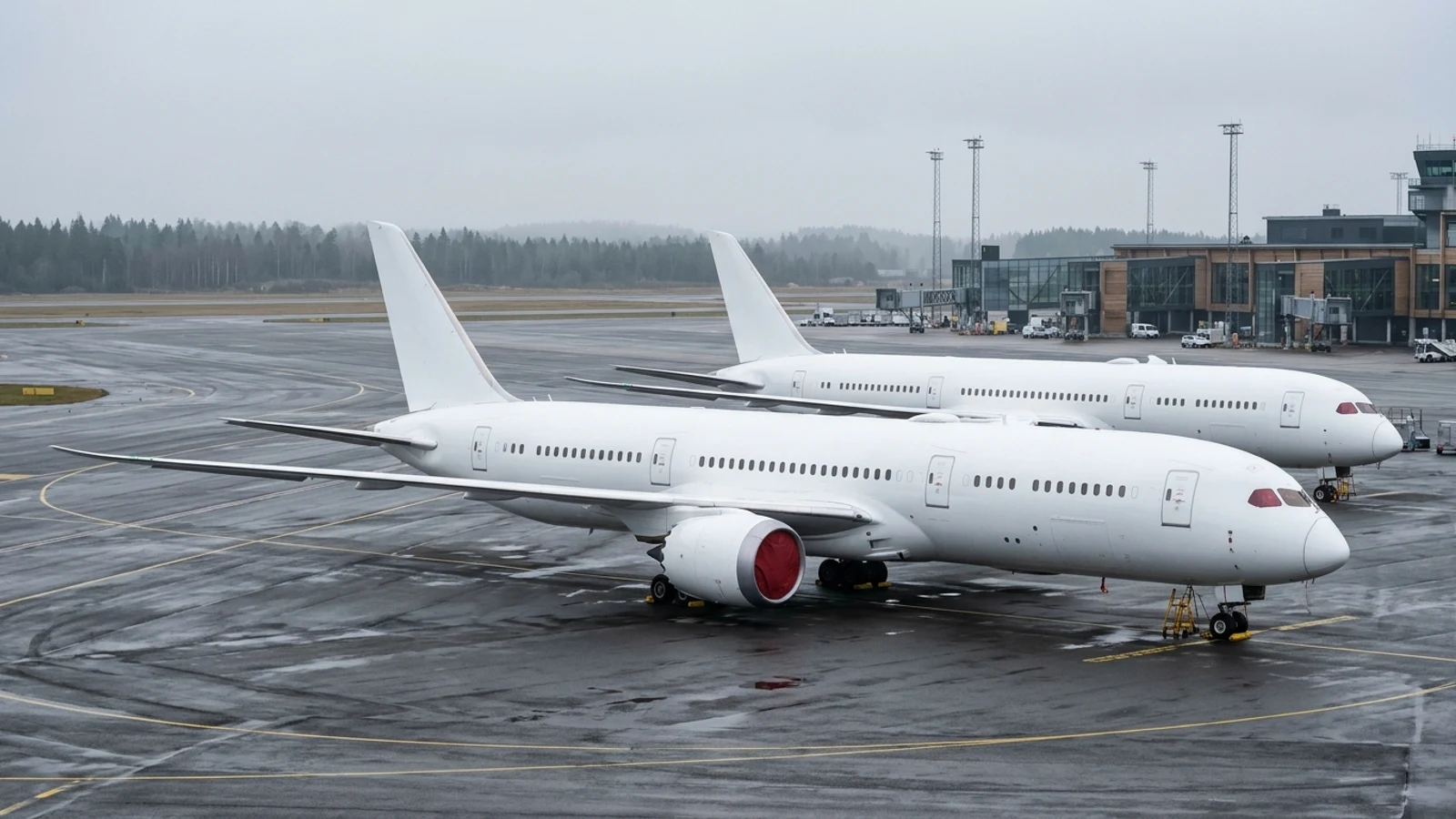
Operational Collapse and Fleet Status
Norse Atlantic Airways has announced that its Norwegian operating subsidiary is moving to file for bankruptcy protection. This decision follows a failed effort by the carrier to secure necessary emergency financing to continue its operations. The filing is set to be submitted to the Agder District Court in Norway. While the Norwegian unit is entering bankruptcy, the airline's parent entity and its UK-based subsidiary are not currently part of this specific legal filing, as management persists in seeking alternatives to salvage the remaining business operations. Source
The critical juncture for the airline occurred after it confirmed that its aircraft lessors had issued formal notices terminating lease agreements for all 12 of its Boeing 787-9 Dreamliners. These termination notices triggered further instability, coming just one day after the carrier had already made the decision to suspend all flight operations. The airline has stated that it is currently contesting the legal validity of these termination notices, though the operational impact remains immediate and severe for the carrier's future flight schedule. Source
The company's fleet, which consists exclusively of 12 Boeing 787-9 aircraft, was previously spread across several key operating hubs, including Oslo, Stockholm, and London Gatwick. Following the suspension of flights, reports have indicated that at least one of these aircraft, registered as G-CKOF, was being readied for a ferry flight to a storage facility. Long-term storage plans were also noted for other aircraft, including G-CKWD, which had flight plans filed for Teruel, Spain, a known location for long-term aircraft storage. Source
The financial distress facing the airline was highlighted by a significant loss of $94.6 million in the first half of 2026. This deficit was compounded by the absence of fuel hedging arrangements during a period of surging jet fuel prices. The airline also faced operational challenges following the return of six aircraft by IndiGo earlier in November. Furthermore, the carrier's financial difficulties were exacerbated by a $32.9 million noncash charge associated with the conversion of bonds, significantly weakening its liquidity position ahead of the bankruptcy filing. Source
The grounding of the fleet has had immediate consequences for other international operators. Pakistan International Airlines (PIA) suffered significant disruptions after its ACMI contract with Norse Atlantic was terminated without prior notice. Two specific services were cancelled: PK786 from London Heathrow to Islamabad and PK710 from Manchester to Lahore. PIA confirmed that it would discontinue the use of Norse-supplied aircraft for its UK operations, opting instead to utilize its own fleet of Boeing 777 aircraft to fulfill its scheduled service commitments to passengers. Source
Norse Atlantic's transition away from its original low-cost transatlantic model toward ACMI contracts and routes targeting Southeast Asian destinations had significantly altered its operational profile. US Department of Transportation data reflects this pivot, showing that the airline reduced its US-based capacity by more than 60% between the summers of 2025 and 2026. By the time operations ceased, London Gatwick–Orlando was the only remaining scheduled US route operated by the airline, marking a sharp decline from its earlier trans-Atlantic network growth. Source
Leasing and Fleet Specifications
The following table outlines the key aspects of the aircraft leasing agreements that were recently terminated by the major lessors involved in the Norse Atlantic fleet portfolio. The duration of these contracts highlights the long-term commitments that were central to the airline's initial business model established in 2021 when the fleet was first assembled from previously operated Norwegian aircraft. These contractual details represent the financial backbone of the fleet deployment that has now been disrupted by the insolvency proceedings. Source
| Lessor | Aircraft Type | Lease Term |
|---|---|---|
| AerCap | Boeing 787-9 | ~12 Years |
| BOC Aviation | Boeing 787-9 | ~16 Years |
Regarding passenger cabin configuration, the Norse Atlantic Boeing 787-9 fleet is outfitted with a total of 338 seats. Within this capacity, 56 seats are designated as premium class, reflecting the carrier's targeted market positioning for its long-haul services. While these specifications defined the passenger experience across the network, the sudden cessation of flights has left many customers without clear guidance on rebooking or refunds, as the airline has yet to provide specific protocols for handling the resulting travel disruption. Source
The broader industry impact of these events includes a tightening of widebody aircraft availability. As Boeing works through its production backlog, the 12 aircraft returned by Norse may become attractive assets for other carriers looking to expand their long-haul capacity. Potential suitors mentioned by industry observers include LOT Polish Airlines, British Airways, and Thai Airways, each of which has existing experience with or a stated requirement for additional Dreamliner capacity to manage their own fleet growth and operational challenges. Source
CEO Eivind Roald, who has led the company since late 2025 following the departure of founder Bjørn Tore Larsen, has expressed regret regarding the impact on passengers, employees, and partners. The company's leadership remains in discussions with potential investors regarding a possible acquisition that could theoretically provide the financing needed to maintain other parts of the business. However, the company has officially warned that no assurances can be given that a viable solution will be identified to prevent full liquidation. Source
The airline's situation serves as a stark reminder of the financial pressures currently impacting the global aviation industry. Analysts point to the ongoing conflict in the Middle East as a primary driver of increased jet fuel costs, which have disproportionately affected carriers lacking fuel hedging protections. As the bankruptcy process for the Norwegian subsidiary moves forward, the future of the remaining corporate entities remains highly uncertain, with management expected to provide further updates as events develop regarding the potential sale or restructuring of remaining assets. Source

