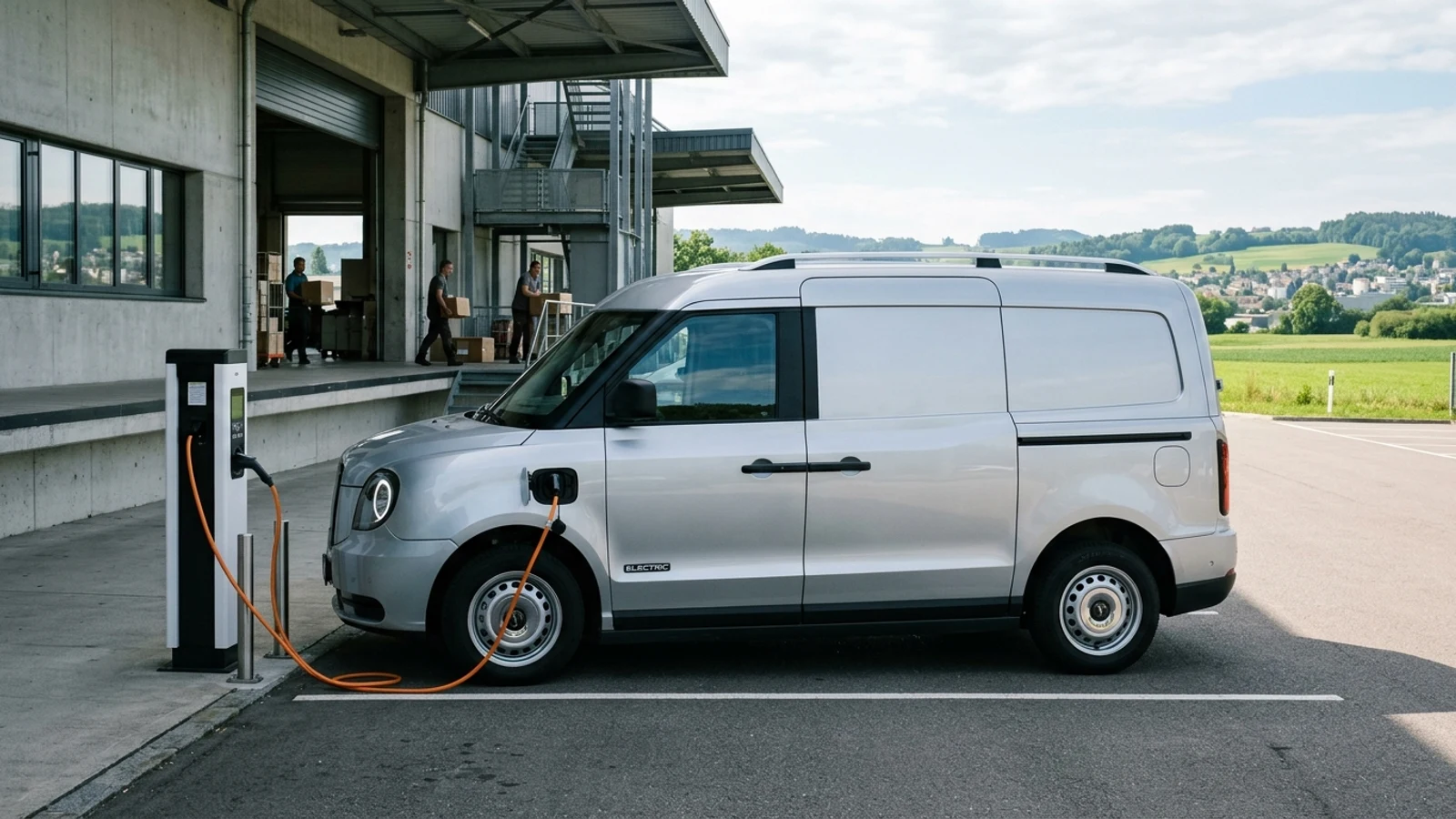
2027 Commercial Van Specifications
Rivian has maintained the specification for its 2027 model year Commercial Van without any design or performance alterations. The vehicle lineup remains focused on two core variants: the short-wheelbase Delivery 500 and the long-wheelbase Delivery 700. Initially developed as an exclusive electric delivery platform for Amazon, Rivian has since expanded the sales of these models to other fleet-based businesses. While these units are available to commercial buyers, they are distinct from the specific gray-blue aesthetic used by Amazon's primary delivery fleet. Source
Both the Delivery 500 and Delivery 700 are equipped with a single electric motor configuration that provides 320 horsepower to the front wheels. All-wheel drive is not offered as an option for these commercial platforms. The vans utilize a lithium-iron-phosphate battery pack that supports 100-kW fast-charging capability. Additionally, the vehicles are outfitted with both J1772 and CCS charging ports, ensuring compatibility with standard commercial infrastructure. The cabin is designed with a focus on simplicity, featuring a flat-bottom steering wheel and dual large screens. Source
Performance and capacity differ between the two available wheelbase configurations. Rivian reports that the Delivery 500 offers a maximum range of 161 miles on a single charge, while the longer Delivery 700 provides an estimated range of 153 miles. Regarding payload and volume, the Delivery 500 is rated for 2663 pounds of payload and provides 487 cubic feet of cargo capacity. The Delivery 700, while offering a significantly larger cargo space of 652 cubic feet, carries a lower payload rating of 2258 pounds. Source
The interior layout of the Commercial Van includes an elevated driver's chair and a dashboard built from durable, chunky plastic. Visibility is managed through a wraparound windshield reminiscent of recreational vehicles, supplemented by a standard 360-degree camera system to assist in maneuvering. Infotainment and instrumentation are displayed across two large screens that share a software interface similar to the system found in the R1T pickup and R1S SUV. A fold-down jump seat is provided to accommodate an additional passenger. Source
Safety and driver assistance remain core components of the van's feature set. Rivian has equipped the Commercial Van with several active systems, including lane-keeping assist, adaptive cruise control, automatic high-beam headlamps, and blind-spot monitoring. Fleet owners looking for specific interior configurations can utilize the empty cargo cavity behind the roll-up rear door to install custom shelving or flooring options, allowing for modular adaptation to diverse business requirements. Source
Market Demand and Financial Performance
The manufacturer noted in November 2026 that it has started delivering two new variants of the EDV to Amazon to support operations in rural environments. These new additions include an all-wheel-drive configuration and a model featuring a higher-capacity battery capable of delivering 30% more range than previous iterations. While these updates target Amazon's specific logistical needs, Rivian continues to manage fleet orders for other commercial operators, setting base pricing for the smaller model at $79,900. Source
Financial reporting for the third quarter of 2026 indicates a strong revenue stream derived from the commercial van segment. Rivian reported receiving $596 million from Amazon in the third quarter alone, a figure surpassing the total revenue generated from the company during the first three quarters of 2025. Cumulatively, Rivian recorded $1.6 billion in revenue from Amazon so far this year, reflecting a nearly threefold increase year-over-year. CEO RJ Scaringe cited the lower running and maintenance costs of the EV platform as a primary driver. Source
Competitive dynamics in the medium-duty electric van market have shifted during 2026. Ford reported that its E-Transit sales declined by 85% compared to the same period in 2025, with fewer than 700 units sold this year, and the company has canceled plans for a next-generation model. Meanwhile, General Motors terminated its BrightDrop electric delivery van line late in 2025. Rivian is currently positioned as a leading manufacturer in the medium-duty segment as other competitors struggle with adoption or exit the sector entirely. Source
While Rivian maintains its core focus on Amazon, the company is actively pursuing new clients. Executives acknowledged ongoing discussions with potential commercial customers beyond existing partnerships. Recent circulating images of an EDV sporting a Walmart delivery livery generated industry speculation, though Rivian declined to comment directly on specific deals. Management emphasized that commercial operators are increasingly evaluating the EDV as a means to achieve greater operational efficiency, which supports the company's broader expansion strategy. Source
On the financial market front, Rivian shares experienced fluctuations in early November 2026. In trading on November 5, the stock price dropped 5.5% to $13.29. However, by November 9, the share price rose 2.9% to reach $14.01. The company reported a net loss of $913 million for the third quarter, which represented a financial improvement compared to the $1.17 billion loss reported in the third quarter of 2025. Analysts currently maintain a consensus hold rating on the stock with an average price target of $19.50. Source
Quarterly performance reports for the period indicate that Rivian beat market expectations, reporting an adjusted loss of $0.48 per share against a forecast loss of $0.64. Total revenue for the quarter was $2.15 billion, representing a 38.3% increase compared to the previous year. Despite these figures, research analysts have issued varied outlooks. Recent notes from financial institutions including Wells Fargo, Cantor Fitzgerald, and DA Davidson have provided mixed adjustments to price targets, reflecting the company's ongoing transition toward long-term profitability. Source
Regarding regulatory data, the EPA does not currently publish fuel-economy numbers specifically for commercial vehicles. Rivian has not provided official energy consumption estimates for the Commercial Van. For safety and compliance data, buyers are directed to consult the official websites of the National Highway Traffic Safety Administration and the Insurance Institute for Highway Safety for detailed crash-test results. The Commercial Van is noted to have warranty terms that differ from those applicable to Rivian's consumer-focused R1T and R1S vehicle lines. Source