
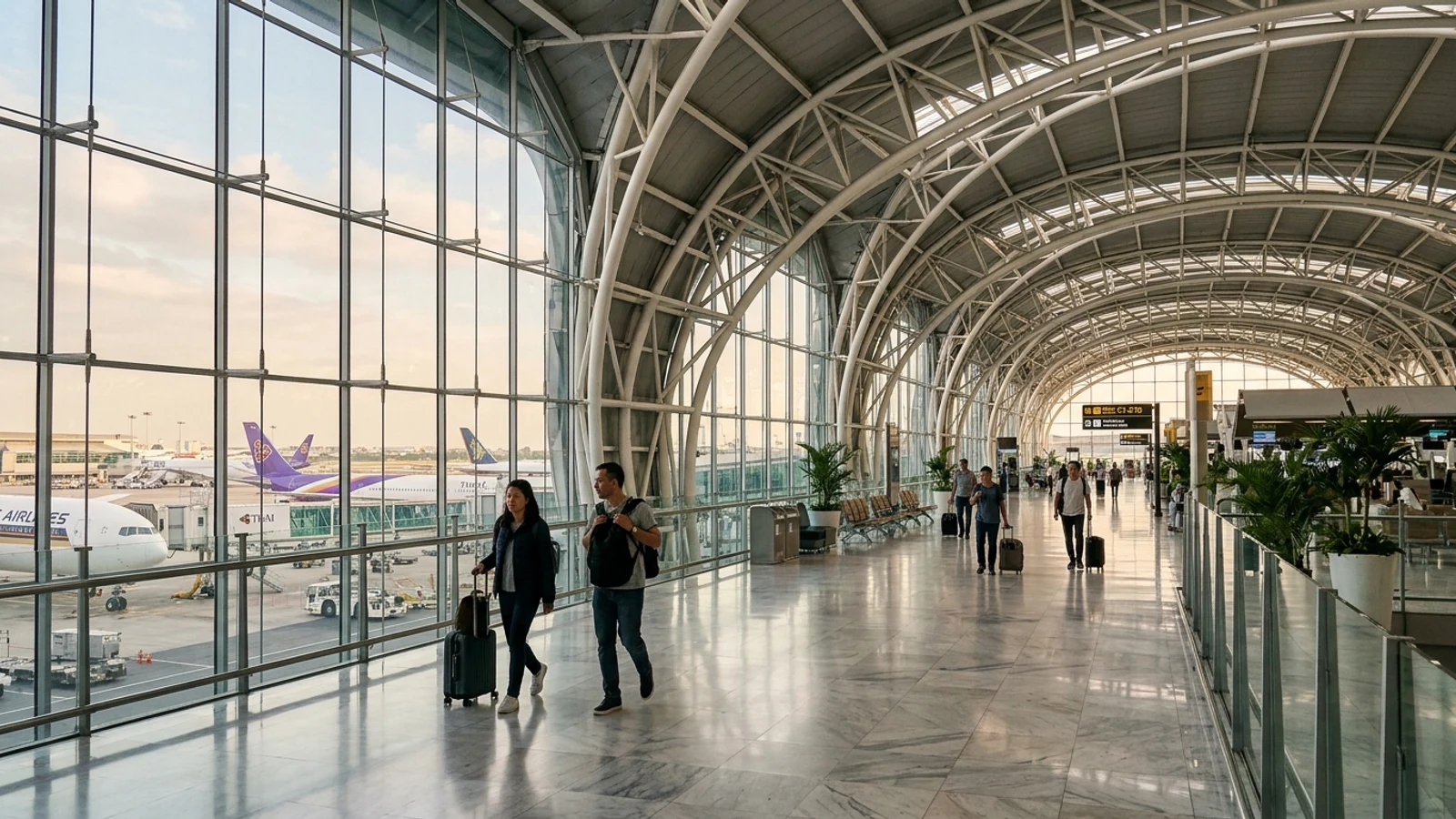
Thailand's tourism sector is grappling with a significant decline in international arrivals throughout 2026, as domestic operational challenges and external geopolitical pressures intersect. According to research from the University of the Thai Chamber of Commerce, foreign tourist numbers are projected to reach 31.5 million for the year, missing initial expectations of up to 34 million. Data indicates a 3.8 per cent decrease in total arrivals during the first nine months compared to the same period in 2025, with steeper declines observed toward the end of that timeframe. Source
The operational environment for travelers has been notably altered by infrastructure and policy decisions. Effective June 20, 2026, Airports of Thailand (AOT) increased the international passenger service charge from 730 baht to 1,120 baht at six major gateways, including Bangkok's Don Mueang and Suvarnabhumi, Chiang Mai, Chiang Rai, Hat Yai, and Phuket. This 53.4 per cent increase was implemented to finance long-term infrastructure upgrades at facilities, some of which have faced congestion issues for decades. Source
Beyond airport service fees, the government has introduced stringent border control measures under its 'No Entry, No Stay, No Escape' policy. Immigration authorities recently confirmed that nearly 29,500 foreigners were denied entry, while more than 169,000 individuals have been blacklisted using digital screening systems. These protocols, designed to combat visa abuse and transnational crime, have inadvertently complicated travel for regular visitors, particularly those originating from specific regions or those perceived to be commuting frequently across borders. Source
The aviation sector serving Thailand faces persistent bottlenecks that further restrict visitor flow. Conflicts in the Middle East have disrupted key flight corridors relied upon by European travelers, resulting in inflated airfares and reduced carrier seat capacity. Reports from industry stakeholders indicate that airfares for European routes have surged by 30 to 40 per cent, and bomb threats affecting roughly 30 flights in early November 2026 have exacerbated traveler anxiety regarding the reliability of transit hubs like Dubai, Doha, and Abu Dhabi. Source
Regional competition has also intensified as neighboring countries, including Vietnam and Japan, successfully capture travelers who are deterred by the current logistical difficulties in Thailand. A national survey of 368 tourism operators identified that 21.7 per cent of the recent contraction in visitor arrivals is directly linked to tourists choosing these competing destinations. Operators identified external pressures such as the conflict in the Middle East as the primary cause for the decline, followed by domestic constraints. Source
Specific source markets have reacted differently to these conditions. While China experienced a 15.2 per cent growth in arrivals during the first nine months of 2026, markets such as South Korea and Malaysia recorded sharp contractions of 25.4 per cent and 15.2 per cent respectively. The European market, which previously generated over a quarter of total arrivals, saw a notable downturn, with adjusted arrival numbers for April and May 2026 falling by 12.5 per cent year-over-year as geopolitical uncertainties impacted long-haul travel plans. Source
In response to these developments, the Tourism Authority of Thailand (TAT) has been instructed to provide marketing assistance to airlines, though no major new financial support package has been finalized. Tourism operators remain concerned that current measures—including the potential implementation of a 300-baht tourist levy and mandatory travel insurance requirements—may further weaken the country's competitive position relative to regional neighbors that offer fewer entry hurdles. Source
For travelers planning visits to the region, the following table summarizes key operational changes impacting access and costs as reported by regional sources during the latter half of 2026: Source
| Category | Change/Detail | Date | Source
| :--- | :--- | :--- | Source
| Int. Passenger Fee | Increased to 1,120 THB | June 20, 2026 | Source
| Border Screening | Digital 'No Entry' Policy | 2026 Active | Source
| Airfare (Europe-TH) | 30–40% increase | November 2026 | Source
The uncertainty surrounding these shifts is expected to persist through the peak winter travel season. Although some operators express cautious optimism that passengers with already confirmed tickets will proceed with their travel, the lack of new bookings from long-haul markets remains a critical issue for the local hospitality industry, which heavily relies on consistent international arrivals to maintain stable revenue levels. Source

