
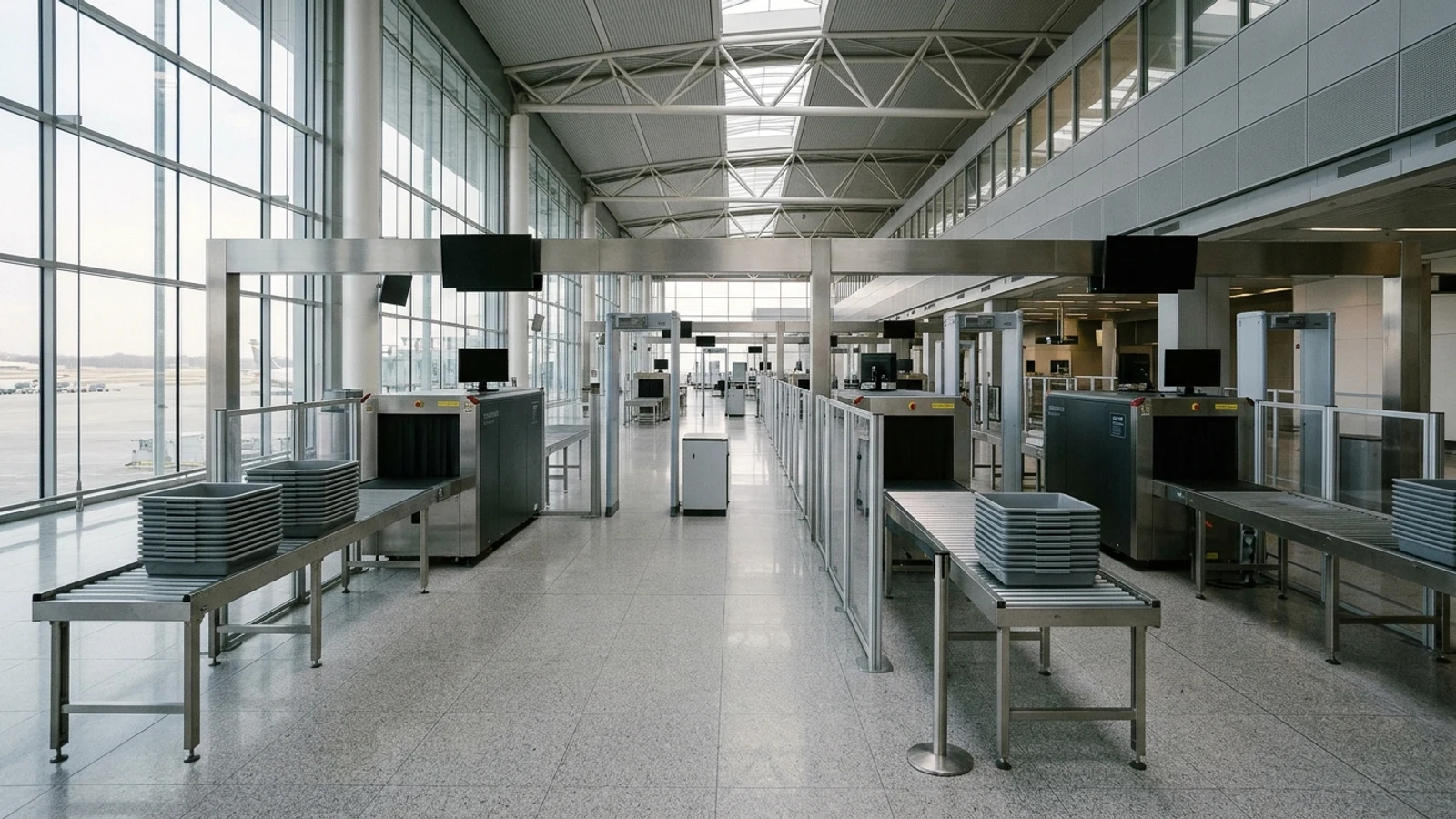
Checkpoint Screening and Data Reporting
The Transportation Security Administration manages an massive screening operation that spans hundreds of American airports, processing more than 900 million passengers every year. During 2025 alone, officials screened over 2.1 billion carry-on bags. Despite this scale, the agency stopped publishing comprehensive statistics regarding the total number of items left behind or voluntarily abandoned by travelers in 2008. Consequently, there is currently no federal accounting for the daily volume of pocket knives, tools, or toiletries surrendered at security lanes. Source
Before the reporting shift in 2008, Bureau of Transportation Statistics records indicated that checkpoint interceptions reached as high as 15 million items annually. In 2003, authorities logged 6.1 million items, a figure that climbed to 15.8 million by 2005 during a period when cigarette lighters were prohibited. Following the policy change in 2007 that permitted lighters, annual seizures dropped to 6.5 million. Since 2008, federal record-keeping for these categories has ceased, leaving the total volume of surrendered property opaque. Source
The agency’s current public tracking focuses exclusively on firearms. Records show a significant increase in gun discoveries, rising from 4,432 in 2019 to a peak of 6,737 in 2023. In 2024, the TSA reported 6,678 detections at checkpoints, with 94% of these weapons arriving loaded. These findings highlight a trend that varies more by specific airport location than by passenger volume, with Southern and Sunbelt hubs recording substantially higher discovery rates than Northeastern counterparts. Source
Data from major hubs illustrates the geographic concentration of firearm incidents. In 2024, Hartsfield-Jackson Atlanta International Airport led the nation with 440 intercepted firearms, followed by Dallas/Fort Worth with 390. Houston Intercontinental reported 272, while Phoenix Sky Harbor recorded 247. Conversely, officials have noted that multiple New England airports combined to stop fewer than 50 firearms despite processing millions of travelers, underscoring the regional variance in prohibited item encounters at security checkpoints. Source
When a firearm is detected, checkpoint operations pause immediately to allow armed airport police to intervene. Most travelers involved in these incidents allege that they simply forgot the weapon was in their carry-on bag. Beyond local police involvement, the TSA enforces administrative penalties, including the suspension of PreCheck eligibility for at least five years. Additionally, the agency has collected over $52 million in civil fines related to these violations over a recent three-year timeframe. Source
Handling of Surrendered Items
Everyday items like tools and blades follow a different procedural path. These objects are collected by airport staff and stored temporarily before being handed over to state surplus agencies. These agencies then aggregate the items and sell them through government auction platforms. Washington Dulles International Airport, for example, generates roughly 4,000 pounds of such material annually. This process effectively removes individual items from the checkpoint and converts them into state-managed revenue without federal accounting. Source
Beyond prohibited items, travelers frequently forget personal belongings during the screening process. Estimates suggest that between 90,000 and 100,000 items, including mobile phones, laptops, and keys, are left in security trays every month, totaling over 1 million per year. These items are typically sent to airport lost-and-found offices. Unclaimed sensitive documents like passports or driver's licenses are destroyed 30 days after being processed if the owner does not recover them. Source
The introduction of 3D computed tomography (CT) scanners has impacted the frequency of manual bag checks. While these machines provide a more detailed view of bag contents, they are highly sensitive to object density. Consequently, common items such as thick books, protein bars, and charging cables frequently trigger automated alerts. This sensitivity forces officers to perform more secondary manual inspections, which contributes to checkpoint delays and further encourages passengers to abandon items to avoid missing their flights. Source
Liquid restrictions remain a primary source of confusion for travelers, particularly those moving between domestic and international airports. While some international hubs in Europe have upgraded technology to allow larger liquid containers, US checkpoints continue to enforce the 3.4-ounce limit. Because domestic scanners often rely on older 2D technology or limited software upgrades, travelers are still required to discard water and toiletries, even when passing through checkpoints equipped with newer CT imaging systems. Source
The following table details the annual firearm detections at specific major US airports based on 2024 data reported by the TSA. Source
| Airport | 2024 Firearm Detections |
|---|---|
| Hartsfield-Jackson Atlanta (ATL) | 440 |
| Dallas/Fort Worth (DFW) | 390 |
| Houston Intercontinental (IAH) | 272 |
| Phoenix Sky Harbor (PHX) | 247 |
Infrastructure investment remains a contentious issue regarding checkpoint efficiency. While passengers contribute through a $5.60 security fee per trip, approximately $1.6 billion of this revenue is diverted annually to federal deficit reduction rather than facility improvements. This funding shortfall affects the speed of deploying advanced scanners, which in turn necessitates more manual interventions and increases the likelihood that passengers will leave items behind during peak travel times across the domestic network. Source

