
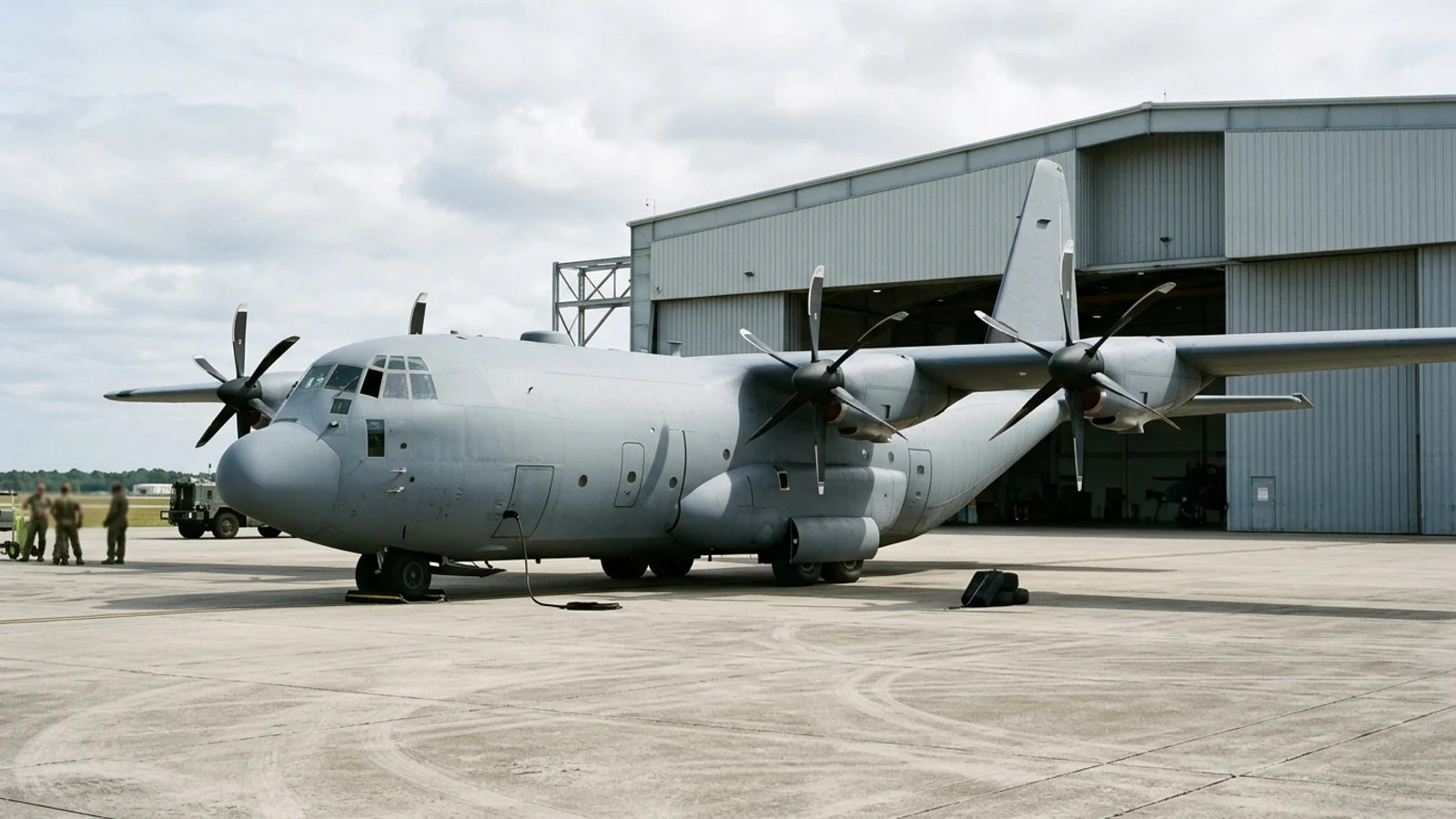
Expansion of the E-130J Phoenix II Development Program
The United States Navy confirmed on November 25, 2026, the exercise of a contract option valued at $1.13 billion with Northrop Grumman. This procurement covers the design, development, and delivery of three E-130J Phoenix II system demonstration test aircraft, along with an initial provision of spare parts. The award effectively completes the order for six test airframes necessitated by the program’s engineering and manufacturing development phase. Northrop Grumman is currently working toward a completion deadline for this project by January 2030. Source
This latest financial modification is part of a broader acquisition effort that originated with a $3.46 billion development contract awarded in December 2024. That initial agreement provided for three engineering development models and included options for the three newly ordered test aircraft, as well as provisions for an initial production batch of up to six aircraft. According to the Pentagon, the Navy has committed $4.18 million in fiscal 2027 research, development, test, and evaluation funds specifically for this recent contract action. Source
The industrial workload for the program is geographically distributed across several US facilities. The primary sites include Melbourne, Florida, which accounts for 35 percent of the work, followed by Marietta, Georgia, at 23 percent, and Richardson, Texas, at 15 percent. Additional secondary sites include Largo, Florida, and Oklahoma City, along with smaller contributions from various other domestic locations. These facilities support a complex integration process led by Northrop Grumman, with Lockheed Martin and Collins Aerospace acting as primary subcontractors. Source
The E-130J Phoenix II serves as a replacement for the Navy's existing fleet of 16 Boeing E-6B Mercury aircraft. The new platform is based on the stretched Lockheed Martin C-130J-30 Super Hercules airframe. This aircraft is specifically designed to conduct the Take Charge and Move Out (TACAMO) mission, which facilitates secure communications between national leadership and the nation's nuclear-armed ballistic missile submarines. The transition aims to address the maintenance challenges associated with the aging E-6B fleet, which utilizes the final derivatives of the Boeing 707. Source
Technical integration remains a significant focus of the development process. The E-130J incorporates specialized modifications, including enlarged landing gear fairings, multiple fuselage-mounted radomes, and various secure communications antennas. The aircraft is equipped with nuclear electromagnetic pulse protection and updated cybersecurity systems. Furthermore, the conversion necessitates upgrades to electrical generation and equipment cooling systems to support the onboard mission hardware. The first C-130J-30 airframe was delivered to the Navy in Marietta, Georgia, on October 15, 2026, for subsequent transfer to Northrop Grumman. Source
The program has encountered technical hurdles that have impacted the original project schedule. A report by the US Government Accountability Office in July 2026 identified that integration risks first noted in late 2024 have proven difficult to mitigate. Contractors are currently focused on reducing the weight of mission systems to ensure they can be effectively hosted on the C-130J-30 airframe. These engineering challenges have led to a postponement of the low-rate production decision by approximately one year, with initial operational evaluation now anticipated for 2033. Source
Strategic Mission and Program Evolution
While the E-130J inherits the TACAMO mission, it will not replicate all capabilities of the E-6B Mercury. Specifically, the requirement to perform the Looking Glass airborne command post mission has been removed from the E-130J’s scope. This decision simplifies the interior configuration by eliminating the need for extensive battle staff accommodations. The overall acquisition program is designed to eventually encompass 31 aircraft, which include 25 production models, compared to the 16 E-6B jets currently in service for the Navy. Source
The following table outlines key historical and programmatic milestones for the TACAMO mission aircraft transition based on government and industry announcements: Source
The Navy has also invested in training infrastructure to support the new fleet. In March 2026, a $225.1 million contract modification was issued to Northrop Grumman for the development of training systems, courseware, and instructional materials. This project is scheduled for completion in March 2027, several years ahead of the delivery timeline for the demonstration test aircraft. These systems are intended to prepare personnel for the transition from the legacy Boeing platform to the modernized Hercules-based architecture as the program matures. Source
The choice of the C-130J-30 platform reflects a shift away from earlier concepts that considered larger jet-based derivatives like the Boeing 737 or 767. By leveraging a production aircraft, the Navy intends to improve sustainment and spare parts commonality with the broader US military Hercules fleet. Despite the engineering difficulties currently reported by the GAO, the Navy program office maintains that the E-130J is a crucial component in maintaining the resilience of the nation's nuclear command and control infrastructure. Source
Future operations will center on the reception, verification, and retransmission of emergency action messages to ballistic missile submarines. The E-130J platform is designed to operate independently of fixed ground-based communications infrastructure. The VLF communications systems, provided by Collins Aerospace, remain the core of this capability. While the initial operational service date remains classified, the progression of the test airframe production signals an advanced stage of development for the successor to the Mercury fleet. Source
The estimated acquisition expenditure for the program is approximately $25.985 billion in then-year dollars. This figure covers the 31-aircraft requirement but explicitly excludes the costs associated with replacing the airborne command post capabilities currently provided by the E-6B. As Northrop Grumman and its partners work through the remaining development hurdles, the delivery of the six test aircraft through January 2030 remains the primary benchmark for the engineering and manufacturing development phase of the E-130J Phoenix II program. Source

