
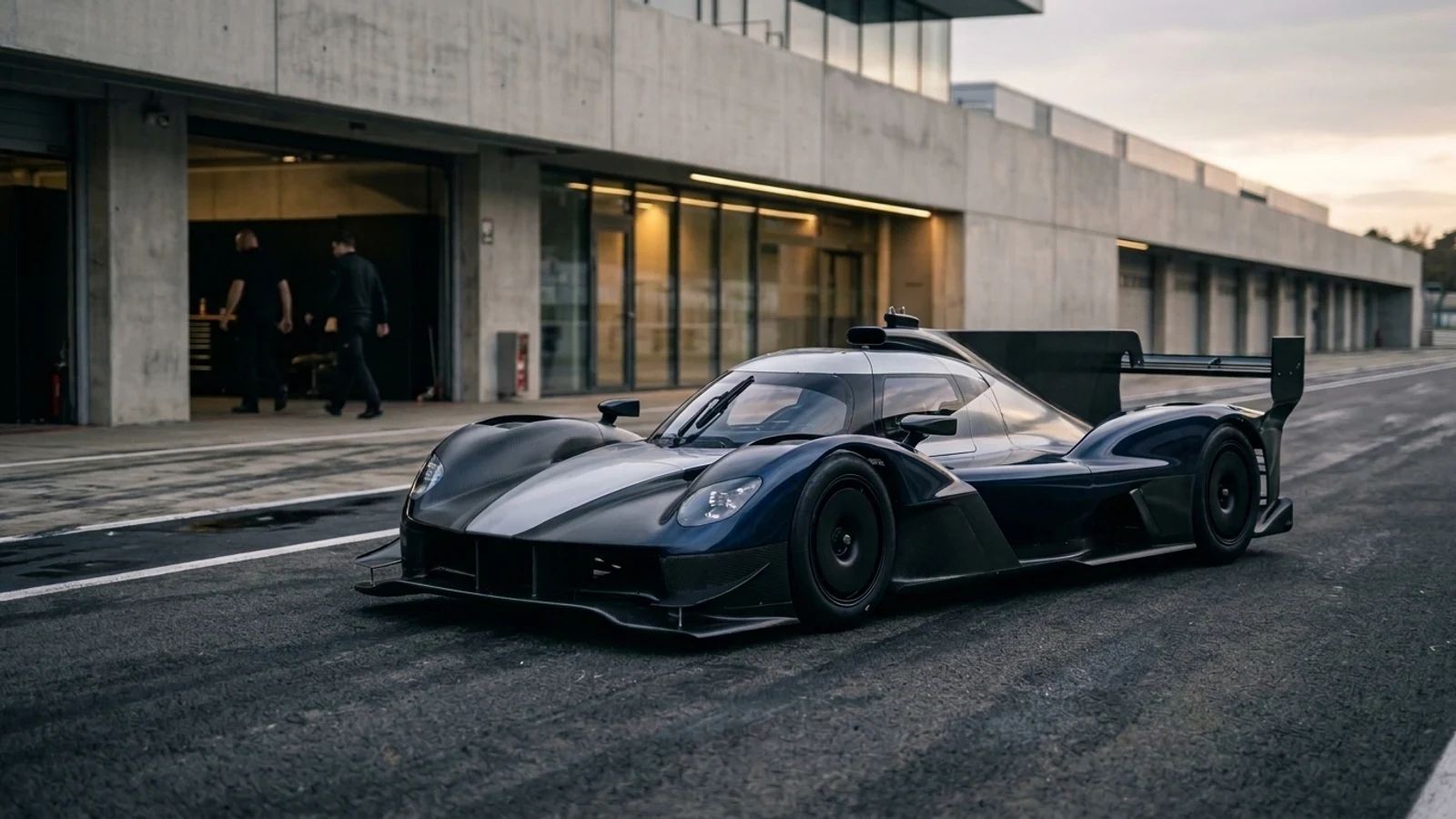
Official Debut and Racing Heritage
Ford officially announced its return to the most prestigious class of the 24 Hours of Le Mans in a move marking more than 60 years since the company achieved a historic 1-2-3 finish at the race in 1966. The new vehicle, designated the GT41, is purpose-built for the Le Mans Hypercar prototype series. During its debut on November 26, 2026, at Ford Field in Detroit, Michigan, the manufacturer highlighted the car's intent to compete against rivals including Cadillac, McLaren, and Genesis Magma Racing. Source
The naming convention for the new hypercar draws inspiration from the classic GT40 of the 1960s, which earned its moniker due to a roof height of exactly 40 inches. The 2027 Ford GT41 adheres to a similar design philosophy, measuring 41 inches from the pavement to the air intake. Ford noted that this measurement does not account for the additional height contributed by the telemetry antenna and camera systems, which will be installed once the vehicle is prepared for active track duty. Source
Aesthetically, the vehicle incorporates several signature Ford performance cues. The chassis, designed by Dallara, features neon orange running lights, a detail shared with other Ford performance models like the Raptor T1+ and the road-going F-150 Raptor. The headlight assembly utilizes a triplicate diode design, intended to mirror the three-bar motif found on Mustang taillights. According to Ford, the staggered arrangement of these light elements is specifically styled to evoke the visual appearance of a checkered flag. Source
While the debut model displayed a specific decorative wrap for the Thanksgiving unveiling at Ford Field, the final race-ready version will retain a patriotic motif as an accent. This visual design includes hidden imagery such as the Statue of Liberty, an American flag, a bald eagle, and the Spirit of Detroit. The event also featured a nod to the location with a football-themed detail integrated into the pattern, acknowledging the timing of the reveal during the Detroit Lions and Chicago Bears game. Source
Powertrain and Engineering Specifications
The powertrain central to the GT41 project is a naturally aspirated 5.4-liter V8 engine, which utilizes a modified Coyote engine architecture. These power units are sourced as 5.2-liter engine blocks from Ford's Windsor plant, originally intended for applications such as the F-150 Raptor R or the Dark Horse SC. Once transported to a specialized 800-square-foot skunkworks facility at the company's dyno testing site, engineers perform modifications to increase the displacement to 5.4 liters and shave material to reduce weight. Source
The manufacturing process involves hand-building by master engineers Ben Johnson and Cyle Stephens. Since the first V8 hypercar engine was tested on February 18, the team has produced 17 individual units. The assembly protocol requires building and testing each engine, followed by a teardown to inspect for wear or fatigue. Critical components identified as potential failure points are replaced with upgraded parts to ensure the durability required for a 24-hour endurance race, according to the manufacturer's briefing. Source
For its hybrid implementation, the GT41 pairs the 5.4-liter V8 with an electric motor system. Although Ford has not disclosed comprehensive technical specifications for the hybrid components, the current class regulations for the Le Mans Hypercar series impose a limit of 671 hp for total power output. The V8 alone, which shares its core displacement with the GT3-class Mustang endurance racer, produces approximately 550 horsepower before the integration of the hybrid system's supplementary electric motor support. Source
The following table outlines key technical parameters and milestones for the GT41 program as reported in the November 26, 2026, announcement: Source
| Feature / Metric | Detail | Source
| :--- | :--- | Source
| Height | 41 inches | Source
| Engine Base | 5.2-liter Coyote V8 | Source
| Race Displacement | 5.4-liter | Source
| Le Mans Class Limit | 671 hp | Source
| First Dyno Test | February 18, 2026 | Source
| Engines Built | 17 | Source
Ford's return to the endurance racing stage is intended to bolster the identity of the brand's performance division. The automaker has drawn parallels between the modern development of the GT41 and the company's historical roots, specifically referencing Henry Ford's victory in a 1901 10-mile race, which provided the financial foundation to incorporate the company in 1903. By integrating hybrid technology into the GT41, Ford is exploring potential performance electrification applications, including future road-legal performance models. Source

