
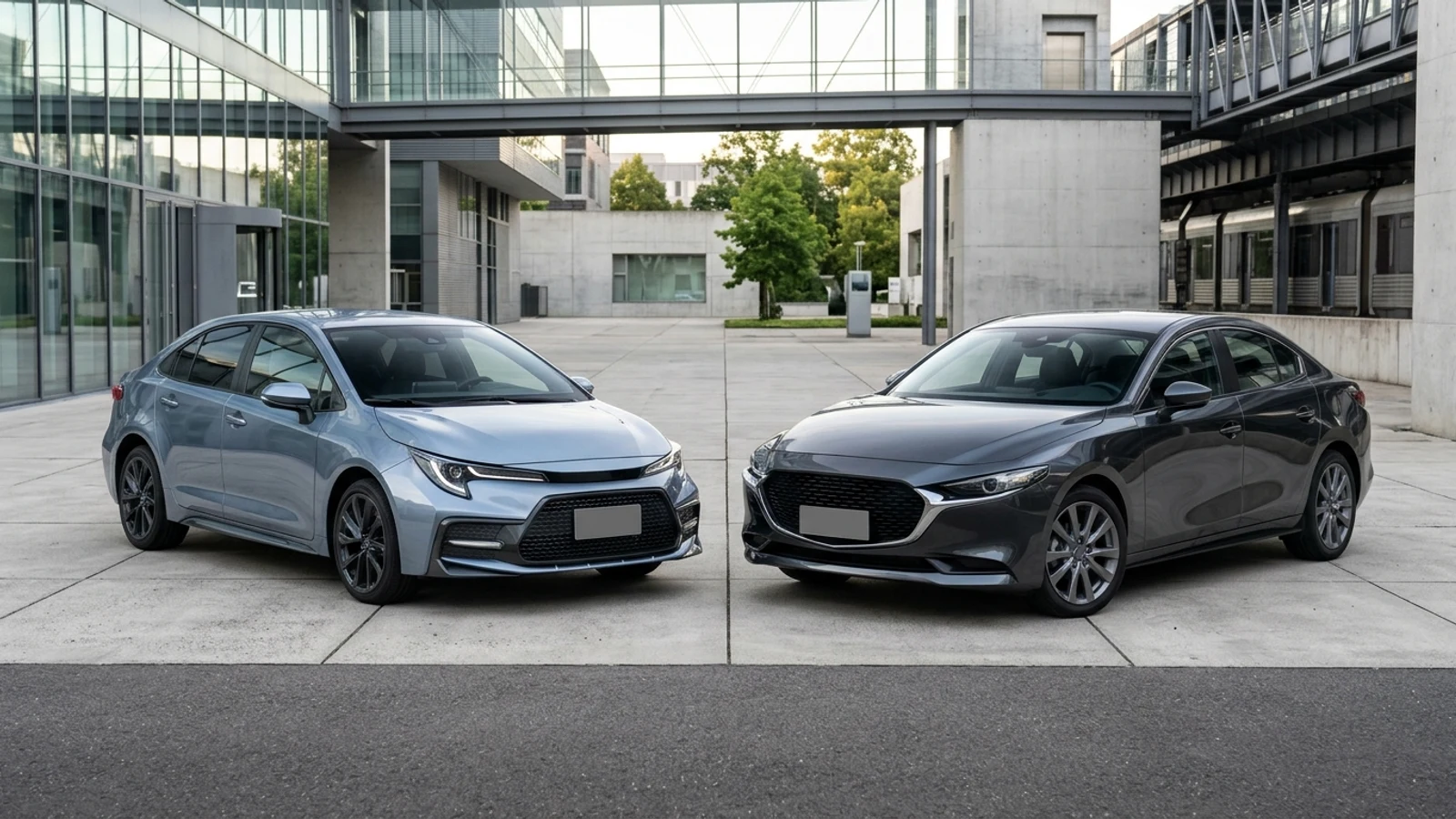
Comparing Reliability and Mechanical Design
For consumers evaluating compact sedans in the 2027 model year, the long-standing debate between the Toyota Corolla and Honda Civic often relies on the assumption that both vehicles guarantee 200,000 miles of trouble-free operation. According to CarBuzz, such assumptions can lead to significant financial consequences as vehicle prices exceed $25,000 and loan terms reach six years. While both models continue into 2027, their distinct engineering histories and recent track records suggest different long-term ownership experiences for typical commuters. Source
Recent industry data provides evidence regarding the relative reliability of these two models. In the 2026 JD Power US Vehicle Dependability Study, which analyzes owner-reported problems three years into ownership, the Toyota Corolla secured the top position among compact cars, while the Honda Civic ranked second. This pattern persists in JD Power's 2027 Quality & Reliability ratings, where the Corolla achieved a score of 83 out of 100, compared to the Civic's rating of 81, as reported by CarBuzz. Source
The brand-level assessment from Consumer Reports aligns with these findings. Its 2026 predicted reliability rankings placed Toyota in the first position with a score of 66, while Honda followed in fourth place with a score of 59. Although neither vehicle is classified as a high-risk purchase, the Honda Civic demonstrates an advantage in the secondary market, holding a three-year resale forecast of 91 compared to the Toyota Corolla's 89, according to data supplied by CarBuzz. Source
The 2027 Toyota Corolla enters its eighth year of the 12th generation with few mechanical changes. Toyota has utilized this extensive production period to address and resolve factory flaws, supplier issues, and software glitches. Because the platform is mature, the manufacturer has effectively refined the vehicle's blueprints. This engineering stability allows the 2027 Corolla to offer predictable, low-maintenance mileage for owners, even if the vehicle is perceived by enthusiasts as being less innovative than its competitors. Source
In contrast, the 2027 Honda Civic utilizes the 11th-generation platform introduced for 2022. While this architecture provides a driving experience described as sharper and more planted than the Corolla, the relative youth of the platform introduces different risks. According to CarBuzz, the newer cabin electronics and vehicle architecture mean the defect curve has not flattened as extensively as it has for the Toyota Corolla, potentially exposing owners to minor software or electronic component hiccups. Source
Engine configuration choices play a significant role in long-term maintenance expectations. For 2027, Honda has moved away from the 1.5L turbocharged engine found in earlier trims, following complaints about gasoline seepage into engine oil during cold-weather operations. Non-hybrid 2027 Civics now feature a 2.0L naturally aspirated four-cylinder engine. While this transition reduces heat-related stress, the engine utilizes direct fuel injection, which can lead to carbon buildup on intake valves after 100,000 miles of use. Source
Drivetrain Durability and Warranty Coverage
Toyota's 2027 non-hybrid 2.0L engine produces 169 hp and 151 lb-ft of torque, offering a performance advantage over the Civic's 150 hp and 133 lb-ft. A notable mechanical feature of the Toyota is its dual fuel-injection system, which sprays fuel onto the intake valves to help prevent carbon accumulation. Furthermore, the Toyota Direct-Shift CVT includes a physical first gear for starting from a stop, a design choice intended to reduce the strain typically placed on a standard CVT belt during heavy traffic acceleration. Source
Hybrid models offer different durability characteristics for both manufacturers. The 2027 Civic Hybrid combines a 2.0L engine with two electric motors to produce 200 combined hp. It utilizes a beltless transmission system with a lock-up clutch. Meanwhile, the 2027 Corolla Hybrid uses a 1.8L four-cylinder paired with fifth-generation hybrid hardware. Toyota's transmission relies on a planetary gear set without shifting bands or belts, a design that has seen extensive use in taxi and rideshare applications over several decades. Source
Warranty terms provide a clear distinction in protection for hybrid buyers. Toyota provides coverage for its hybrid battery for 10 years or 150,000 miles. Honda offers an 8-year or 100,000-mile warranty for its hybrid battery components. Additionally, the Corolla Hybrid offers an Electronic On-Demand All-Wheel Drive system, which uses a dedicated rear electric motor rather than a mechanical driveshaft, reducing the number of fluids and seals that require maintenance in cold-weather regions. Source
Recent recall history also provides context for these reliability assessments. In October 2024, Honda issued a recall for approximately 1.7 million vehicles, including 2022–2025 Civics, to address potential steering gearbox issues caused by excessive internal friction. Toyota also faced recall campaigns for 2023–2025 Corolla Hybrids concerning potential power brake assist loss, as well as separate issues involving steering shafts. Most Toyota recalls were related to software patches or specific supplier batches rather than fundamental powertrain defects. Source
The table below highlights key performance and mechanical specifications for the 2027 base models as noted by the source. Source
In summary, the 2027 Toyota Corolla is recommended for those prioritizing a proven mechanical track record and a superior battery warranty, starting at a base price of $23,325. The 2027 Honda Civic is positioned as a secondary option for those who value driving dynamics and resale performance, starting at $24,995. Both manufacturers continue to refine their compact sedans, balancing the need for updated electronics with the durability requirements of long-term owners. Source

