Reported by Simple Flying
Airlinesยท ๐ŸŒ Global

Airbus A380: Emirates Fuel Burn Specifications and Seat Cost Breakdown

Emirates leverages the Airbus A380's high seat capacity and hub volume to outweigh its 4,600-gallon-per-hour fuel burn, reporting record 2025โ€“26 earnings and planning operations through 2041.

By Rohit Kumar

AI-assisted reporting based on the linked source record. How we publish

Published 28 Nov 2026, 5:40 am IST ยท 2 min read

Key facts

Reported by Simple Flying
  • โ€ขThe Airbus A380 burns approximately 4,600 gallons (17,413 liters) of jet fuel per hour, compared to ~2,700 gallons per hour for the A350-1000.
  • โ€ขOn a 515-passenger DXB-LAX flight, the A380 burns about 13 tonnes of fuel per hour and ~200 tonnes total for the trip.
  • โ€ขHigh passenger load factors allow the A380 to achieve lower per-seat fuel costs than operating two Boeing 787 flights.
  • โ€ขOperating 500+ seat aircraft optimizes restricted slots at congested hubs like London Heathrow and Hong Kong.
  • โ€ขEmirates Group reported a record AED 24.4 billion ($6.6 billion) profit for 2025โ€“26 and plans to keep the A380 flying until ~2041.
Airbus A380: Emirates Fuel Burn Specifications and Seat Cost Breakdown
๐Ÿ“ Airlines Sector Dispatch ยท Simple Flying
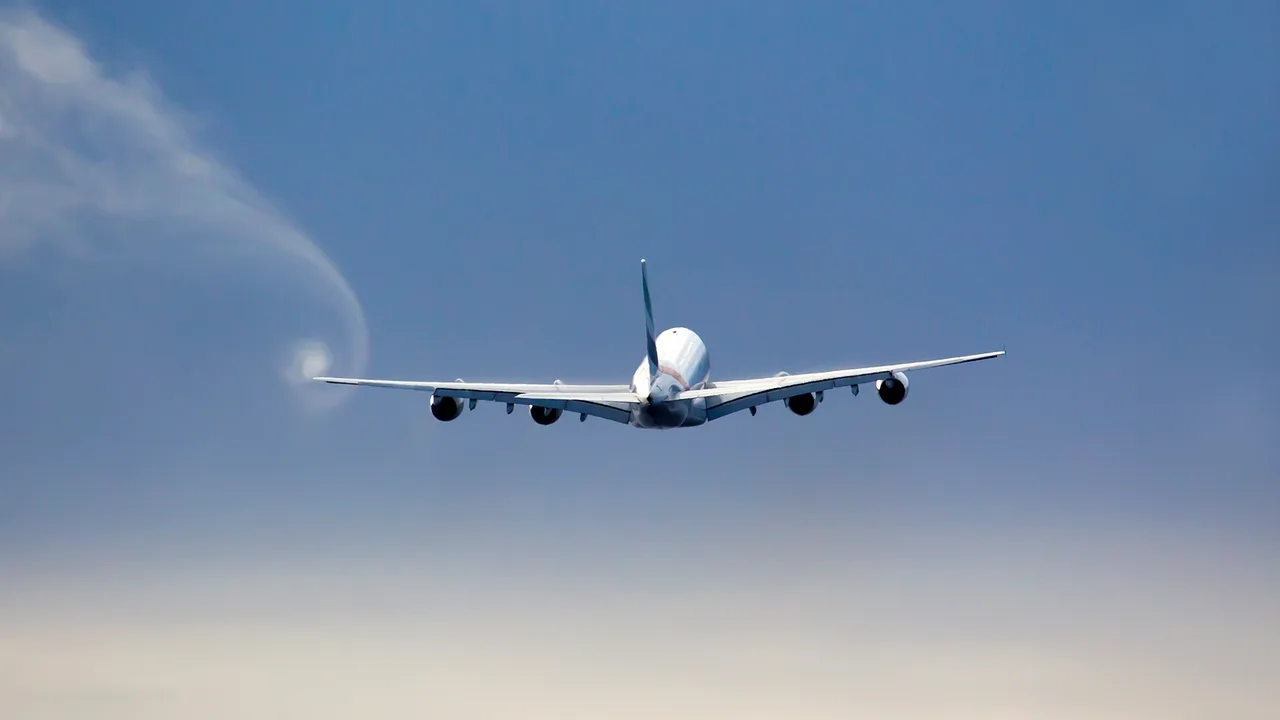
Image credit: Photo by Maarten Visser from Capelle aan den IJssel, Nederland (CC BY-SA 2.0) Source1280ร—720

Key Story Context & Attributes

Industry Sector:Aviation, Commercial Airline Management, Aerospace Manufacturing
Companies Mentioned:Emirates, Airbus, Boeing, Air France
Geographic Scope:United Arab Emirates, United States, United Kingdom, France
Reporting Source:Simple Flying

Operational Metrics and Superjumbo Fuel Consumption

As long-haul carriers shift toward smaller twin-engine jets, Emirates continues to anchor its international trunk strategy on the four-engine Airbus A380 superjumbo. According to operational metrics published by Simple Flying, the A380 consumes approximately 4,600 gallons (17,413 liters) of jet fuel per hour. This figure significantly exceeds modern widebody twin-jets such as the Airbus A350-1000, which burns roughly 2,700 gallons (10,221 liters) per hour.

On ultra-long-haul sectors such as Dubai International Airport (DXB) to Los Angeles International Airport (LAX), carrying 515 passengers requires approximately 13 tonnes (28,660 pounds) of fuel per hour. Total trip fuel burn across the entire DXBโ€“LAX sector reaches approximately 200 tonnes (440,925 pounds).

Hourly Fuel Burn and Fleet Comparative Specifications

Aircraft / Operational MetricAirbus A380Airbus A350-1000Boeing 787 (Single Flight)
Hourly Fuel Consumption~4,600 gal (~17,413 L)~2,700 gal (~10,221 L)~2,300 gal (~8,707 L)*
DXBโ€“LAX Sector Fuel Rate~13 tonnes/hr (~200t total)N/AN/A
Passenger Capacity Benchmark515+ seatsVariable widebody~250 seats

*Note: A Boeing 787 burns approximately half the hourly fuel of an A380, per Emirates comparative benchmarks.

Per-Seat Economics and Slot Efficiency

Emirates President Tim Clark stated that when high load factors are maintained, the A380's fuel cost per seat is lower than running two separate Boeing 787 flights, each burning half the fuel. Maximizing passenger volume per movement allows Emirates to optimize tight runway and terminal slots at congested airports, such as London Heathrow (LHR) and Hong Kong (HKG), where movement caps restrict flight frequency additions.

This high-density hub-and-spoke model contrasts with carriers like Air France, which retired its A380 fleet in 2020 due to lower per-flight passenger demand. Historically generating roughly 85% of Emirates' pre-pandemic profits, the A380 remains a core driver of financial performance. For the 2025โ€“26 financial year, Emirates Group posted a record profit of AED 24.4 billion ($6.6 billion), while Emirates airline recorded AED 22.8 billion ($6.2 billion) in profit before tax. Although A380 manufacturing ended in 2021, Emirates plans to operate its fleet through roughly 2041.

Source-stated Dates & Events

2020

Air France permanently retires its entire Airbus A380 fleet.

2021

Airbus official production of the double-decker A380 comes to an end.

2026-11-28

Operational review details Emirates' A380 per-seat economics and 2025โ€“26 financial results.

2041

Targeted retirement timeline for Emirates' Airbus A380 fleet.

Announced Next Steps

  • 1Monitor global slot allocation rules at constrained airports including LHR and HKG.
  • 2Track Emirates fleet updates for future high-capacity widebody replacement announcements.
  • 3Evaluate jet fuel market price changes impacting four-engine operational expenses.

Frequently Asked Questions

The Airbus A380 burns roughly 4,600 gallons (approximately 17,413 liters) of jet fuel per hour during long-haul cruise operations.

When fully loaded, the A380's per-seat fuel burn cost can beat running two smaller Boeing 787 flights, even though a 787 burns half as much fuel overall.

Emirates plans to maintain its Airbus A380 fleet in commercial service until approximately 2041.

Source & Evidence Ledger

1 linked source
1
Simple FlyingLinked reporting source ยท 28 Nov 2026, 5:31 am IST
Open source โ†—

Upstream source timestamp: 28 Nov 2026, 5:31 am IST. Skyline publication timestamp is shown in the byline above.

SkylineWire Android App

Read in the SkylineWire App

FREE

30s Fast Bites, Executive Audio Briefing Room & offline reading on Android.

Get on Google Playโ†’

See our editorial team and corrections policy.

Related Intelligence Reports

More in Aviation โ†’

Get Breaking Global Intel in Your Inbox

Subscribe to the Skyline Wire AI Daily Briefing. Direct insights across Aviation, Tech, EVs, and Markets.

Original source link: Simple Flying

Airbus A380EmiratesAviation EconomicsFuel ConsumptionAirline FleetDubai International Airport
Airbus A380 fuel burnEmirates A380 seat costAirbus A380 vs A350 fuelDXB to LAX fuel consumptionEmirates financial results 2025-26