Safety and Cabin Operations
The primary objective for any flight attendant or cabin crew member upon boarding an aircraft is to guarantee a secure and efficient operation. While cabin crew are often perceived as service providers, their presence is essential for managing scenarios that deviate from scheduled plans. Their fundamental focus is safety, with passenger comfort considered secondary. Crew members are extensively trained in emergency procedures to address events such as medical crises, turbulence, or inflight fires, serving as safety professionals rather than just cabin staff. Source
Cabin safety encompasses a suite of disciplines, training, and equipment intended to prevent incidents and increase occupant survival in emergencies. Modern approaches emphasize risk management and hazard identification rather than purely reactive measures like evacuation. Organizations such as the International Civil Aviation Organization and the International Air Transport Association establish the global standards for these procedures. Crew members serve as critical safety monitors, performing mandatory pre-flight checks on equipment including emergency exits and communication systems. Source
Before boarding begins, crew members conduct thorough inspections to ensure all safety equipment is operable and correctly placed. This includes verifying oxygen bottle pressure and confirming that fire extinguisher gauges are in the green zone. Cabin crew maintain constant situational awareness and perform legally required briefings. They are also trained to manage unruly passengers or individuals who may require special assistance. The ability to coordinate an evacuation in less than 90 seconds is a core competency required of all cabin crew members. Source
One of the most critical, yet frequently unseen, safety procedures commences the moment the boarding door closes. Once the aircraft is ready to leave the stand, the flight crew issues a command, often stated as 'Cabin crew, arm the doors and cross-check.' This action ensures the slides are attached and ready to inflate automatically if an emergency occurs. Each crew member physically moves an arming lever to the armed position, which engages the girt bar and connects the emergency escape slide to the door frame. Source
Following the arming process, crew members perform visual checks on their respective doors and verify the status of the opposite door through the cross-check procedure, which serves to minimize human error. A senior crew member then confirms the status with the flight crew before the aircraft departs. This procedure is vital because if doors are not armed correctly, slides may fail to deploy during an emergency. Conversely, if doors are not disarmed properly upon arrival, accidental slide deployment can pose risks to ground personnel. Source
Operational Disruptions
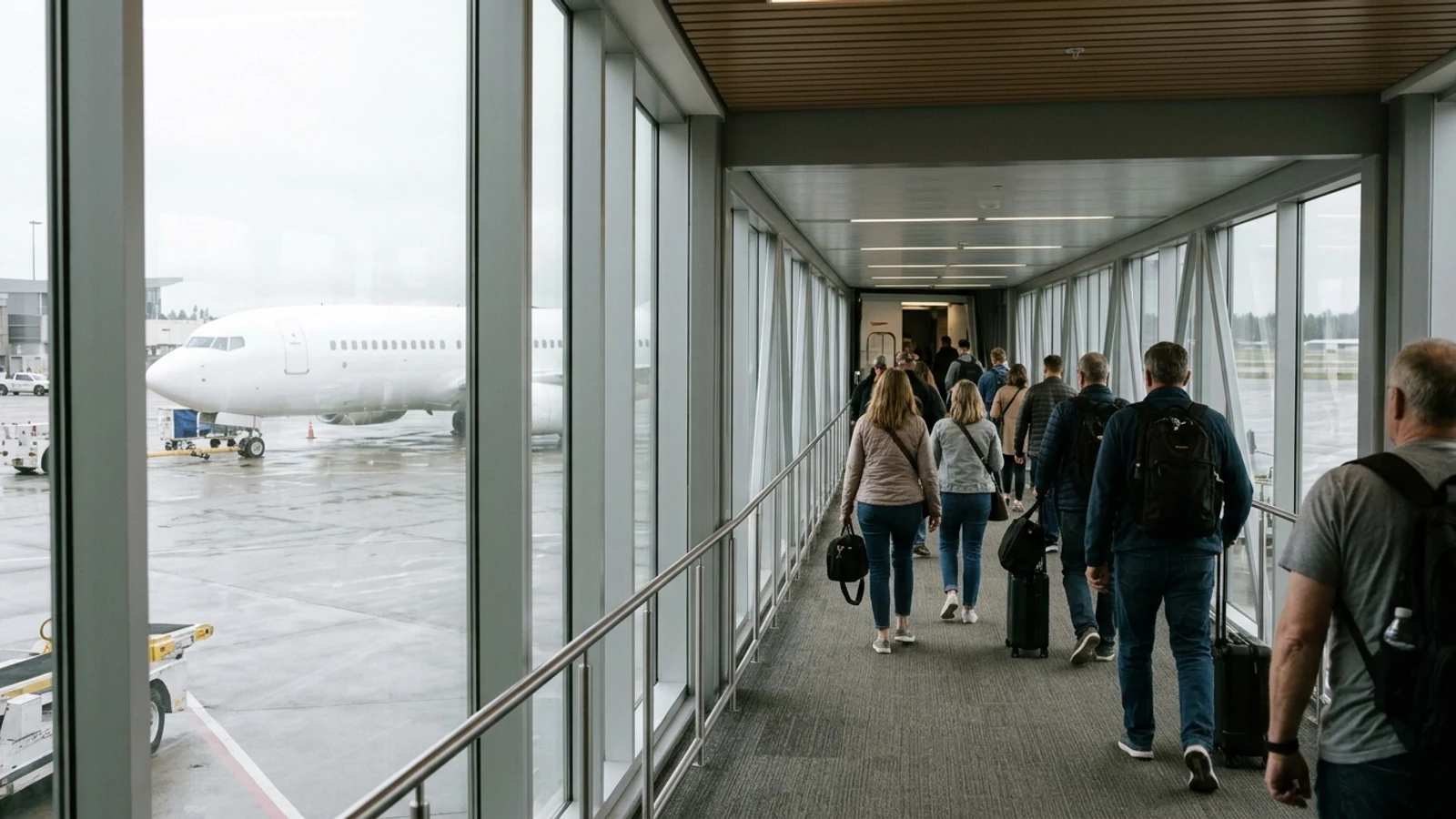
The operational environment of a cabin was tested at Seattle-Tacoma International Airport on November 21, 2026, when an immigration enforcement action disrupted the boarding of Alaska Airlines flight 1306. Federal agents entered the jet bridge at gate N9 around 8:00 a.m. to intercept two passengers, a father and his daughter. The situation resulted in a crowd of approximately 50 people becoming trapped in the confined space of the jet bridge for over 10 minutes, creating significant operational challenges for the airline crew. Source
The confrontation during the boarding of flight 1306 had direct consequences for the flight crew and the scheduled departure. The event left the flight attendants so unsettled that they required replacements to continue their duties. Additionally, one pilot left the flight. The aircraft, originally slated for an 8:10 a.m. departure to Los Angeles, eventually left nearly three hours behind schedule. This incident highlighted the tension between law enforcement objectives and the established security and safety protocols managed by airlines within the airport environment. Source
The Port of Seattle stated that federal agencies maintain broad access to the airport, though local Port police do not participate in civil immigration enforcement. Alaska Airlines confirmed it received no advance notice of the intervention. The airline is currently investigating whether proper protocols were followed during the encounter. The Association of Flight Attendants voiced strong opposition to the use of jet bridges for immigration enforcement, noting the distress caused to both staff and passengers in an area designed primarily for safe transit. Source