
Operational Engagement and Airspace Disputes
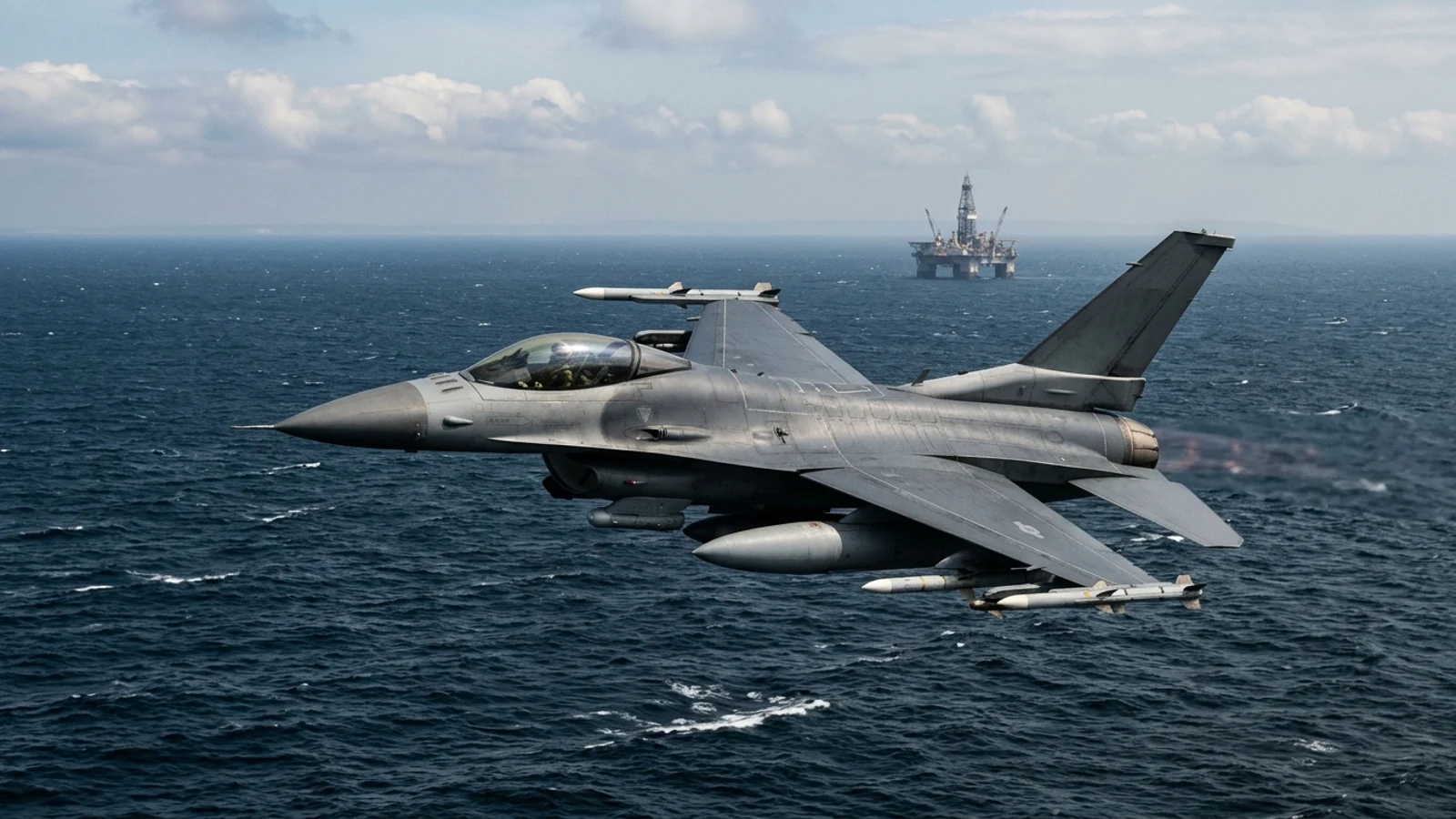
On August 20, 2026, the Romanian Air Force executed an operation involving two F-16 Fighting Falcon fighter jets against an explosive-laden maritime drone. This incident occurred in the vicinity of the Neptun Deep offshore gas project, situated within the Romanian exclusive economic zone. The Romanian Ministry of National Defense reported that the presence of the drifting drone was initially identified by a commercial vessel at approximately 06:28 local time, approximately 148 kilometers or 80 nautical miles east of Constanța. Source
Former Romanian Defense Minister Radu Miruță stated during a podcast interview published on November 24, 2026, that Russia had announced a flight ban over the specific area shortly after he had authorized the fighter jet interception. Miruță noted that military officials warned him that the tactical mission presented legal complexities, as the Neptun Alpha platform, installed in July 2026, is located beyond Romania's territorial waters. The operation put hundreds of personnel working at the platform at risk. Source
The engagement involved one F-16 utilizing its onboard cannon to strike the target. Subsequent assessment by the Romanian Ministry of National Defense clarified that while the initial cannon fire did not completely destroy the maritime drone, it was eventually neutralized by a Romanian Naval Forces explosive ordnance disposal team deployed via a Coast Guard vessel. Inspections of the wreckage confirmed that the drone carried an explosive payload, and tracking data verified that only one unit was involved. Source
Strategic Context and Regional Security
This event marked a continuation of tensions in the region. Nine days prior, on August 11, 2026, Romanian Naval Forces divers successfully destroyed two drifting Gerbera-type drones near the same Neptun Deep perimeter. These incidents occurred during a summer characterized by multiple drone incursions into Romanian airspace, including an instance where a Romanian F-16 shot down a drone within the country's national borders. Romania also took diplomatic action, expelling a Russian diplomat on July 27, 2026. Source
The security of the Neptun Deep project, a joint venture operated by OMV Petrom alongside partner Romgaz, remains a strategic focus for the nation, with initial gas production scheduled for 2027. Legal and defense questions regarding the site were highlighted by General Gheorghiță Vlad, the Chief of Defense for Romania, who stated in January 2026 that infrastructure within the country's exclusive economic zone is not encompassed by the collective defense provisions of NATO's Article 5. Source
During the August 20, 2026, incident, the Ministry of National Defense established a specific command cell to oversee the situation. Miruță noted that this internal ministry body requested a transfer of command authority from NATO to the Romanian national military to facilitate the intervention against the maritime threat. While Miruță suggested that ignoring the Russian-imposed flight restrictions could have potentially triggered a broader military response, he confirmed that no escalation occurred following the strike. Source
The following table outlines significant maritime and aerial security incidents near the Neptun Deep platform during the summer of 2026 as reported by defense authorities and summarized by AeroTime Aviation Discovery. These events demonstrate the ongoing risk profile for energy infrastructure located within the Romanian maritime exclusive economic zone, necessitating frequent intervention by naval and air assets to secure the area and protect commercial personnel working on the Neptun Alpha production facility. Source
| Date | Incident Description | Primary Response | Source
| :--- | :--- | :--- | Source
| August 11, 2026 | Two Gerbera drones identified | Naval EOD divers destroyed them | Source
| August 20, 2026 | Maritime drone with explosives | F-16 cannon fire; Naval EOD neutralization | Source
The events of August 2026 highlight the precarious security environment surrounding critical energy infrastructure in the Black Sea. The Ministry of National Defense maintains a vigilant posture regarding the maritime exclusive economic zone, despite the limitations imposed by NATO treaty interpretations regarding infrastructure outside territorial waters. The continued reliance on F-16 fighter assets for reconnaissance and kinetic interception underscores the direct application of air power to maintain territorial and economic integrity against non-state aerial or maritime threats. Source

