The Asia-Pacific region stands at the forefront of global aviation expansion, with projections indicating it will host nearly half of all future passenger growth. However, airport infrastructure is not expanding at a rate commensurate with these numbers, necessitating more efficient operational strategies. As reported by AeroTime Aviation Discovery, the core challenge lies in processing increasing volumes of passengers, baggage, and border security within existing physical footprints, rather than pursuing costly and space-intensive terminal construction. Source
Enhancing Airport Throughput and Passenger Flow
At the Passenger Terminal Expo Asia 2026 held in Singapore, industry experts discussed how decentralized processes can relieve terminal congestion. SITA has actively promoted moving the passenger journey outside the terminal building, utilizing digital tools to pre-clear travelers. By shifting check-in and baggage drop procedures to remote or online channels, airports can mitigate the bottleneck effects typically seen at traditional counters, effectively increasing the passenger throughput capacity of currently operating infrastructure. Source
A notable development in this space is SITA’s Border Flow lane, which transitioned to a commercial product on September 9, 2026. This system is designed to enable pre-cleared passengers to navigate immigration zones without stopping, relying on integrated data rather than manual passport checks for every traveler. According to SITA, the system can process individuals up to eight times faster than traditional e-gates, with approximately 75% of passengers receiving clearance before they even arrive at the airport. Source
The operational benefits extend to immigration and security personnel, who can shift their focus toward screening specific individuals of interest rather than mandatory manual inspection of every traveler. This model is being implemented at various global airports, where biometric programs have already reduced the total time elapsed from terminal entry to boarding gate arrival from an average of 40 minutes to under seven minutes. Such efficiency gains are becoming a requirement rather than a preference in high-growth markets. Source
Infrastructure optimization is also visible in Japan, where Kobe Airport has successfully expanded into international flight operations without the need for additional terminal buildings. By integrating existing passenger processing systems that cover both domestic and international traffic, the airport was able to use its available floor space more effectively. This strategy of leveraging existing systems rather than investing in massive physical expansion projects is a recurring theme among airports facing land and capital constraints. Source
Baggage handling remains a significant source of industry inefficiency and cost, with the sector seeing an annual financial impact of approximately $6.3 billion due to mishandled items. While technology-driven improvements led to a 23% reduction in mishandled bags during 2025, industry leaders warn that rising fleet counts and passenger numbers threaten to reverse these gains if tracking capabilities are not further standardized. New solutions now allow passengers to share tracker data with airlines directly. Source
Beyond the passenger experience, airport management systems are attempting to integrate fragmented data sources into a single, shared view of truth. This connectivity allows various departments—such as catering, cleaning, and ground handling—to react dynamically to flight disruptions. For instance, if a flight arrival is delayed by 30 minutes, an integrated system can automatically notify all ground support teams, preventing unnecessary waiting at gates and allowing for more efficient reallocation of staff and equipment. Source
Maintenance and Fleet Reliability Strategies
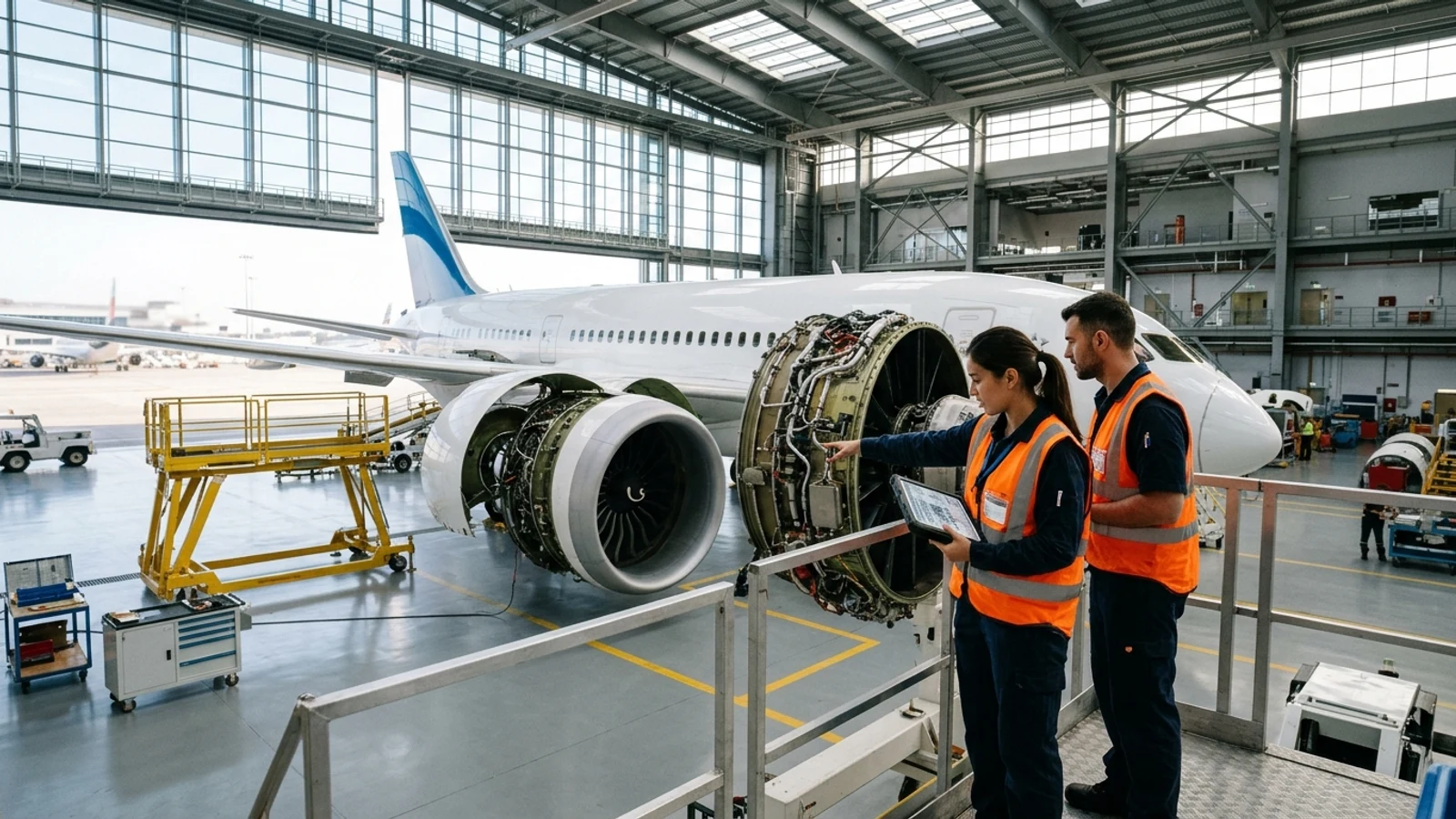
Parallel to these airport developments, the maintenance sector for airlines in the region is undergoing a shift toward deeper, long-term support agreements. AeroTime reports that Thales has emphasized the necessity of local presence to ensure critical parts are available within the region. With Asia-Pacific identified as a key growth market through 2050, the company has established sites in Singapore, Beijing, and New Delhi, with the latter facility opening in 2025 to support local carrier operations. Source
The demand for spare parts is dictated by the Minimum Equipment List (MEL), which prevents an aircraft from flying if specific systems are not operational. To minimize time on the ground, Thales is increasingly entering into repair-by-the-hour contracts. These agreements transfer the inventory management burden from the airline to the manufacturer, ensuring that essential components are stocked locally and ready for immediate deployment when an issue arises within an airline’s fleet. Source
A concrete example of this maintenance shift is the recent contract signed with Vietjet. Thales will provide component maintenance for the airline’s entire fleet of 147 Airbus A320 family and A330 aircraft. This partnership is designed to improve fleet availability and reduce long-term costs. The agreement marks a transition from transactional maintenance to a holistic support model, including exploratory work in cybersecurity, data-driven maintenance, and predictive analytics to improve overall fleet health. Source
The operational approach of Thales includes subcontracting repairs within its global network to optimize costs while prioritizing fast turnaround times for airlines. By maintaining a balance between local support sites and broader global repair capabilities, the company aims to support the mixed fleets of new-generation and older aircraft currently operating in Asia-Pacific. This hybrid model ensures that airlines gain access to high-level technical expertise while benefiting from the speed of localized spare-part availability. Source
In summary, the regional aviation landscape is prioritizing data connectivity and local infrastructure optimization. Whether through SITA’s efforts to digitize passenger movement or Thales’ focus on localized maintenance support, the objective is to process more volume within existing constraints. The following table summarizes key operational figures and capacity improvements documented during the recent MRO and Terminal Expo industry gatherings in Singapore. Source