
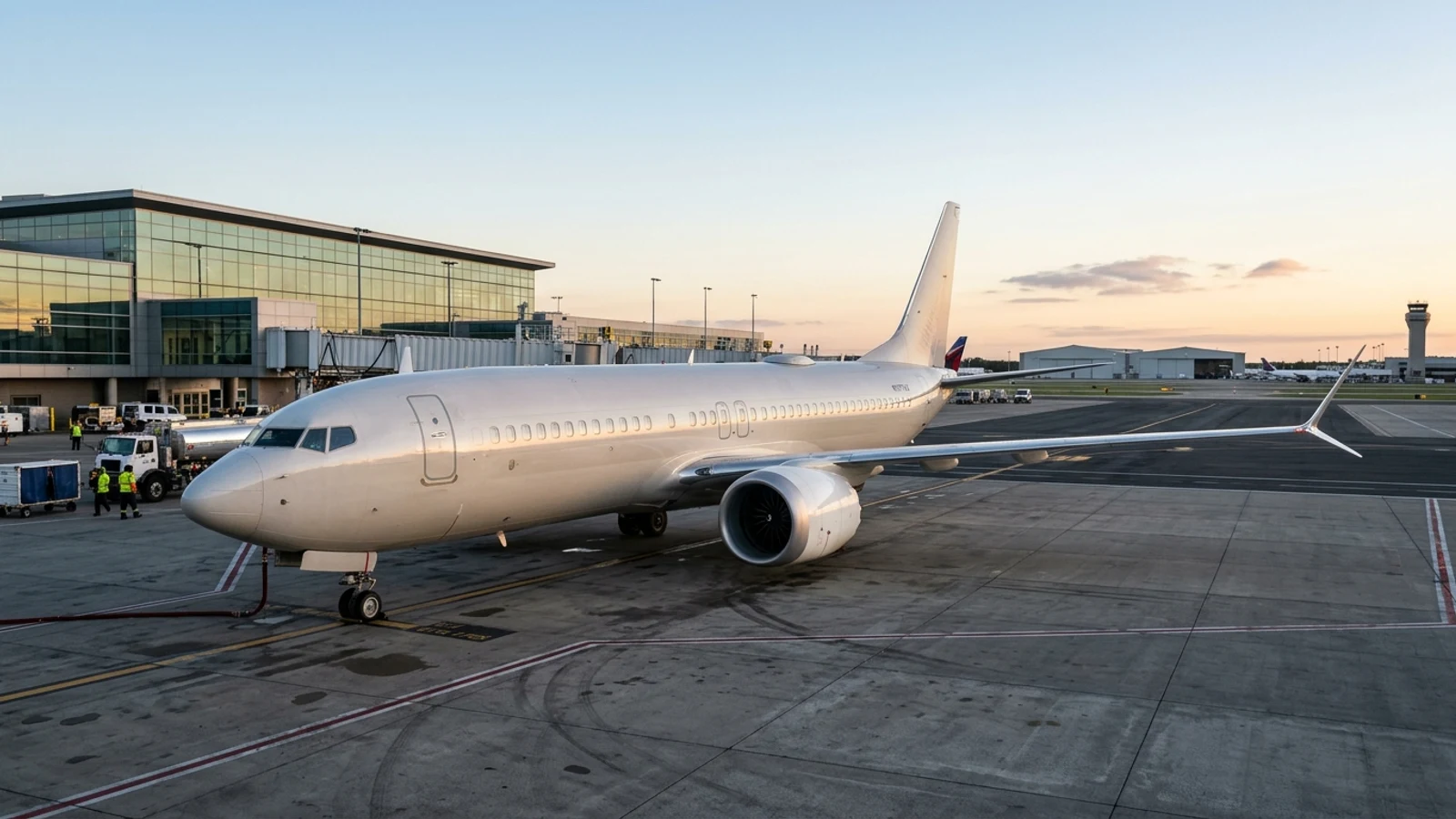
The Boeing 737 MAX 7 reached a major milestone on August 3, 2026, when it received airworthiness certification from the Federal Aviation Administration. This approval allows the aircraft to officially enter production as the designated successor to the legacy 737-700 Next Generation series. Although the type first performed a flight in March 2018, its entry into the commercial market experienced significant delays following the broader 737 MAX groundings that halted momentum for several years. Source
Boeing designed the MAX 7 to be larger than the aircraft it replaces, directly responding to feedback from launch customer Southwest Airlines. The aircraft measures 116 feet 8 inches in length, which represents an increase of approximately six feet four inches compared to the 110-foot 4-inch 737-700. While the wingspan remains nearly identical, the maximum takeoff weight has risen to 177,000 pounds, a significant increase of 22,500 pounds over the older model's 154,500-pound limit. Source
The evolution of the aircraft's physical dimensions was a direct result of negotiations with Southwest Airlines, which holds nearly 90% of the model's total order book. Originally marketed as a size-for-size replacement, the design was adjusted after the launch customer expressed concerns over the economics. Boeing stretched the fuselage by 76 inches, which involved adding 30 inches forward of the wing box and 46 inches aft, effectively increasing the two-class seating capacity to 153 passengers. Source
Technical Specifications and Fleet Integration
The following table compares key physical and performance specifications between the legacy 737-700 and the newly certified 737 MAX 7: Source
| Feature | 737-700 NG | 737 MAX 7 |
|---|---|---|
| Length | 110 ft 4 in | 116 ft 8 in |
| Max Takeoff Weight | 154,500 lb | 177,000 lb |
| Two-Class Seating | 126–140 | 138–153 |
| Single-Class Max | 149 | 172 |
Southwest Airlines expects to initiate passenger service with the MAX 7 in March 2027. This induction is part of a larger fleet renewal strategy, where the new jets will replace approximately 290 aging 737-700 aircraft. Currently, Boeing is preparing roughly 30 completed MAX 7 units out of storage by fitting them with necessary anti-ice upgrades. Newly manufactured jets are scheduled to begin exiting the Renton assembly line in February 2027 as the manufacturer ramps toward a target of 47 MAX jets per month. Source
The decision to commit to the MAX 7 was driven by Southwest's business model, which relies on a unified 737 fleet. By avoiding an introduction of the Airbus A220-300, the airline prevents the need for separate pilot training pipelines and split spare-parts inventories. Although the A220-300 has a lighter operating empty weight by roughly 17,600 pounds, the MAX 7 offers superior high-density seating capacity and a range advantage of 400 nautical miles over the Airbus alternative. Source
Southwest's strategy for the MAX 7 also accounts for the carrier's recent transition toward legacy-style amenities, including the introduction of checked bag fees and plans for airport lounges. The aircraft’s stretched cabin allows the airline to implement a dedicated extra-legroom section without reducing the total seat count or requiring a fourth flight attendant. This configuration provides the necessary balance to keep seat-mile costs competitive on thinner routes where the larger 175-seat MAX 8 might struggle. Source
Boeing’s broader production strategy involves balancing the high-volume output of the 737 line with the sunset of other programs. While workers in Renton continue to install 69-inch CFM LEAP-1B turbofans on the MAX family, the company is winding down 767 freighter production in 2027. This divergence reflects Boeing's decision to concentrate engineering capital on the 777X family and the 777-8F, rather than attempting to modernize the legacy widebody freighter airframe to meet ICAO carbon emission rules. Source
Industry Trends and Notable Projects
In a separate project, a retired 737-500 fuselage has been repurposed by an engineer in Derbyshire, England. Dave Billings, 45, purchased the retired section for approximately $5,300 on Facebook Marketplace. The three-ton structure was lowered into a 14-foot-deep excavation to serve as part of an underground bunker system. Billings expects the residential project to be finished by Christmas, incorporating features such as electricity, running water, and a toilet linked to the home's septic system. Source
The integration of the MAX 7 into the Southwest network provides operational flexibility for specific flying conditions. The aircraft's lighter airframe combined with the propulsion system of the MAX 8 improves climbing performance, which is advantageous for high-altitude airports or short runways. This capability ensures the airline can maintain service to challenging destinations without the payload restrictions that might affect a heavier, larger jet, while simultaneously managing landing fees that are calculated based on weight. Source
As of November 2026, the pathway to service entry remains focused on the final testing and induction phase for the initial MAX 7 units. Before the fleet can carry passengers, Southwest must complete approximately three months of proving runs, maintenance checks, and ferry flights monitored by the FAA. This rigor is intended to ensure that the aircraft is fully ready for the intensive daily operational demands of the Southwest domestic network following its anticipated debut in the spring of 2027. Source

