
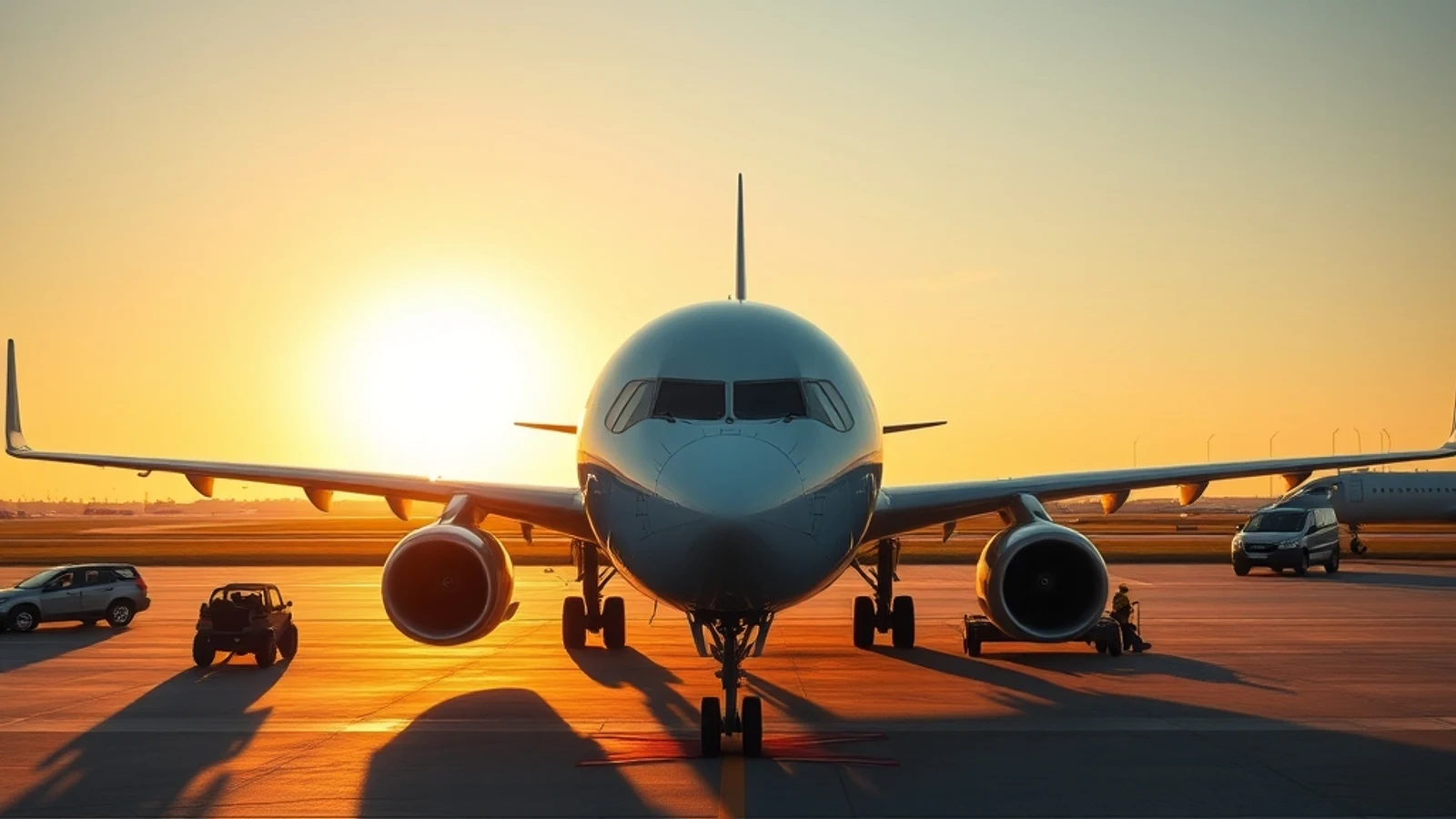
Commercial aviation prioritizes strict adherence to weight limits to balance profitability against aerodynamic physics. For the Boeing 737 MAX, financial margins are tight, necessitating that aircraft frequently operate near their maximum carrying capacity. To accommodate every passenger, item of luggage, and reserve of fuel, airlines utilize a regulatory provision that allows for the temporary loading of extra fuel at the gate. This excess fuel is intended to be consumed during ground maneuvers before the aircraft commences its takeoff roll. Source
Engineering design dictates two distinct weight thresholds: Maximum Taxi Weight and Maximum Takeoff Weight. When stationary at a gate or moving slowly on pavement, the landing gear, tires, and wheels support the aircraft's mass. Because the jet moves at a walking pace in these conditions, engineers certify a higher Maximum Taxi Weight. For a 737 MAX 8, this ground limit is set at 182,700 pounds (82,871 kilograms), which provides a operational buffer during pushback and taxi operations. Source
Once an aircraft prepares for flight, safety regulations mandate a lower Maximum Takeoff Weight. For the 737 MAX 8, this figure is 182,200 pounds (82,644 kilograms), creating a 500-pound (227-kilogram) difference from the maximum taxi weight. This limit is essential for ensuring that the aircraft possesses enough structural integrity to lift off safely, climb away during a potential single-engine failure, and stop effectively on the runway if an aborted takeoff occurs due to adverse conditions such as ice or high heat. Source
Operating safely within these limits requires precise monitoring by flight crews. If an aircraft encounters a traffic bottleneck, the extra 500 pounds of fuel can be depleted faster than anticipated, potentially eating into the required flight reserves. In such instances, if the weight remains above the takeoff limit, crews may be forced to return to the gate to reload fuel or perform procedures to shed surplus weight while waiting on the taxiway, which can lead to unavoidable passenger delays. Source
When comparing the 737 MAX 8 to other narrowbody aircraft, the narrow weight gap is significant. A typical Airbus A320neo, for instance, operates with a much larger margin between its taxi and takeoff weight limits, allowing for more flexibility on congested airport surfaces. Boeing engineers restricted the 737 MAX buffer to maintain the original airframe's geometry, as adding reinforced landing gear to support higher weights would have required fundamental design changes to the aircraft's ground stance. Source
The evolution of the Boeing 737 family continues with the MAX 7, which received FAA certification on August 3, 2026. This aircraft, designed to replace the aging 737-700, features a fuselage stretched by 76 inches (1.93 meters). Following design changes spurred by requests from launch customer Southwest Airlines, the aircraft now offers an increased capacity for 153 passengers in a two-class configuration, allowing the carrier to compete more effectively with the Airbus A220-300. Source
The MAX 7 serves as a strategic replacement for Southwest Airlines' nearly 290 retiring 737-700 units. By retaining a single-fleet business model centered on the 737 family, Southwest avoids the costs associated with separate pilot training, split spare-parts inventories, and the operational limitations that would arise from introducing the A220. The MAX 7's ability to fly 400 nautical miles farther than the A220-300 provides the airline with significant network flexibility for point-to-point operations. Source
Comparison of Boeing 737-700 and 737 MAX 7 Specifications: Source
| Feature | 737-700 | 737 MAX 7 |
|---|---|---|
| Length | 110 ft 4 in | 116 ft 8 in |
| Max Takeoff Weight | 154,500 lb | 177,000 lb |
| Two-Class Capacity | 126–140 | 138–153 |
| Single-Class Capacity | 149 | 172 |
The integration of the MAX 7 into Southwest’s fleet is expected to commence with a passenger debut in March 2027. This move follows years of scheduling uncertainty caused by certification delays for the MAX 7, which forced the airline to convert many of its orders into 175-seat 737 MAX 8 aircraft. While the larger MAX 8 offers superior cost per seat-mile, its size is not ideal for the high-frequency, short-haul routes that the 737-700 fleet previously served. Source
Southwest’s shift toward a legacy-style service model, including the introduction of extra-legroom sections and checked bag fees, influences how the MAX 7 is deployed. Because landing fees are calculated based on an aircraft's weight, the 22,500-pound increase over the 737-700 requires the airline to prioritize the MAX 7 for longer routes. On these missions, the aircraft's fuel efficiency and premium seating options generate sufficient revenue to cover the higher airport operating costs. Source
Despite the structural and weight differences between these models, the 737 MAX 7 offers a unique advantage in handling challenging flight environments. Its design, which combines a lighter fuselage with the robust wing and engine systems of the larger MAX 8, grants it improved climbing performance and range. This capability makes it particularly suitable for operating from high-altitude airports or short-runway facilities, and for long-haul routes to destinations such as Hawaii where weight-limited takeoffs are a factor. Source

