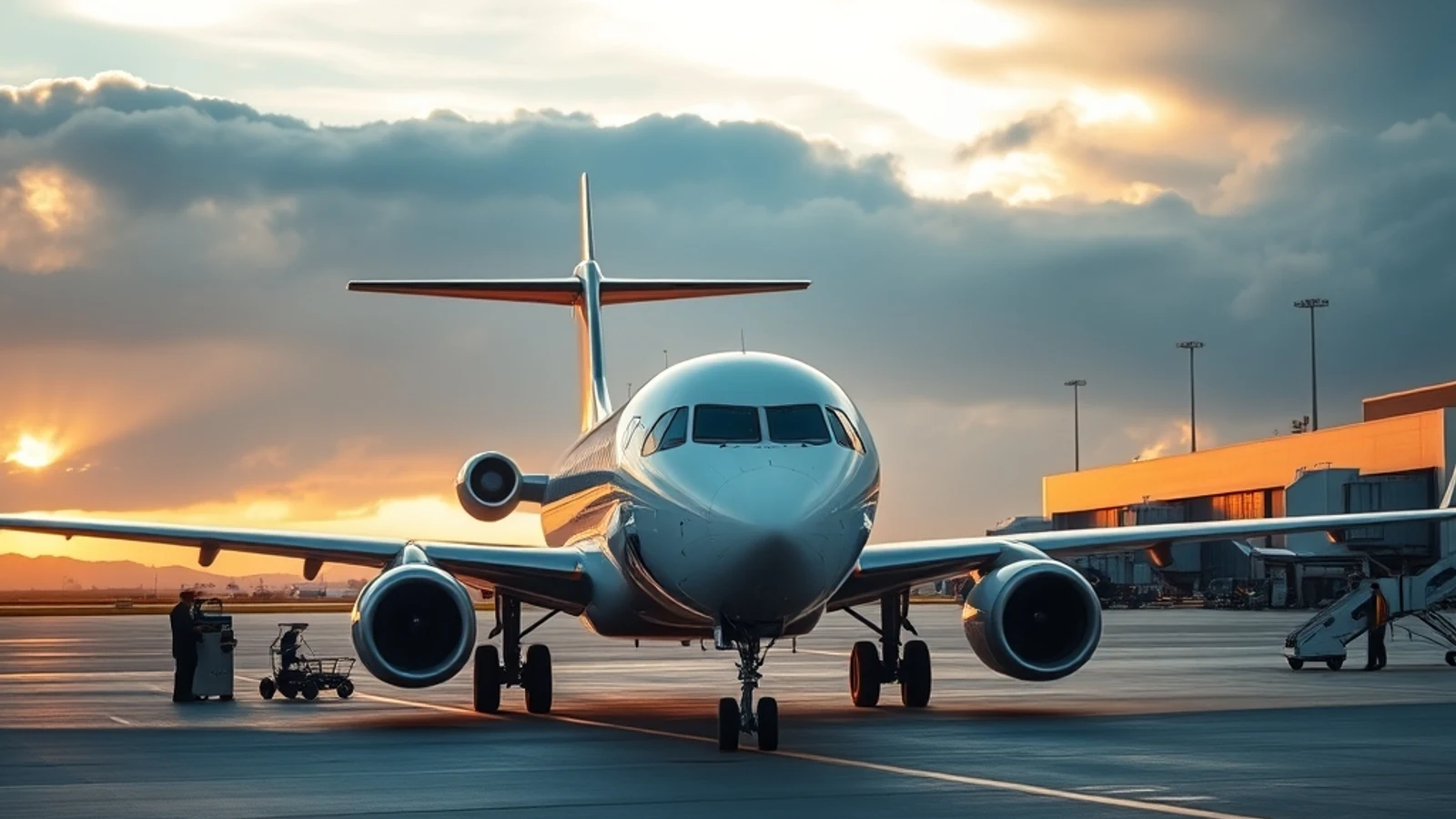
The United States government has announced a proposed 10% tariff on aircraft imported from Brazil. According to Simple Flying Aviation Discovery, the Office of the US Trade Representative revealed this plan on Wednesday, November 25, 2026. This potential duty covers various categories of finished aircraft, including both helicopters and airplanes, and represents a significant shift from previous policies. While this measure is currently a proposal and has not yet been finalized, it has sparked immediate concerns regarding the cost of future fleet expansions for major US carriers. Source
Data provided by ch-aviation indicates that US airlines maintain a substantial footprint of pending deliveries for Brazilian-manufactured aircraft. There are currently over 200 firm orders for Embraer aircraft placed by domestic carriers, alongside approximately 100 additional purchase options. At published list prices, these firm commitments are valued in excess of $13 billion. While the eventual financial impact will be lower due to standard industry discounts, the introduction of a 10% levy could still add hundreds of millions in costs for airlines. Source
Embraer's backlog data, as of September 30, 2026, highlights that 163 E175 aircraft are currently on firm order. Of that total, 155 units are designated for three primary US customers. American Airlines leads this group with 66 aircraft on order, followed by SkyWest Airlines with 63, and Republic Airways with 26. Furthermore, Avelo Airlines committed to 50 E195-E2 aircraft in September 2025, with options for another 50. Deliveries for the Avelo order are currently scheduled to commence in 2028. Source
The potential financial implications for US carriers are significant when considering list price valuations. The E175 orders for US customers are estimated to be worth approximately $9.3 billion. When combined with the $4.4 billion value of the Avelo E195-E2 order, the total list price reaches roughly $13.7 billion. A 10% tariff on this volume equates to over $1.3 billion. While airlines rarely pay list prices, the surcharge still threatens to increase capital expenditure for companies already dealing with high fuel costs. Source
Embraer has expressed its intent to review the proposed regulation. The manufacturer officially stated it remains committed to defending the zero-tariff policy for the global aerospace sector, a practice maintained since the 1980s. Following the announcement by the US Trade Representative, shares in the planemaker declined by approximately 5%. Additionally, the Brazilian Foreign Ministry indicated that it is currently evaluating the potential impact of the proposed tariff on the nation's exports. Source
Trade Representative Jamieson Greer justified the proposed modification by citing a lack of progress regarding issues raised during a previous US investigation into Brazilian policies. The official stated that this action is intended to provide the United States with greater leverage to secure the elimination of policies deemed unreasonable. This development arrives after a separate 25% tariff was introduced in July 2026 on other Brazilian goods, although that previous order specifically provided an exemption for finished aircraft. Source
The importance of Embraer to the US domestic network is underscored by current usage statistics. The E175 has become the most frequently scheduled aircraft type in the US domestic market. According to Embraer Commercial Aviation CEO Arjan Meijer, the regional jet was scheduled to operate 102,931 domestic flights in October 2026. This volume exceeded the flight counts for both the Boeing 737-800, at 88,434, and the 737 MAX 8, at 73,381. There are currently over 720 active Embraer airframes operating under US carriers. Source
Current regional carrier operations rely heavily on the E175 platform. SkyWest Airlines stands as the largest operator with 276 units flying for carriers including United, Delta, American, and Alaska Airlines. Republic Airways operates 251 units for American, Delta, and United, while American's subsidiary, Envoy Air, operates 136. These carriers have previously navigated trade uncertainty. In July 2025, Envoy Air, Piedmont Airlines, and Republic formally requested that the Department of Commerce exclude aircraft from threatened tariffs. Source
Embraer US Order Backlog and Market Impact
The following table outlines the current firm order commitments for Embraer aircraft among major US carriers as of September 30, 2026, as reported by Simple Flying Aviation Discovery. Source
| Airline | Aircraft Type | Number of Units |
|---|---|---|
| American Airlines | E175 | 66 |
| SkyWest Airlines | E175 | 63 |
| Republic Airways | E175 | 26 |
| Avelo Airlines | E195-E2 | 50 |
Regulatory Uncertainty and Future Deliveries
The timeline for the implementation of these tariffs remains uncertain. Future deliveries of existing orders could be affected, contingent on the effective date of the final policy. Industry analysts are monitoring the situation closely to determine if a similar exemption process to the one utilized in 2025 will be granted for aircraft manufacturers. Until official finalization occurs, the potential financial impact remains a projection based on current list price values rather than actual transaction costs. Source
The aviation industry is evaluating the long-term consequences of this proposal. With Embraer serving as a pillar of regional connectivity in the United States, the outcome of the USTR investigation and subsequent negotiations will influence fleet planning for several years. Airlines will likely continue to lobby for the historical zero-tariff status for aerospace, as emphasized by Embraer's leadership. The potential for higher acquisition costs could force carriers to adjust their regional capacity strategies if the tariffs are implemented. Source