
Nationwide Air Traffic Disruption
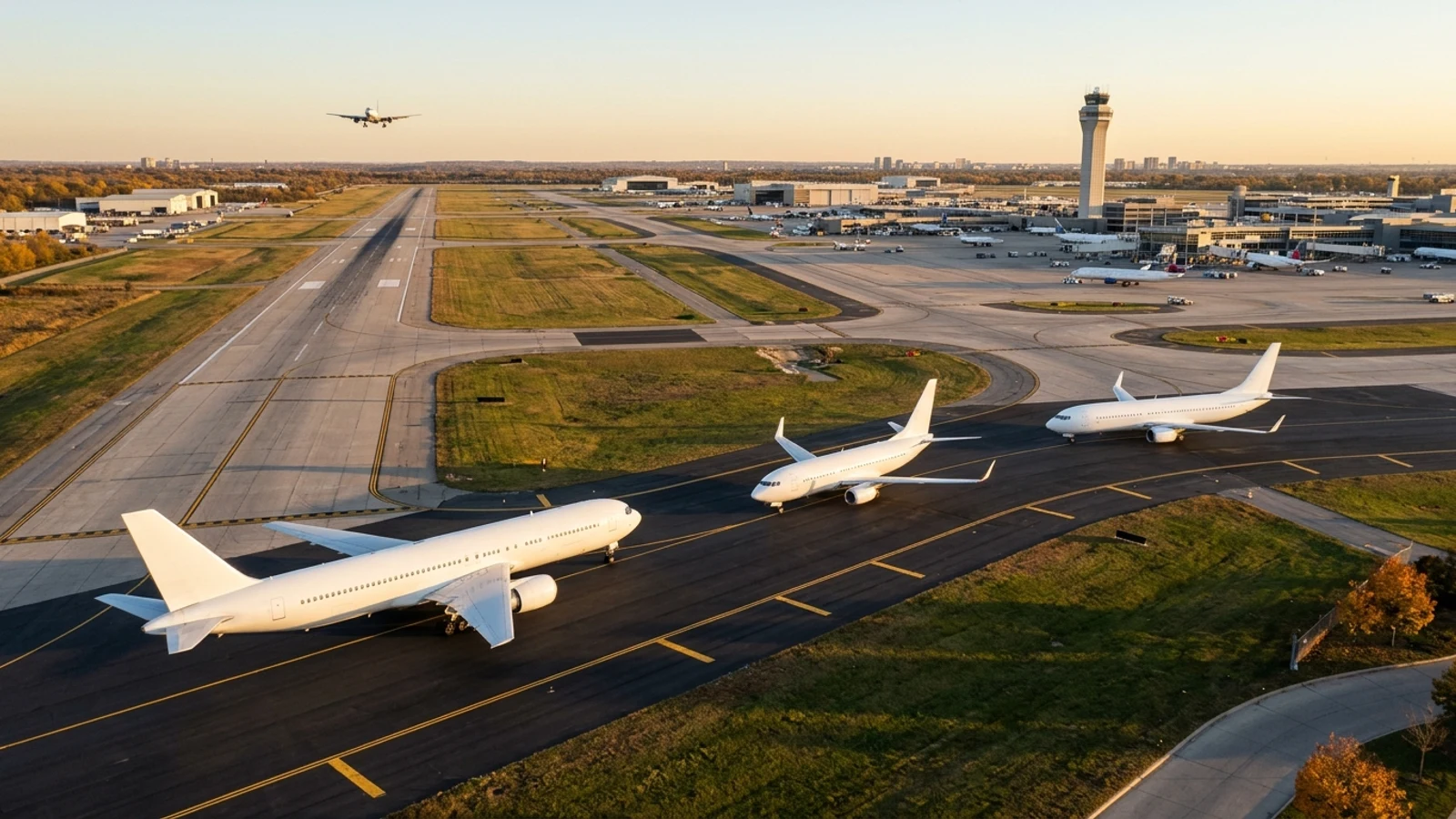
The United States Federal Aviation Administration implemented a comprehensive nationwide ground stop on November 13, 2026, which impacted departures at airports across the country. The directive was issued shortly before 4:00 p.m. Eastern Time following the detection of a significant telecommunications malfunction that specifically affected all Air Route Traffic Control Centers. These regional facilities are essential for managing the flow of aircraft throughout the en route phase of flight operations, providing critical guidance between departure and arrival hubs. Source
This event represents a rare systemic failure within the US aviation network. According to documentation from the incident, it is considered the first nationwide departure halt since January 2023 and only the second such occurrence since the September 11, 2001, terrorist attacks. The disruption necessitated immediate precautionary measures from federal regulators, who moved to hold ground-bound aircraft at their originating airports while simultaneous investigations were launched by technical personnel across the network. Source
During the period the ground stop was in effect, approximately 3,100 aircraft remained in the air, having already departed for various US destinations. While the FAA provided instructions to flight crews to anticipate potential airborne holding patterns due to the ongoing equipment outages, the specific number of aircraft actually forced into holding was not explicitly stated in public reports. Aircraft already en route were permitted to continue their flights and land at their intended destinations during the disruption. Source
Operational Impact and Recovery
US Transportation Secretary Sean Duffy confirmed that the primary issue centered on a communication failure impacting all regional Air Route Traffic Control Centers. Although investigations were initiated immediately, official statements did not identify the exact nature of the failed system or a definitive timeline for the resumption of standard departure operations. The FAA stated that international flights would be handled on an individual basis as the agency worked to account for every active aircraft across the national airspace system. Source
Local airport authorities were quick to respond to the federal order, issuing travel alerts to passengers regarding the high probability of delays or cancellations. For instance, the Owensboro-Daviess County Regional Airport advised travelers to verify their status directly through their respective airlines. Similarly, reports from George Bush Intercontinental Airport confirmed that all departures were held, while San Francisco International Airport reported that landing operations for en route flights continued despite the nationwide ground order. Source
The timing of this November 13, 2026, outage followed a specific legislative request from the White House and the Department of Transportation. Just hours before the ground stop was ordered, officials had requested that Congress provide an additional $30.1 billion specifically for the modernization of aviation infrastructure. This funding proposal included a allocation of $10.1 billion dedicated specifically to the upgrade of air traffic control systems, highlighting existing concerns regarding the stability of aging technology in the current aviation landscape. Source
In comparison to previous incidents, the January 11, 2023, nationwide ground stop lasted approximately 90 minutes. That event was attributed to the failure of the Notice to Air Missions (NOTAM) system. Post-incident investigations revealed that contract personnel had inadvertently deleted files while performing database synchronization between primary and backup systems. While officials stated that the November 13, 2026, action was taken as a precaution, the specific root cause remains under active investigation by technical teams and agency leadership. Source
For passengers attempting to assess their travel status, the FAA's mandate meant that all departure sequences were essentially halted at the airport level. Unlike a simple runway closure or local technical issue, this mandate was geographically universal, affecting the entirety of the US national airspace. Passengers were consistently directed to check with their airlines for individual flight data, as local airport boards and air traffic control centers were unable to provide specific, accurate arrival or departure times while the stop was active. Source
The FAA also provided updates via its official social media channels to address the nature of the emergency. Throughout the event, the agency focused on clearing the existing congestion of en route aircraft while keeping ground operations suspended. Air traffic controllers, who typically manage hand-offs between centers, faced significant hurdles due to the communications breakdown. While the agency maintained that all flights were accounted for, the sudden nature of the order caused widespread confusion at airports across all major US regions. Source
Comparing this incident to historical events helps frame the significance of the 2026 disruption. Since the 2001 attacks, ground stops of this magnitude remain extremely rare. While the January 2023 event provided a template for how agencies respond to system-wide failures, the November 2026 event impacted regional centers directly rather than the NOTAM notification system. This difference implies a broader operational impact on active air traffic, which necessitates higher levels of coordination between FAA technicians and the individual, affected airport control towers. Source
Ultimately, the ground stop serves as a reminder of the reliance on stable infrastructure. The fact that the agency had to halt departures globally across the US indicates that the communications failure had the potential to degrade safety protocols if aircraft were allowed to continue taking off. The agency's commitment to safety, by prioritizing the management of already airborne flights over the throughput of new departures, reflects the standard procedural approach to dealing with sudden, large-scale communication losses within the ARTCC architecture. Source
As of the current reporting, while the initial ground stop has seen changes, the technical teams have been working to stabilize the communications network. Passengers are advised that even after a ground stop is formally lifted, the cascading effects of flight delays and cancellations often persist for several hours or days due to displaced crews and aircraft. Future updates will be provided by the FAA as the investigation into the specific cause of the outage concludes and infrastructure upgrades are finalized. Source

