
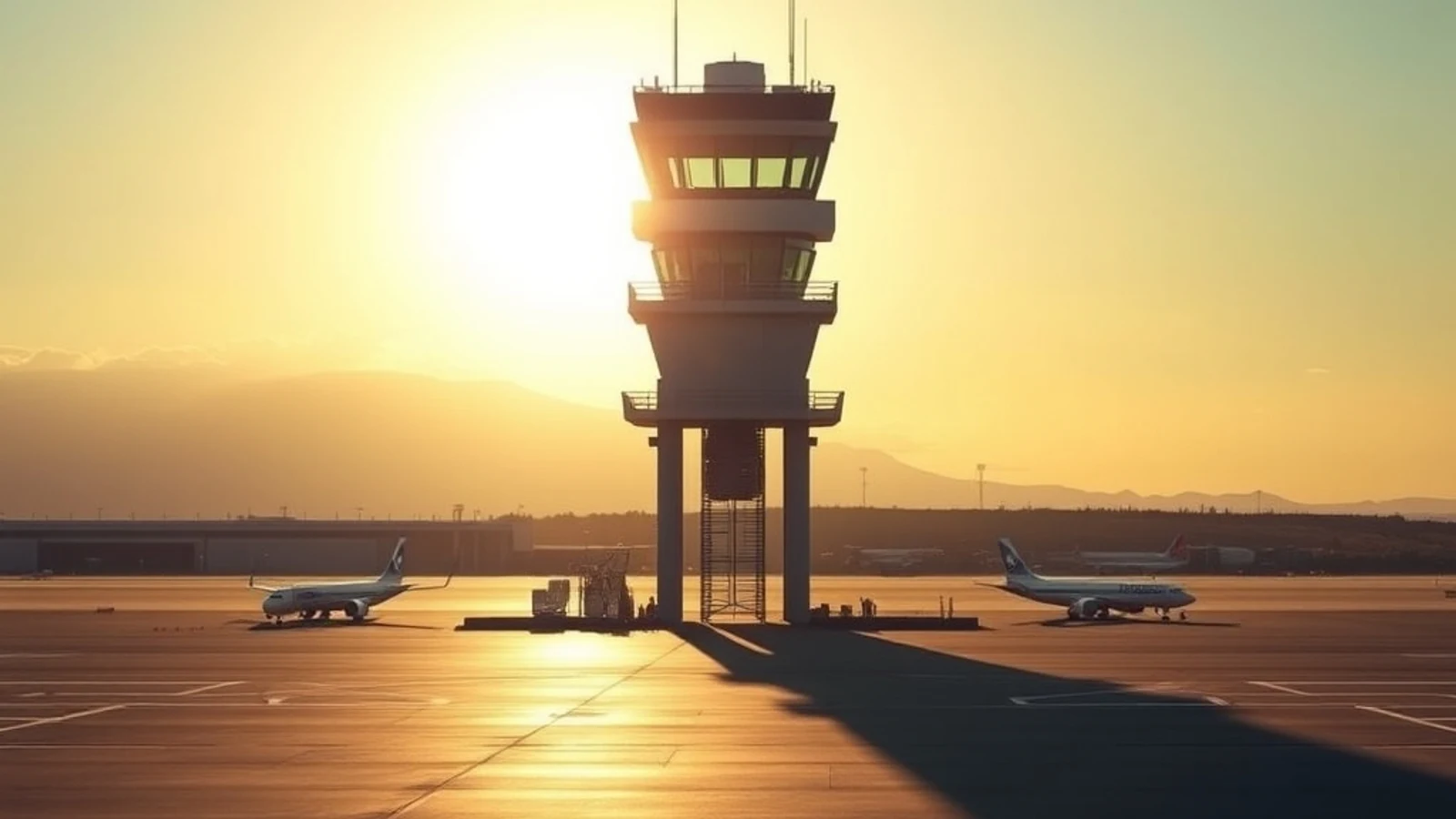
The Federal Aviation Administration implemented stricter nationwide runway safety requirements on November 24, 2026, as US airports prepare for a 16-year high in holiday flight volume. The new directive, titled FAA Notice N JO 7210.979, mandates specific staffing arrangements for Line Up and Wait (LUAW) departure procedures. Under these updated rules, towers must provide a dedicated operations supervisor or controller-in-charge to monitor runway activity whenever aircraft are instructed to enter and hold on an active runway. Source
This regulatory shift converts previous recommendations into binding requirements. Air traffic control facilities must ensure that the designated watch supervisor does not simultaneously manage other tasks, such as ground control or clearance delivery. By separating these duties, the FAA aims to eliminate potential distractions and strengthen oversight during departure operations. The mandate ensures that personnel providing watch supervision can maintain undivided attention toward the runway environment, reducing the risk of hazardous situations during peak air travel periods. Source
The FAA’s policy does not prohibit the LUAW procedure, which remains a standard method for managing departure sequences when multiple aircraft require access to the same runway. Instead, it establishes more rigorous staffing conditions governing its usage. The directive also mandates a clear separation between local control and non-local positions. While local control may still be combined with certain tower-specific functions like local assistance or monitoring, it cannot be paired with non-local positions including flight data or watch supervision. Source
Operational Staffing Changes
The following table outlines the operational requirements for air traffic controllers under the new FAA directive compared to previous guidance. Source
| Requirement | Previous Status | Current Status (Effective Nov 24, 2026) |
|---|---|---|
| Dedicated LUAW Supervision | Recommended | Mandatory |
| Supervisor Role | Could hold secondary duties | Must be dedicated to runway safety |
| Separation of Local Control | Suggested | Required from non-local positions |
Aviation officials have noted that the timing of this directive corresponds with a significant surge in air travel. The FAA anticipates over 417,000 flights occurring during the nine-day Thanksgiving period, with November 24 identified as the single busiest day for aircraft movements. Simultaneously, the Transportation Security Administration projects that approximately 17.6 million passengers will pass through airport security checkpoints between November 24 and November 30, with peak passenger screening volume expected on November 29. Source
Industry analysts and air traffic controllers have expressed concerns regarding the impact of these changes on departure rates, particularly at facilities facing chronic staffing shortages. While the FAA has not issued a nationwide limit on departure procedures, towers lacking sufficient personnel to staff a secondary supervisory position may be forced to suspend LUAW operations. This would necessitate holding aircraft on adjacent taxiways until the runway is entirely clear, a process that could lengthen departure queues, particularly during the expected peak travel dates of November 25 and November 29. Source
The FAA has clarified that the new policy does not establish a blanket restriction on airport operations or mandate passenger flight cancellations. It is intended as a safety measure to prevent runway incursions and conflicts between arriving and departing traffic. Despite these measures, weather remains a primary factor for potential delays, with rain and wind forecast for the Northeast and Southeast regions. Travelers are advised to monitor flight status alerts closely and consult the FAA’s official National Airspace System status portal for real-time information. Source
The directive enters force as the aviation sector continues to recover from a nationwide ground stop that occurred on November 13, 2026. That event, caused by a telecommunications equipment malfunction in southern Arkansas, resulted in approximately 18,000 flight cancellations. Although the current staffing directive addresses a different category of operational risk related to tower oversight, it highlights the broader focus on system reliability. The FAA has stated that this notice will remain in effect until its scheduled cancellation date of June 9, 2027. Source
Operational and Passenger Impacts
While major hubs with full rosters are expected to integrate the new supervisory requirements without significant disruption, smaller regional towers with limited staffing may experience slower aircraft throughput. The FAA has noted that medium-large airports, specifically those classified between Levels 8 and 12, may request exemptions in response to airline feedback. The agency has not provided a quantitative estimate of potential delay impacts, focusing instead on the goal of ensuring safety during the high-traffic holiday environment. Source
Safety remains the primary objective of this regulatory adjustment, following several high-profile runway close calls that prompted a comprehensive review of tower oversight procedures. By standardizing the supervisory role, the FAA aims to eliminate the ambiguity that previously permitted local controllers to handle multiple operational responsibilities during LUAW maneuvers. This policy strengthens the safety margins at airports, particularly when visibility is limited or when high volumes of arriving and departing traffic create complex, time-sensitive coordination needs. Source
Ultimately, the effectiveness of these new regulations will depend on local facility staffing levels and the ability of towers to manage complex traffic flows. As the industry moves into the peak holiday period, airlines and ground-handling teams will continue to coordinate with local towers to ensure efficient aircraft turnarounds. For passengers, the directive does not represent a direct operational barrier to travel but underscores the ongoing efforts by regulators to maintain safety levels in a high-demand air traffic system. Source

