
Technology and Design Innovation
The Chinese automotive market has officially seen the introduction of a production vehicle featuring a foldable steering wheel, marking a shift in interior cabin design. Marketed under BYD’s luxury sub-brand Fang Cheng Bao, the Tai 9 three-row SUV utilizes new regulatory allowances in China to integrate this technology. Following the update of Chinese vehicle regulations in July 2026, which now explicitly permit the use of steer-by-wire systems, manufacturers are exploring new configurations for vehicle interiors that were previously restricted. Source
Technology and Design Innovation
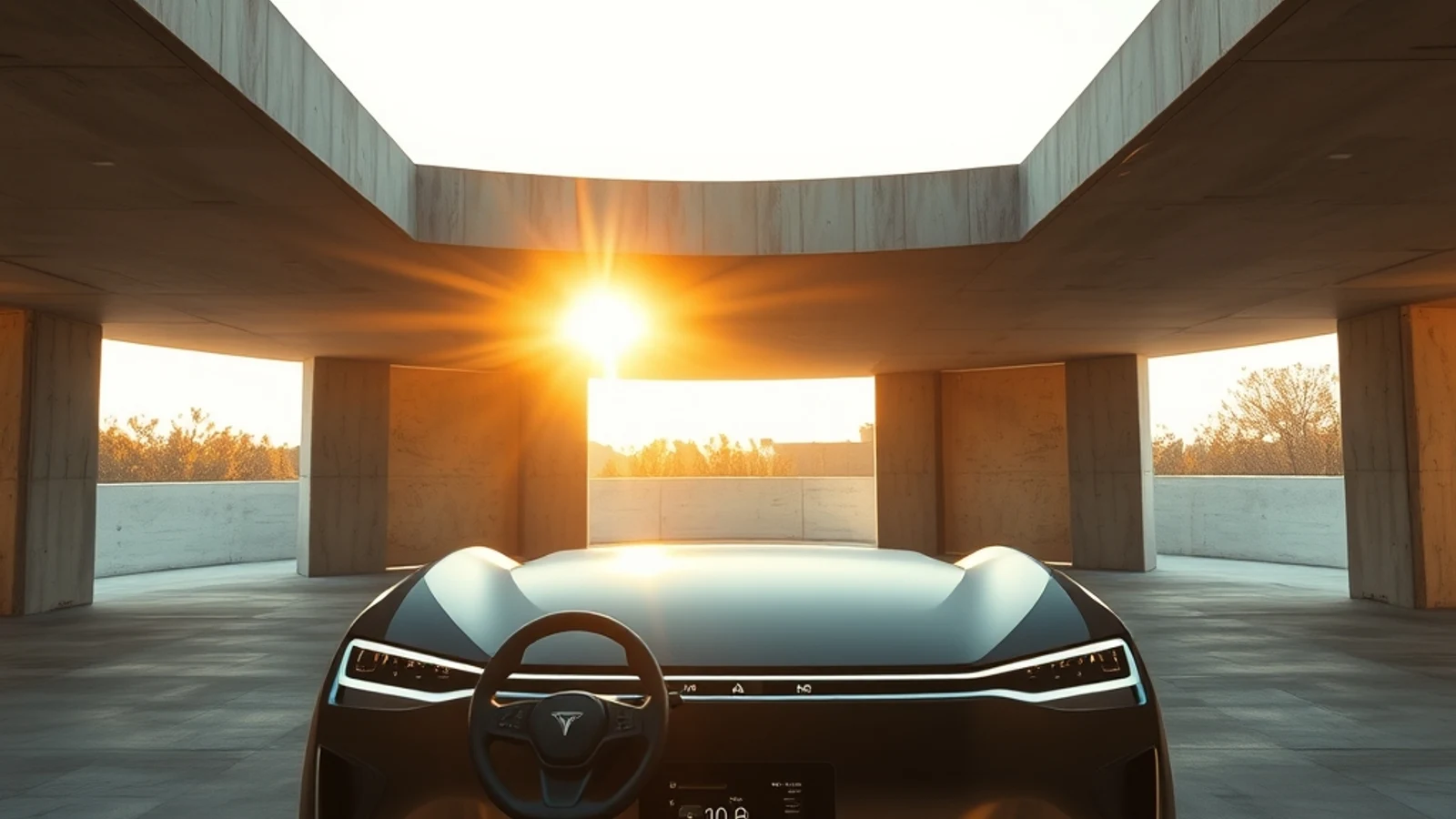
The foldable steering wheel, branded as the Foldable Smart Cabin system, is designed to enhance the utility of the vehicle while it is parked. Using electric motors, the rim of the steering wheel splits into two sections, allowing the entire mechanism to fold flat against the steering column. The unit then retracts into the dashboard, with a decorative panel automatically covering the aperture to create a clean surface. This process is documented to take less than 10 seconds to complete during stationary operation. Source
This retractable functionality is made possible entirely through steer-by-wire technology, which removes any physical mechanical link between the steering wheel and the vehicle's road wheels. Because there is no steering column connection, the wheel can be moved without compromising the vehicle's driving capability. However, the system is strictly limited to parking scenarios. Despite the Tai 9's inclusion of advanced autonomous driving technology, referred to as the God’s Eye system, the steering wheel cannot fold or retract while the vehicle is in motion. Source
Beyond the steering mechanism, the interior of the Tai 9 is configured for maximum leisure and multi-use functionality. The vehicle provides front seats that are capable of reclining up to 165 degrees, allowing for a flat resting position. When the steering wheel is retracted, the space previously occupied by the steering rim allows for the deployment of a retractable tabletop. These features are marketed toward families, particularly for use while the vehicle is charging or during camping excursions, aligning with current consumer preferences in China for living-space-style interiors. Source
The Tai 9 is a large, luxury-focused SUV measuring 5270mm in length. It features a six-seat configuration with individual seating for each passenger. All six seats offer heating, ventilation, and massage functions. Additional cabin amenities include an in-car refrigerator, screens for each of the three rows, a 31-speaker sound system, and integrated in-car karaoke. The vehicle also incorporates a rocking chair mode for the front passenger seat to further emphasize the leisure capabilities of the cabin space. Source
Regarding performance, the Tai 9 utilizes a range-extender plug-in hybrid powertrain. This system pairs a 1.5-litre internal combustion engine—acting exclusively as a generator—with electric motors mounted on each axle. Each motor is rated at 200kW, providing the vehicle with a combined power output of 400kW. Energy is supplied by a 66.5kWh battery pack. According to manufacturer claims, the battery supports an EV-only driving range of up to 310km under WLTP testing, while the combined range using the petrol generator exceeds 1600km. Source
The availability of the foldable steering wheel is limited to the top trim level of the Tai 9 model line. The starting MSRP for this specific trim is 329,900 yuan, approximately $49,500 based on current exchange information. While the steer-by-wire technology itself has appeared in other high-end vehicles such as the Tesla Cybertruck and the Mercedes EQS, as well as the Infiniti Q50 dating back to 2013, the implementation by BYD represents the first application of a fully foldable, storable steering wheel on a production model. Source
The technical specifications and configuration options for the Fang Cheng Bao Tai 9 and its hybrid system are summarized in the table below. Performance and range figures provided reflect manufacturer claims as reported by the specified sources. Source
Regarding the potential for international expansion, the status of the Tai 9 in markets outside of China remains unconfirmed. While the smaller Tai 7 SUV is considered a strong candidate for potential introduction to the Australian market, there is uncertainty regarding the larger Tai 9. Observers note that the Tai 9 may skip certain showrooms to avoid direct competition with the smaller, more similarly sized models already designated for those regions under the BYD or Denza brand architectures. Source
Technical Specifications
The following table details the key performance and structural metrics for the Fang Cheng Bao Tai 9 SUV as disclosed in the provided manufacturer-related reporting. Source
| Feature | Specification |
|---|---|
| Length | 5270mm |
| Total Power Output | 400kW |
| Motor Configuration | Dual motor (200kW per axle) |
| Battery Capacity | 66.5kWh |
| WLTP EV-Only Range | 310km |
| Combined Range (Generator) | >1600km |
In the broader context of the automotive industry, the introduction of the Tai 9 signifies a trend toward utilizing steer-by-wire to enhance interior flexibility. As autonomous driving capabilities mature globally, it is expected that such mechanisms will appear more frequently in future vehicle designs. For the present, however, Chinese buyers remain the primary target for these leisure-focused interior innovations, which seek to repurpose the vehicle cabin into a versatile living space during stationary periods such as camping or charging. Source

