
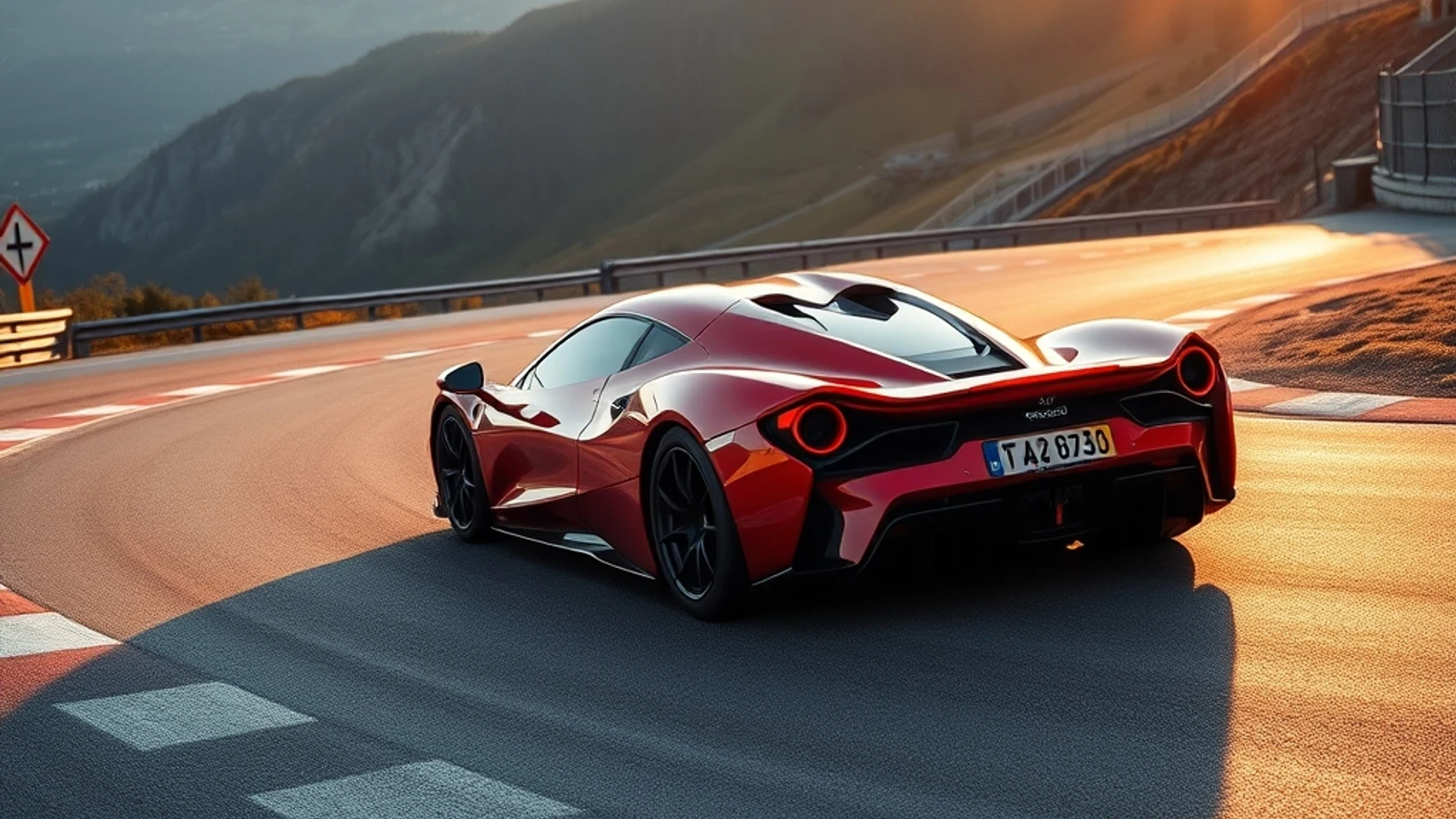
New 296 Challenge Stradale Technical Overview
Ferrari has introduced the 296 Challenge Stradale, a new street-legal production supercar that removes the hybrid components found in the standard 296 GTB. Unveiled during the 2026 season finale at the Catalunya circuit in Spain, the vehicle was developed alongside the track-only 296 Challenge Evo, which is scheduled to participate in the single-marque Ferrari Challenge series beginning in 2027. This release represents a significant departure from the hybrid-assisted architecture of the brand's recent offerings, focusing instead on reduced weight and mechanical simplicity. Source
The powertrain of the 296 Challenge Stradale consists of a 3.0-liter twin-turbocharged V6 engine producing 670 horsepower. By eliminating the 5-kWh battery pack and the axial-flux electric motor, Ferrari has reduced the vehicle's dry weight by 328 pounds compared to the 296 GTB. The engine is paired with an eight-speed dual-clutch transmission that utilizes specific software calibrations derived from the race-oriented Challenge Evo and the SF90 XX Stradale, depending on the driving environment and speed requirements. Source
Performance metrics for the model indicate a zero-to-62-mph sprint time of 2.8 seconds and a top speed exceeding 186 mph. Ferrari has implemented a variety of weight-saving measures to optimize the power-to-weight ratio, including the use of carbon fiber for door panels and optional bucket seats. Further weight reduction is achieved through the use of a lighter transmission flex plate and timing cover, alongside the removal of interior storage areas and heavy sound insulation to emphasize the model's focus on track performance. Source
The vehicle's aerodynamic profile is heavily influenced by the 296 Challenge Evo, featuring a fixed carbon fiber rear wing, an adjustable front splitter, and multiple vortex generators. Ferrari claims the car generates 1,360 pounds of downforce at 155 mph, representing a 72% increase in downforce compared to the 296 GTB. These aerodynamic elements are designed to facilitate improved stability during high-speed cornering, while the underbody has been fully enclosed to optimize airflow and reduce drag. Source
Handling characteristics are supported by a suspension system derived directly from the racing program, utilizing semi-active dampers and a dual-spring design to manage body roll, which Ferrari claims is reduced by 68% compared to the 296 GTB. The chassis is equipped with 20-inch forged wheels wrapped in Pirelli P Zero R tires. Braking is handled by carbon-ceramic discs, with the absence of regenerative braking requiring larger rear discs and enhanced cooling ducts compared to the standard 296 model architecture. Source
Unlike models within Ferrari's special series, which typically require an existing customer relationship, the 296 Challenge Stradale is classified as a standard range model. This indicates that availability is not limited to a specific production count, and orders can be placed by new customers through official dealers. While European pricing is set at approximately 291,000 euros, US pricing has not been formally finalized, although market reports estimate the cost to be between $300,000 and $320,000. Source
The track-only 296 Challenge Evo, which shares a significant portion of the bodywork and aerodynamic architecture with the Stradale, introduces further performance capabilities. The Evo produces 700 horsepower and offers an optional Low Drag configuration that can reduce drag by 4%. The Evo’s aerodynamic kit, including front bumpers and diffusers, can be retrofitted to existing 296 Challenge vehicles, allowing existing racing teams to upgrade their current machines to the latest specifications for the 2027 racing season. Source
In terms of cabin design, the 296 Challenge Stradale maintains a minimalist approach that prioritizes driver interaction. The steering wheel features physical buttons, returning to a traditional layout rather than the haptic interfaces seen in other recent models. Buyers can further strip the interior by removing carpets and trim, exposing structural components to save additional weight. This focus on austerity is intended to align the road-going vehicle as closely as possible with the specifications of its racing counterpart. Source
Comparison and Specification Table
The following table outlines key performance and weight specifications for the 296 Challenge Stradale as compared to the standard 296 GTB model. Source
| Feature | 296 Challenge Stradale | 296 GTB |
|---|---|---|
| Power | 670 horsepower | 819 hp (system) |
| Downforce at 155 mph | 1,360 lbs | ~790 lbs |
| Body Roll Reduction | 68% | Base |
| Hybrid System | None | Plug-in Hybrid |
Ferrari emphasizes that the removal of the hybrid system is intended to limit vehicle complexity and provide a raw, mechanical driving experience. Engineers focused their development on boost pressure, insulation, and valve timing to compensate for the loss of electric torque assistance. The resulting power delivery is designed to offer a more immediate throttle response and a distinct acoustic profile, with the exhaust system utilizing a twin-exit configuration derived directly from the 296 Challenge race car. Source
Market delivery timelines indicate that the road-going Challenge Stradale is expected to arrive in the United States in the second half of 2027. Prospective owners are encouraged to contact authorized dealers to discuss allocation, given that the model is part of the standard production lineup rather than a limited-run release. Ferrari continues to position the model as a primary entry point for enthusiasts seeking the most direct connection between their road vehicles and the company’s competitive racing heritage. Source

