
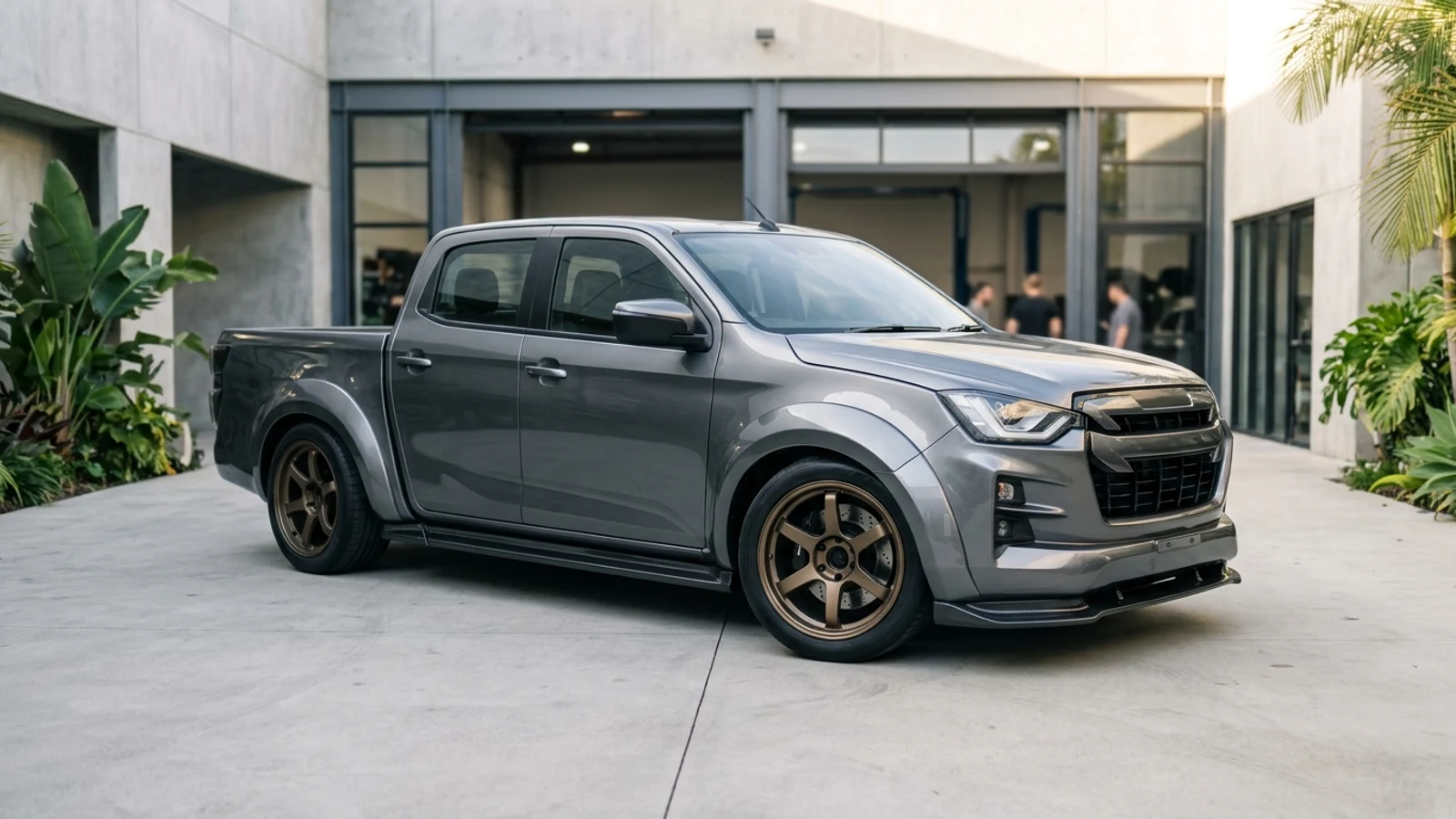
Development and Purpose
In 2024, Toyota initiated the development of the Hyper Z prototype, a vehicle project conducted in collaboration with Toyota Design Australia. This concept was created to pay homage to the vibrant and unique pickup truck customizing scene prevalent in Thailand. Unlike standard utility vehicles, this prototype serves as a decorative showcase designed to provide inspiration for younger buyers, aftermarket accessory partners, and potential future motor racing projects. The project draws from a specific regional automotive subculture. Source
The Hyper Z prototype is based on the Thai-market Hilux Travo Z Edition. The design team intentionally moved away from the traditional utility functions of a standard Hilux. By eliminating the conventional tailgate and the cargo bed, designers aimed to prioritize aerodynamics. The rear area of the vehicle now contains a substantial air intake channel, aircraft-inspired fins, and a large honeycomb diffuser. These modifications shift the vehicle toward an aesthetic resembling a track-ready street racer. Source
Measuring physical dimensions, the prototype is significantly altered compared to a factory-standard double-cab Hilux. The Hyper Z reaches a length of 5,360 millimeters, whereas the standard model measures 5,325 millimeters. Width has increased to 2,203 millimeters, compared to the 1,855-millimeter width of the standard vehicle. Furthermore, the prototype stands 1,513 millimeters tall, which represents a height reduction of approximately 300 millimeters compared to the production version's height of 1,815 millimeters. Source
The vehicle's aesthetic features include wide bodywork extensions and a prominent hood scoop. It is fitted with 22-inch alloy wheels that feature white aero-style covers. These wheels are paired with Pirelli P Zero tires, specifically in the 325/35 R22 specification. The exterior is further distinguished by a large front splitter and a significant X-shaped wing located where the cargo bed would typically reside. These elements function to create a highly aggressive, non-utilitarian visual presence for the truck. Source
Technical and Interior Specifications
The suspension system has undergone a complete redesign to support the vehicle's track-focused intent. It incorporates Ohlin remote-reservoir coilovers along with Swift springs. The setup includes upgraded suspension arms and features a wider track to accommodate the modified bodywork. A key visual identifier of this motorsport-inspired setup is the noticeable negative front camber. The vehicle's wheelbase, however, remains consistent with the standard production Hilux, measuring 3,085 millimeters. Source
Interior modifications emphasize the vehicle's departure from its utilitarian origins. The cabin has been stripped and fitted with a roll cage for safety. Driver and passenger interfaces include a Race Dash digital instrument cluster and a custom three-spoke steering wheel. The seating consists of Sabelt racing bucket seats, which are secured with racing-specific yellow harnesses. These changes align the interior with the extreme exterior modifications to present a unified performance-oriented concept. Source
Regarding powertrain specifications, Toyota has not disclosed official performance numbers for the Hyper Z prototype. While the vehicle features a large intercooler, no functional engine data has been provided by the manufacturer. The standard Hilux Travo, which serves as the base for this prototype, is typically offered with either a 2.4-liter engine producing 147 horsepower (150 metric horsepower) or a 2.8-liter turbo-diesel engine that produces 201 horsepower (204 metric horsepower). Source
The prototype was displayed at the Toyota Alive facility in Bangna, Thailand, alongside the production Hilux Travo Z Edition. Industry reports emphasize that the Hyper Z is strictly a non-production concept designed to highlight customization options. It serves to promote aftermarket styling packages such as the Charismo Drift and Charismo Rock, which are factory-backed exterior kits. These accessories allow owners to modify the appearance of their standard Hilux trucks using elements inspired by the prototype. Source
Toyota has not indicated any plans to bring this specific model to production, acknowledging that the vehicle's extreme design limits its practical utility for commercial work. Instead, the prototype functions as a marketing tool within the Southeast Asian market, where pickup trucks frequently serve as platforms for personalization. The project demonstrates the versatility of the Hilux chassis when modified for specific, aesthetic-focused niche audiences within the regional automotive market. Source
The following table compares the dimensions of the Toyota Hilux Hyper Z prototype against the standard production Toyota Hilux double-cab model as reported in the documentation. Source

