
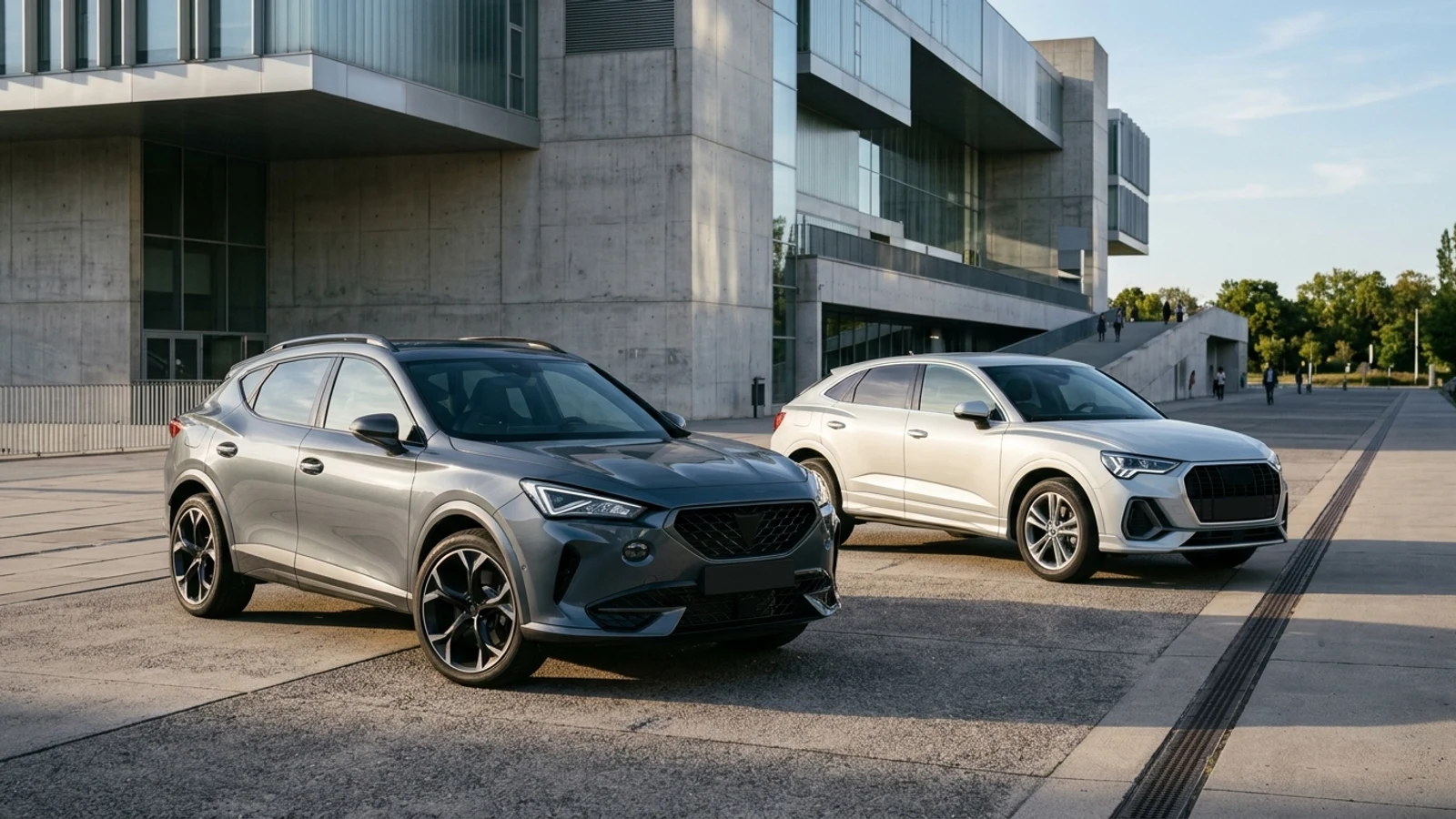
2026 Audi Q3 Design and Powertrain Upgrades
The 2026 model year marks a significant transition for Audi’s entry-level SUV, the Q3. This new generation has undergone a substantial design evolution, now measuring 1.8 inches longer and 1.2 inches taller than the version it replaces. The exterior styling has adopted a more upright posture, highlighted by a taller grille and a pronounced D-pillar design. These aesthetic changes are intended to provide the Q3 with a more commanding physical presence compared to its predecessor, successfully shedding the previous entry-level rental vehicle perception for a more upscale identity. Source
The cabin of the 2026 Audi Q3 has been extensively reconfigured to align with the brand's latest electronics suite. Central to the interior are two large displays: an 11.9-inch digital gauge cluster situated in the driver's view and a 12.8-inch central touchscreen for infotainment. While the climate control system has been shifted to touch-based input, Audi maintained physical volume and track selection buttons on the center console. The interior incorporates various fabric textures and the brand's largest wood trim panel to date, though testers noted an abundance of plastic elements in some areas. Source
Under the hood, the 2026 Audi Q3 features a revised 2.0-liter turbocharged four-cylinder engine. This powertrain produces 255 horsepower and 273 pound-feet of torque. Audi has replaced the former eight-speed automatic transmission with a seven-speed dual-clutch unit. Despite the vehicle weighing nearly 4,000 pounds, the updated powertrain provides improved agility. Drivers will experience linear steering responses, although the firm suspension tuning can result in a harsh ride over irregular pavement, especially when fitted with the optional 20-inch wheels. Source
2026 Audi SQ5 Performance and Comparison
The 2026 Audi SQ5 serves as the performance-oriented offering within the brand's compact crossover lineup. According to testing data from Car and Driver, the SQ5 is powered by a 3.0-liter turbocharged V-6 engine that generates 362 horsepower. This power is routed to all four wheels through a seven-speed dual-clutch automatic transmission. To manage this power and enhance dynamic stability, the vehicle is equipped with a sport-tuned adaptive air suspension system. The model aims to deliver a fusion of luxury comfort and aggressive performance capabilities. Source
Car and Driver's comparative analysis of the 2026 Audi SQ5 placed it against three major competitors: the BMW X3 M50, the Genesis GV70 3.5T, and the new-for-2027 Mercedes-AMG GLC53. The SQ5 was praised for its quiet and comfortable cabin environment but was noted for having a less distinctive design compared to the other vehicles in the test. The interior layout was criticized by some reviewers for being overly fragmented due to the installation of multiple digital screens, specifically the inclusion of a passenger-side display. Source
Performance output varies significantly across this competitive group. The Mercedes-AMG GLC53 produces 443 horsepower, the BMW X3 M50 reaches 393 horsepower, the Genesis GV70 3.5T delivers 375 horsepower, and the Audi SQ5 produces 362 horsepower. Pricing for these as-tested models reflects differing levels of optional equipment. The Mercedes-AMG GLC53 as-tested price reached $85,920, while the Audi SQ5 was priced at $76,370 as tested. The BMW X3 M50 represented the most cost-effective option in the test with an as-tested price of $72,050. Source
The following table details the technical specifications and as-tested pricing for the performance crossover SUVs analyzed in the Car and Driver comparison test. These figures were recorded based on the specific configurations provided by the manufacturers and observed performance metrics during testing at the track. Source
| Model | Engine | Power | As-Tested Price |
|---|---|---|---|
| Audi SQ5 | 3.0L V-6 Turbo | 362 hp | $76,370 |
| BMW X3 M50 | 3.0L I-6 Turbo | 393 hp | $72,050 |
| Mercedes-AMG GLC53 | 3.0L I-6 Turbo/Super | 443 hp | $85,920 |
| Genesis GV70 3.5T | 3.5L V-6 Twin-Turbo | 375 hp | $73,895 |
The BMW X3 M50 distinguishes itself through its powerful inline-six engine and robust torque output of 428 pound-feet. It utilizes an eight-speed automatic transmission paired with an M Sport rear differential and adaptive M suspension. Despite being a seasoned player, the X3 M50 met the test criteria by providing strong performance metrics alongside a lower as-tested price than the Audi or the Mercedes competitors, although its interior design choices were polarizing among the testing staff who found the ergonomics of the air vents and haptic door buttons to be counterintuitive. Source
Mercedes-AMG's GLC53 entrant utilizes an enhanced 3.0-liter inline-six that employs both a supercharger and a turbocharger to reach its 443-horsepower figure. The model includes a nine-speed automatic transmission, rear-axle steering, and AMG Ride Control with adaptive damping. While this vehicle led the group in power and track performance, it also carried the highest as-tested price point, significantly influenced by optional performance and comfort packages. Testers noted that while the driving experience was engaging, some occupants might find the road noise and ride stiffness tiresome. Source
The Genesis GV70 3.5T maintained its reputation as a strong contender in the segment, having previously secured multiple accolades. Powered by a 375-hp twin-turbocharged 3.5-liter V-6, it features an eight-speed automatic transmission. Although it held the highest base price at the start of the comparison, the Prestige Graphite trim level meant that there were very few additional options to add, resulting in a competitive as-tested price of $73,895. The design remains a standout, maintaining a balance of aesthetic appeal that reviewers found superior to the other group participants. Source
Overall, the comparison demonstrated that each crossover balances luxury expectations with athletic performance in different ways. The Audi SQ5 prioritizes comfort and quiet operation as its primary traits, whereas the BMW and Mercedes models focus more heavily on raw power and track-oriented handling. The Genesis GV70 continues to offer a well-rounded package that integrates established design elements with competitive performance figures. These vehicles represent the intersection of utility and sport, catering to buyers who require versatile luxury transport rather than a specialized track machine. Source

