
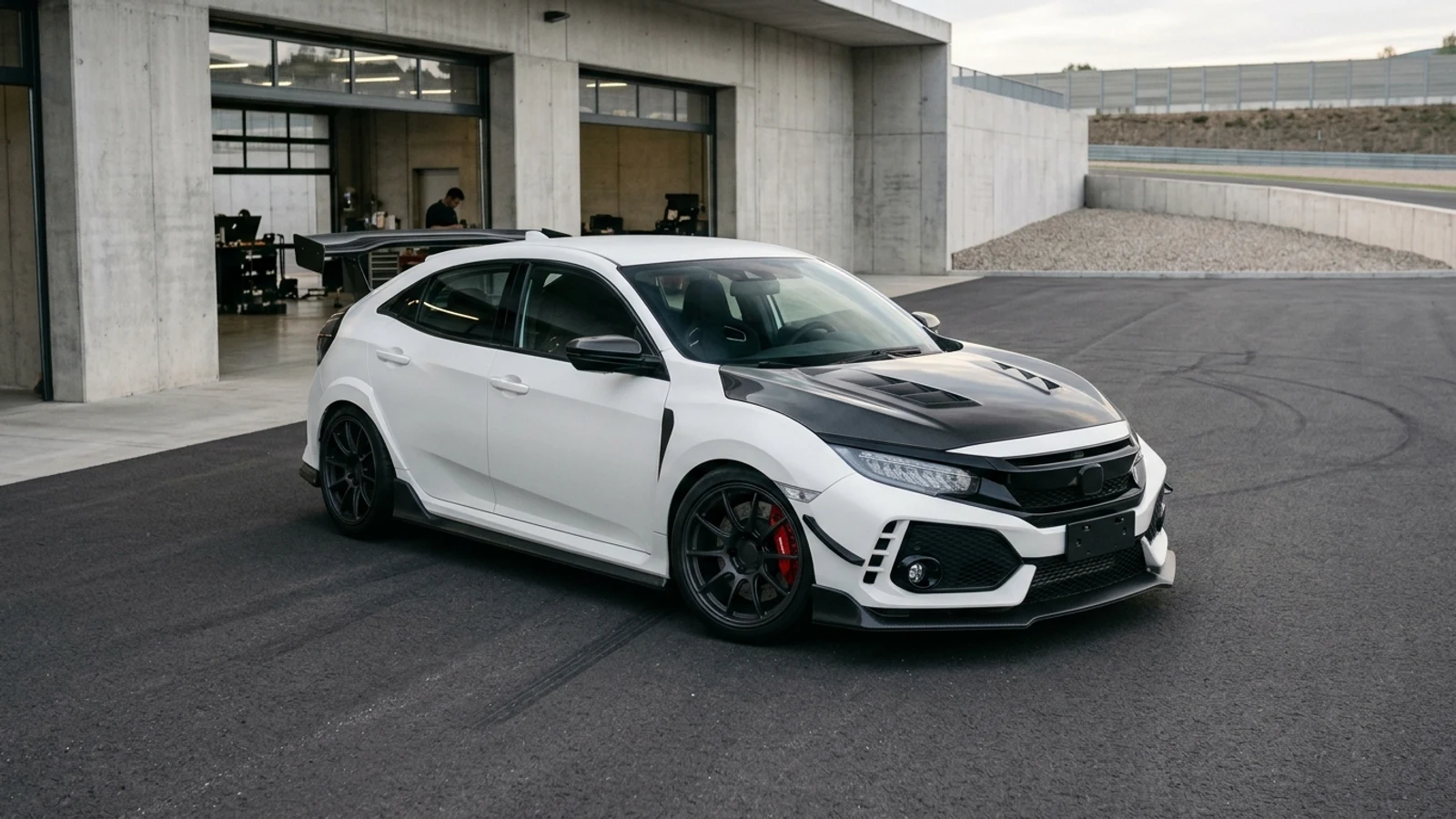
Honda has officially confirmed that it is moving forward with the production of the Civic Type R HRC, a model previously showcased as a prototype at the SEMA show in Las Vegas. While Honda initially presented the vehicle as a concept or prototype, the manufacturer has explicitly confirmed plans to transition the vehicle into a production model. This development follows extensive testing at the Nürburgring circuit in Germany and the Suzuka Circuit in Japan to refine the vehicle's performance characteristics. Source
Development and Reveal Timeline
The North American reveal of the Honda Civic Type R HRC Concept occurred during the 2026 SEMA Show, which took place from November 3 to November 6 in Las Vegas. Prior to this event, the public first observed the HRC concept at the 2026 Tokyo Auto Salon in Japan. Honda is developing the vehicle for the U.S. market, though the company has not yet provided a definitive, binding commitment regarding the final production schedule for this specific territory. Source
The HRC concept features several aerodynamic and mechanical upgrades compared to the standard Civic Type R. Notable exterior changes include a new front bumper with integrated aerodynamic enhancements that extend toward the top of the front wheels, and a large, visible oil cooler or radiator positioned behind the lower grille. The rear wing has been upgraded for track-focused performance, and a Gurney flap is situated at the base of the rear glass. These elements collectively aim to reduce lift at speed. Source
Engineers have replaced the standard exhaust system with an Akrapovič setup featuring three identical central exhaust tips. While the powertrain continues to utilize a 2.0-liter turbocharged four-cylinder engine, industry reporting suggests that power output may exceed the current 315 horsepower found in the standard Civic Type R, with some reports circulating potential figures around 335 horsepower. The manufacturer has not released final performance specifications at this time, leaving specific output numbers currently unconfirmed. Source
The chassis and handling components are also receiving attention from the Honda Racing Corporation team. The vehicle is described by test drivers as having more rigid characteristics and faster response times than the standard model. HRC is evaluating several suspension enhancements, which may include revised adaptive dampers or entirely new coilover units. The integration of a strut brace is anticipated to improve structural rigidity, further distinguishing the HRC-tuned variant as a track-capable vehicle. Source
Technical Specification and Component Differences
Despite the focus on track performance, the vehicle is being developed with the intent to remain street legal, allowing owners to operate the car in both environments. The following table illustrates key components identified in the transition from the base model to the HRC concept design as reported in technical observations: Source
| Feature | Modification Details |
|---|---|
| Front Bumper | Integrated aero enhancements extending to front wheels |
| Cooling | Large HRC oil cooler/radiator in lower grille |
| Exhaust | Triple-tip Akrapovič system |
| Rear Wing | Upgraded track-oriented profile with larger end plates |
| Aero Aids | Gurney flap at rear glass base |
| Chassis | Increased rigidity and potential strut brace integration |
The development of this model occurs in a competitive environment for hot hatches. Recently, a Golf GTI Edition 50 established a new front-wheel-drive record at the Nürburgring, surpassing the previous record held by the standard Civic Type R. Honda’s focus on increased aerodynamic downforce and potential power gains represents a strategic effort to reclaim performance records. The HRC variant incorporates the collective experience of the racing division to optimize these specific track-oriented parameters. Source
Other performance-oriented parts under consideration by HRC include short-shift kits and larger braking systems, which could be implemented to further transform the driving experience. These upgrades are framed by the manufacturer as an embodiment of HRC’s professional racing knowledge. While the current focus remains on refining these components, the presence of these systems in the production-intent concept suggests a clear path toward a more aggressive, track-focused iteration of the Civic platform. Source
The integration of racing-derived software and technology is a core aspect of Honda's broader strategy, as observed in other company projects like the Passport Baja Spec Trophy Truck. This broader commitment to competition-driven R&D informs the development of the Civic Type R HRC. As testing concludes, potential buyers should anticipate an evolution of the existing Type R architecture rather than a complete redesign, maintaining its base characteristics while enhancing its track-day capabilities. Source

