
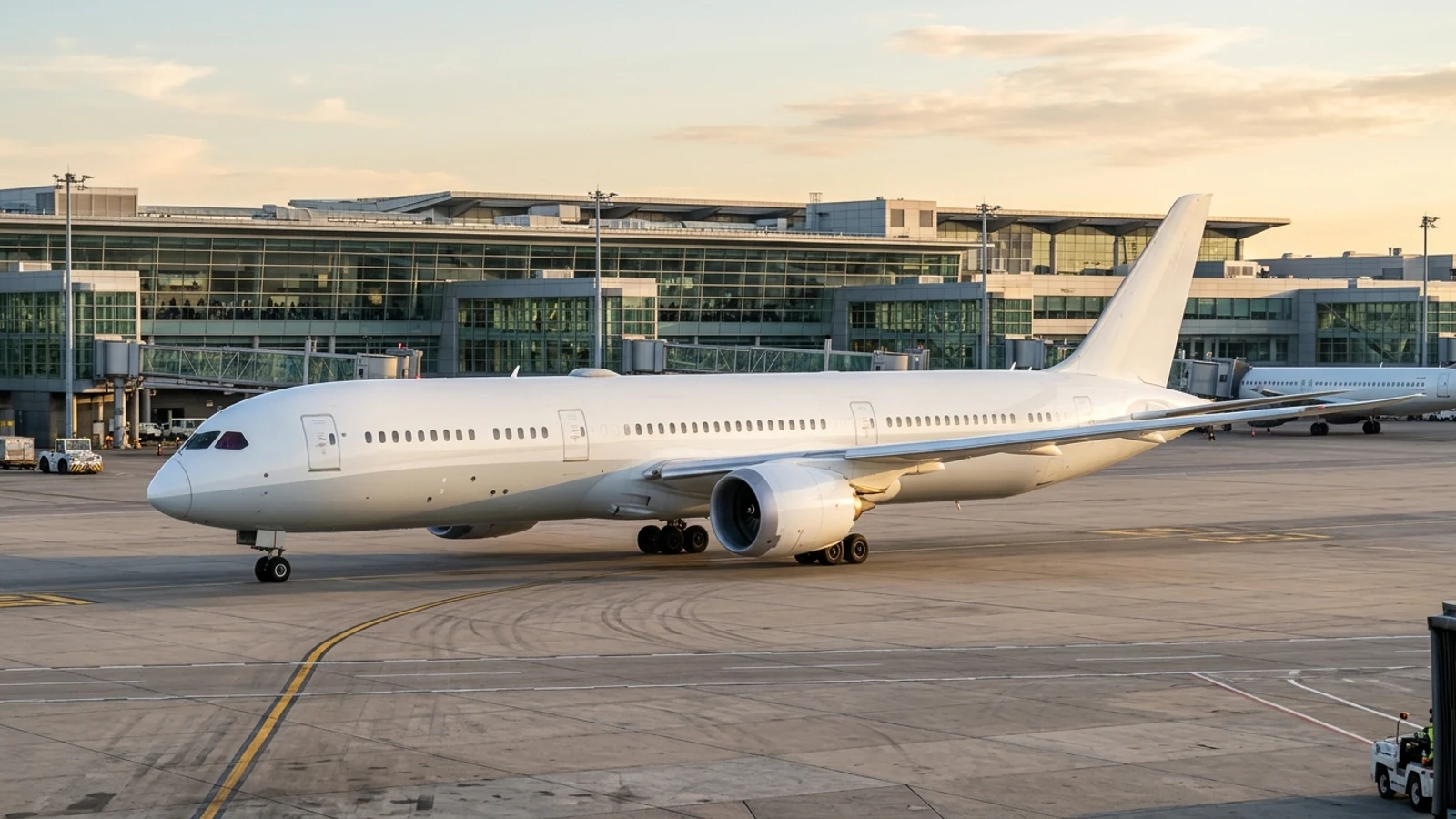
Fleet Renewal and Aircraft Specifications
Malaysia Aviation Group (MAG) has officially announced an order for 10 Boeing 787-10 Dreamliners, marking a significant step in the company's long-haul fleet modernization strategy. This agreement, which includes options for an additional six aircraft, was formalized on November 25, 2026, during a signing ceremony held in Kuala Lumpur. The event was attended by Malaysian Prime Minister Anwar Ibrahim, underscoring the national importance of the carrier's fleet transition, as reported by AeroTime Aviation Discovery. Source
The incoming Boeing 787-10 fleet will be equipped with GEnx-1B engines manufactured by GE Aerospace. According to information from AeroTime Aviation Discovery, the deliveries are projected to take place between 2032 and 2035. This delivery timeline coincides with the phase-out of the airline's existing fleet of seven Airbus A350-900 aircraft. Upon the arrival of these new Dreamliners, Malaysia Airlines is set to become the first operator of the 787 type within the Malaysian aviation market. Source
Regarding passenger cabin configurations, MAG has confirmed that the 787-10 aircraft will be fitted with 319 seats across a three-class layout. This design decision aims to align with the airline's broader strategy of deploying larger-capacity aircraft on specific long-haul routes to improve operating economics. While the exact seating map remains undisclosed, the configuration represents a departure from the current setup of the A350-900, which according to Air Data News, carries 286 passengers. Source
The transition to the 787-10 platform introduces a distinct shift in the airline's long-haul widebody capabilities. Analysis from Air Data News highlights that while the A350-900 provides a longer nominal range of 8,500 nautical miles, the 787-10 is listed with a range of 7,500 nautical miles. This figure accounts for a 2026 FAA certification update that added over 400 nautical miles to the 787-10’s performance. Nonetheless, this remains below the performance of the smaller 787-9 model. Source
MAG has identified several key international markets currently served by its long-haul operations that are expected to be the focus of the new Dreamliner deployment. According to reporting from FlightGlobal, these destinations span Europe and the Asia-Pacific region, including London, Paris, Sydney, Melbourne, Tokyo, Osaka, and Seoul. The company stated that the 787's introduction will enhance capacity and provide greater flexibility for meeting future network requirements on these specific long-haul routes. Source
The decision to order the 787 follows an extensive evaluation of widebody aircraft options that took place over several months. Air Data News reports that the choice was influenced by factors including aircraft availability and commercial terms related to the GEnx engine selection. This order builds upon an existing, robust Boeing footprint within the MAG fleet, which currently includes over 37 737 Next Generation aircraft and 19 737-8s, with further 737 Max 8 and Max 10 deliveries scheduled through 2030. Source
In addition to the new widebody commitments, MAG maintains a significant order book for the Airbus A330neo family. According to records cited by Air Data News, the airline has placed orders for 40 A330-900 aircraft, with a second batch announced in 2025. These A330neo units are configured for 297 passengers across two classes. The operator plans to utilize these for regional and long-haul services across ASEAN, India, China, and Australasia, creating a diverse, multi-type widebody operation. Source
Operational efficiency remains a core objective for the group's investment in new technology. Alongside the aircraft order, AeroTime Aviation Discovery notes that MAG has renewed its agreement for GE Aerospace's Fuel Insight and FlightPulse software suites. These digital tools have been utilized by the airline for more than five years to track fuel consumption patterns and support tactical operational decisions. The move aims to ensure that the integration of the new 787 fleet is supported by existing data-driven platforms. Source
While the deal was publicly announced on November 25, 2026, sources indicate that technical finalization is still required. The transition strategy involves phasing out the leased Airbus A350-900 fleet as their lease cycles conclude. This process allows the airline to manage the transition from its current Airbus-centric widebody operation to a mixed fleet structure involving the 787-10 and A330neo. These changes are expected to reshape the long-haul capacity profile of the carrier through the early 2030s. Source
Widebody Fleet Comparison
The operational parameters for the future widebody fleet show a distinct split between regional, long-range, and ultra-long-range support. The following table illustrates the key differences in capacity and role for the current and future widebody aircraft within the Malaysia Aviation Group fleet as reported across multiple sources. Source
| Aircraft Type | Total Seats | Service Classes | Primary Market Focus |
|---|---|---|---|
| Airbus A350-900 | 286 | Multi-class | Long-haul (Current) |
| Airbus A330-900 | 297 | Two-class | ASEAN/Regional/Long-haul |
| Boeing 787-10 | 319 | Three-class | Key long-haul markets |
Financial terms regarding the order were not disclosed by MAG or Boeing during the announcement. Nevertheless, the selection of the 787-10 concludes a procurement process that had been under evaluation since late 2025. Captain Nasaruddin A. Bakar, President and Group CEO of MAG, stated that the acquisition is a strategic investment in the group's future. The partnership is framed by both Boeing and GE Aerospace as a milestone in the long-standing relationships with the Malaysian carrier. Source

