
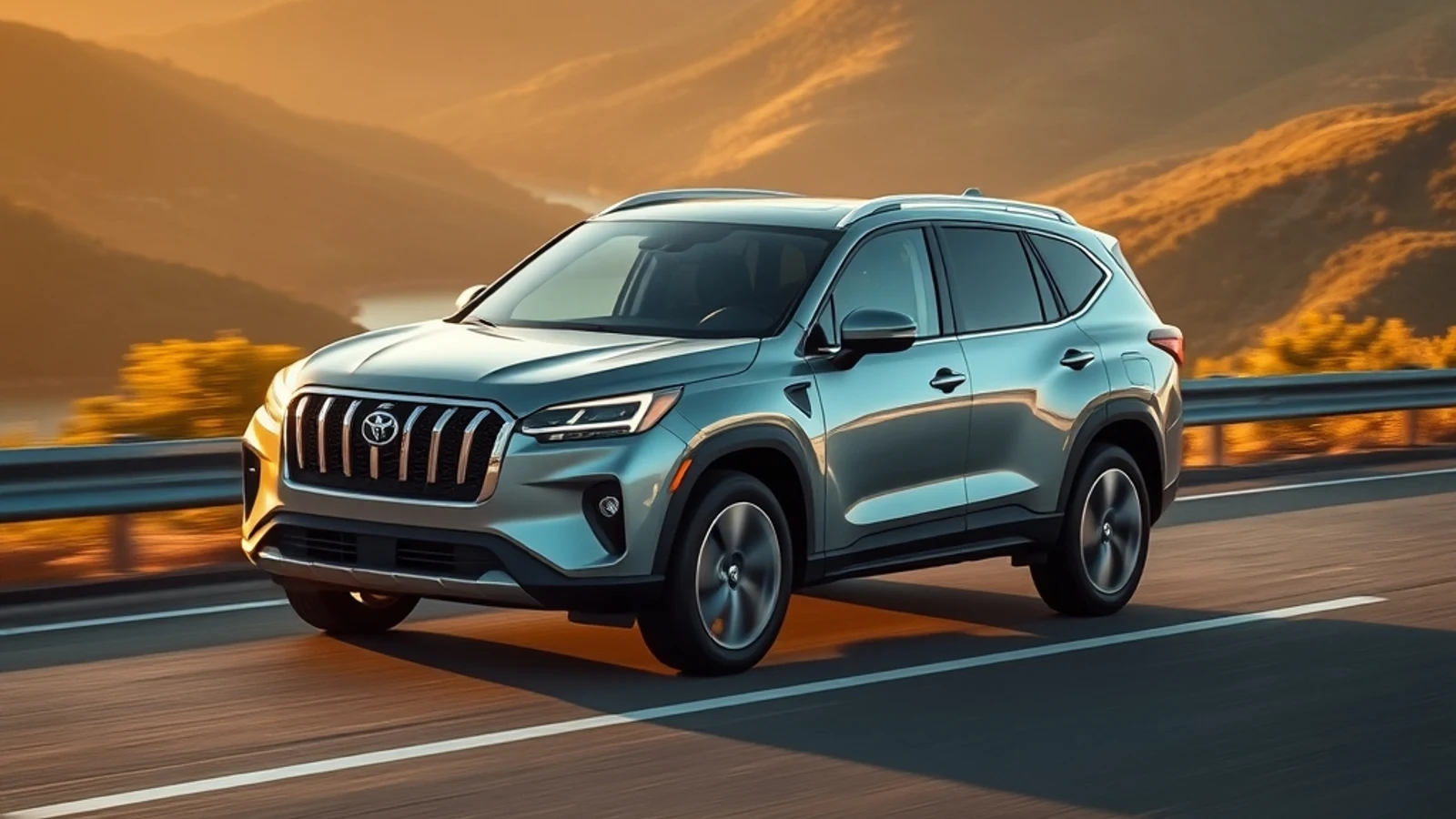
The automotive landscape for two-row crossover SUVs is witnessing a significant shift as the Mazda CX-70 reaches the end of its standalone production cycle. According to reporting from CarBuzz, Mazda is consolidating the CX-70 into its larger sibling, the CX-90, starting with the 2027 model year. This transition marks the end of a short, three-year production run for the CX-70, which first entered the market in 2024 as a companion piece to the three-row CX-90. Source
Despite its impending consolidation, the CX-70 is approaching the conclusion of 2026 with a potential for its best-ever annual sales figure. The model has demonstrated steady growth in its short lifespan, beginning with 10,678 units sold in 2024. This number increased to 13,833 units in 2025. With 11,044 units already sold as of late 2026, the vehicle remains within reach of setting a new high-water mark for its brief tenure before the model name is phased out as a standalone offering. Source
The Honda Passport, conversely, is experiencing a different trajectory characterized by long-term growth and sustained market interest. After a 16-year hiatus following the conclusion of its initial run in 2002—a period during which the original models were produced in partnership with Isuzu—the Passport returned in 2019. Since its reintroduction, the SUV has maintained momentum, achieving its most successful sales year to date in 2025 with 55,231 units sold, according to the data reported by CarBuzz. Source
Market positioning for these two vehicles reflects differing strategies regarding value and utility. The Mazda CX-70 was marketed to a specific niche of buyers who did not require a third row of seats, yet it utilized the same platform and engine as the CX-90 without offering significant weight savings or increased power. CarBuzz notes that the CX-70 had a base MSRP of $42,750, which was $2,000 higher than the three-row CX-90, making its specific value proposition a challenge for some consumers to justify. Source
For the 2027 model year, Mazda has restructured its strategy by integrating the two-row format into the CX-90 line. These new models are set to carry a base price of $48,080 for the 3.3 Turbo Premium Sport trim. This adjustment is intended to provide a clearer alignment between the vehicle's features and its price point, addressing previous criticisms regarding the difficulty of justifying the cost of a smaller vehicle that was positioned higher in price than its more versatile, larger sibling. Source
Honda has taken an alternative route with the Passport, emphasizing a rugged, off-road-oriented identity. The vehicle is designed as a direct competitor to the Toyota 4Runner, employing a unibody platform to balance off-road capability with comfort on paved surfaces. Unlike the CX-70, the Passport has successfully maintained a robust V6 powertrain that resonates with its target audience. As of late 2026, the combination of refreshed styling and this traditional engine configuration positions the model to potentially surpass its 2025 sales record. Source
The divergence in sales volume between these two competitors is stark. Reported data indicates that Honda has moved nearly 18,000 more units of the Passport in 2026 alone than Mazda has delivered for the CX-70 across its entire three-year production span. This underscores the success of Honda's strategy in segmenting the Passport between the smaller CR-V and the larger Pilot, whereas the CX-70 struggled to differentiate itself sufficiently from the CX-90 to carve out a dominant market share. Source
Market Positioning and Technical Comparison
The following table highlights key differences in current market positioning and power plant configurations for the two models as identified in the report: Source
| Feature | Mazda CX-70 (Previous) | Honda Passport (Current) |
|---|---|---|
| Primary Engine | 3.3L Turbo Mild-Hybrid | 3.5L V6 |
| Market Niche | Two-Row Premium | Rugged Midsize SUV |
| Sales Trend | Being Consolidated | Potential Record Year |
| Base MSRP | $42,750 | $45,195 |
The competitive outcome for both models highlights the importance of clarity in automotive branding. Consumers in the current market exhibit a preference for vehicles that clearly communicate their specific utility and value. Honda’s decision to differentiate the Passport through styling and off-road capability has allowed it to command a price point that sits $2,800 above the Pilot. This is a contrast to Mazda’s experience with the CX-70, where the brand struggled to explain why the two-row configuration warranted a price premium over the CX-90. Source
As the industry moves toward 2027, the lessons learned from the CX-70's short lifecycle are becoming central to Mazda's product strategy. By folding the two-row layout into the CX-90, the automaker aims to streamline its offering and align its pricing with a more comprehensive feature set. This shift is expected to simplify the buying process for customers who previously found the distinction between the two models ambiguous, while simultaneously allowing the brand to consolidate its resources into a single, clearer product line. Source
With only weeks remaining until the end of 2026, the final sales tallies for the year will serve as the definitive marker for these vehicles. While the Passport continues to enjoy the benefits of strong consumer interest and a well-established reputation, the CX-70 will conclude its legacy as a unique but short-lived experiment. The total market demand for vehicles that forgo a third row remains significant, yet these two models serve as a case study in why a strong value proposition is necessary for success. Source

