
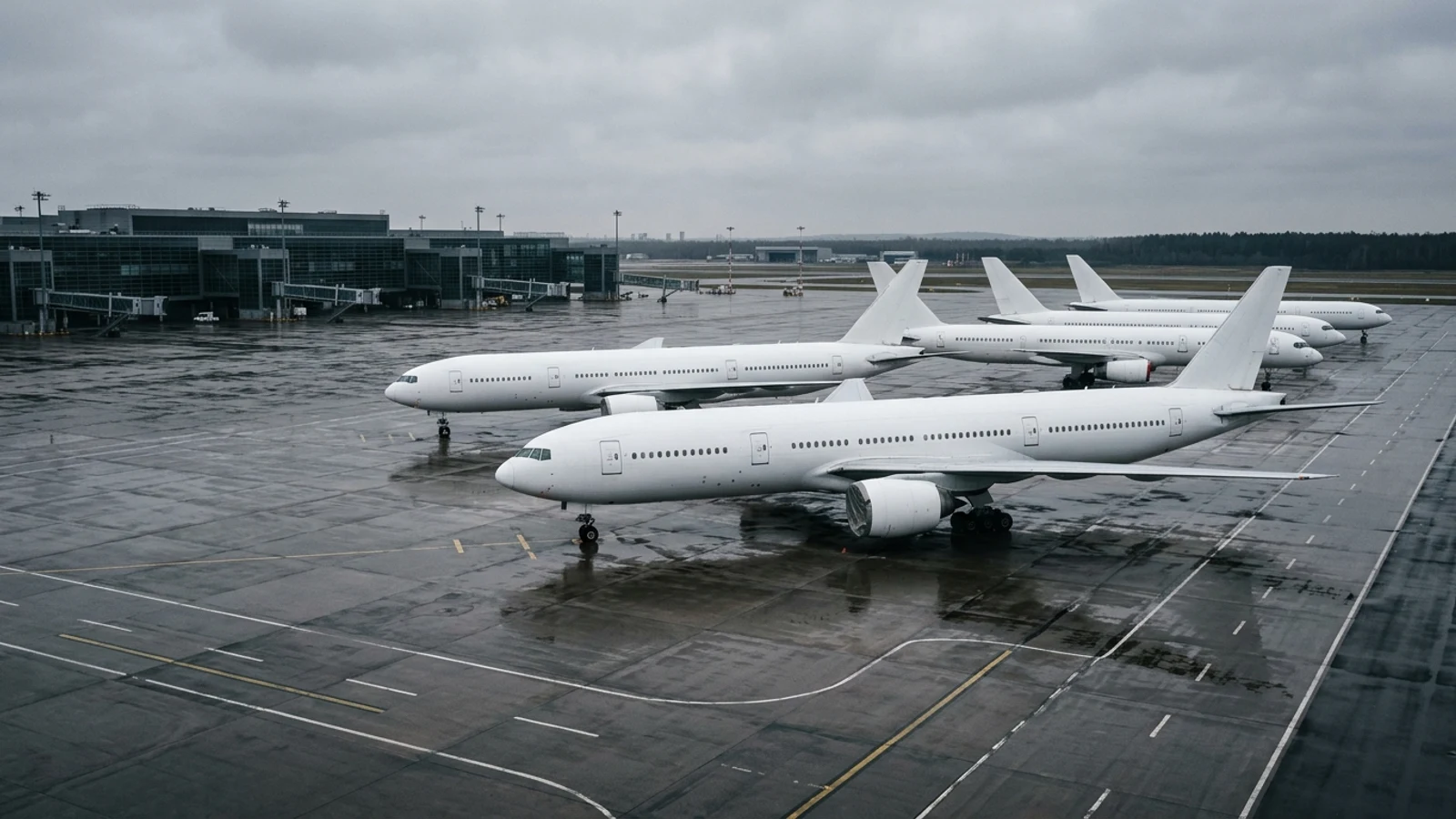
Operational Suspension and Financial Status
Norse Atlantic Airways has suspended all flight operations, announcing that its future is currently dependent on securing urgent short-term financing. The long-haul low-cost airline, which officially commenced service in June 2022, took the drastic action following a period of financial instability. On November 26, 2026, the company officially confirmed the grounding of its entire flight schedule as it seeks a potential takeover or financial solution to prevent the board from moving forward with a formal bankruptcy filing. Source
The decision to cease operations follows a rapid deterioration of the airline's financial position, which had been previously described by leadership as critical. According to data provided by Simple Flying, the carrier had been attempting to adapt its business model to survive in the competitive long-haul market. Following the suspension of all flights on November 26, the airline stated that there remains no assurance that a viable financial path will be found to resume its normal flight schedule. Source
Before the total suspension, the carrier had been involved in wet-lease agreements, which involve providing aircraft and crew to other airlines. Specifically, Pakistan International Airlines had recently contracted Norse to operate routes between Pakistan and the United Kingdom. However, due to the unexpected operational suspension on November 25, these services were canceled, forcing the Pakistani carrier to revert to utilizing its own Boeing 777 fleet for those routes to maintain service connectivity for passengers. Source
The financial struggle at Norse Atlantic is linked to several macroeconomic headwinds affecting the aviation industry. Industry reports indicate that the airline faced significant pressure from high fuel costs and limited access to capital. As a result of these pressures, the airline's stock experienced a significant decline on the Oslo Stock Exchange, closing 85% lower on November 25. This market reaction underscores the investor concerns regarding the carrier's ability to maintain liquidity in the current economic climate. Source
Impacted Route Network and Operational Context
The following table summarizes the key routes impacted by the sudden operational cessation and the carrier's recent service adjustments across its primary long-haul network. Source
| Route | Status | Notes |
|---|---|---|
| London Gatwick (LGW) to Orlando (MCO) | Canceled | Primary remaining US route |
| London Gatwick (LGW) to Cape Town (CPT) | Canceled | Key winter leisure route |
| London to Islamabad (PIA Wet-Lease) | Canceled | Operated for PIA |
| Manchester to Lahore (PIA Wet-Lease) | Canceled | Operated for PIA |
Norse Atlantic's network had seen significant changes throughout 2026. Prior to the total shutdown, the airline had narrowed its focus, operating only a limited number of transatlantic services. For instance, the airline had ended flights from New York to London and Rome on October 25 to consolidate its operations. The carrier's remaining fleet of Boeing 787-9 Dreamliners, which featured 56 premium economy seats and 282 economy seats, had been recently transitioned toward leisure destinations in Asia and Africa. Source
The airline's strategic pivot toward wet-leasing was intended to diversify revenue, but proved insufficient to achieve long-term profitability. An earlier major contract with the Indian carrier IndiGo, which involved leasing six Boeing 787-9 aircraft, ended in October 2026. IndiGo cited currency pressures and elevated fuel costs as primary drivers for the conclusion of this agreement. This loss of revenue, combined with ongoing operational costs, further limited the carrier's ability to navigate the winter season. Source
For passengers, the impact of the suspension is immediate. Booking services were stopped simultaneously with the flight cancellations. Travel analytics indicate that passengers booked on the remaining routes, such as the Orlando to Gatwick corridor, are left with canceled travel plans. Affected travelers must now arrange alternative transport, as the airline has not provided a mechanism for resumed service or rebooking, given its current liquidity status and the looming possibility of bankruptcy proceedings. Source
The history of the airline is rooted in the assets previously operated by Norwegian Air before that carrier exited the long-haul market during the 2020 pandemic. Norse Atlantic attempted to succeed with the same low-cost long-haul business model, but despite growth in revenue, it consistently struggled with annual profitability. The departure of founder Bjorn Tore Larsen as CEO in November 2025 and the subsequent restructuring under Eivind Roald failed to rectify the underlying structural financial deficits. Source
Internal reports suggest that the financial crisis extended to employee compensation, with claims that the company lacked sufficient cash to process payroll. While the airline has not officially responded to these specific labor-related claims, the operational silence and the absence of management communication regarding a recovery plan remain central to the current situation. The board of directors continues to monitor potential takeover discussions, though there is no guarantee these talks will prevent the final cessation of corporate activities. Source
As of November 26, 2026, the aviation industry remains focused on the potential bankruptcy proceedings. The loss of Norse Atlantic removes one of the last remaining independent low-cost transatlantic carriers, leaving the space largely dominated by the budget subsidiaries of larger legacy airline groups. As regulators in Norway, Sweden, and the UK await further corporate updates, the future of the remaining fleet and the long-term viability of the Norse Atlantic entity remain uncertain pending definitive financial resolution. Source

