
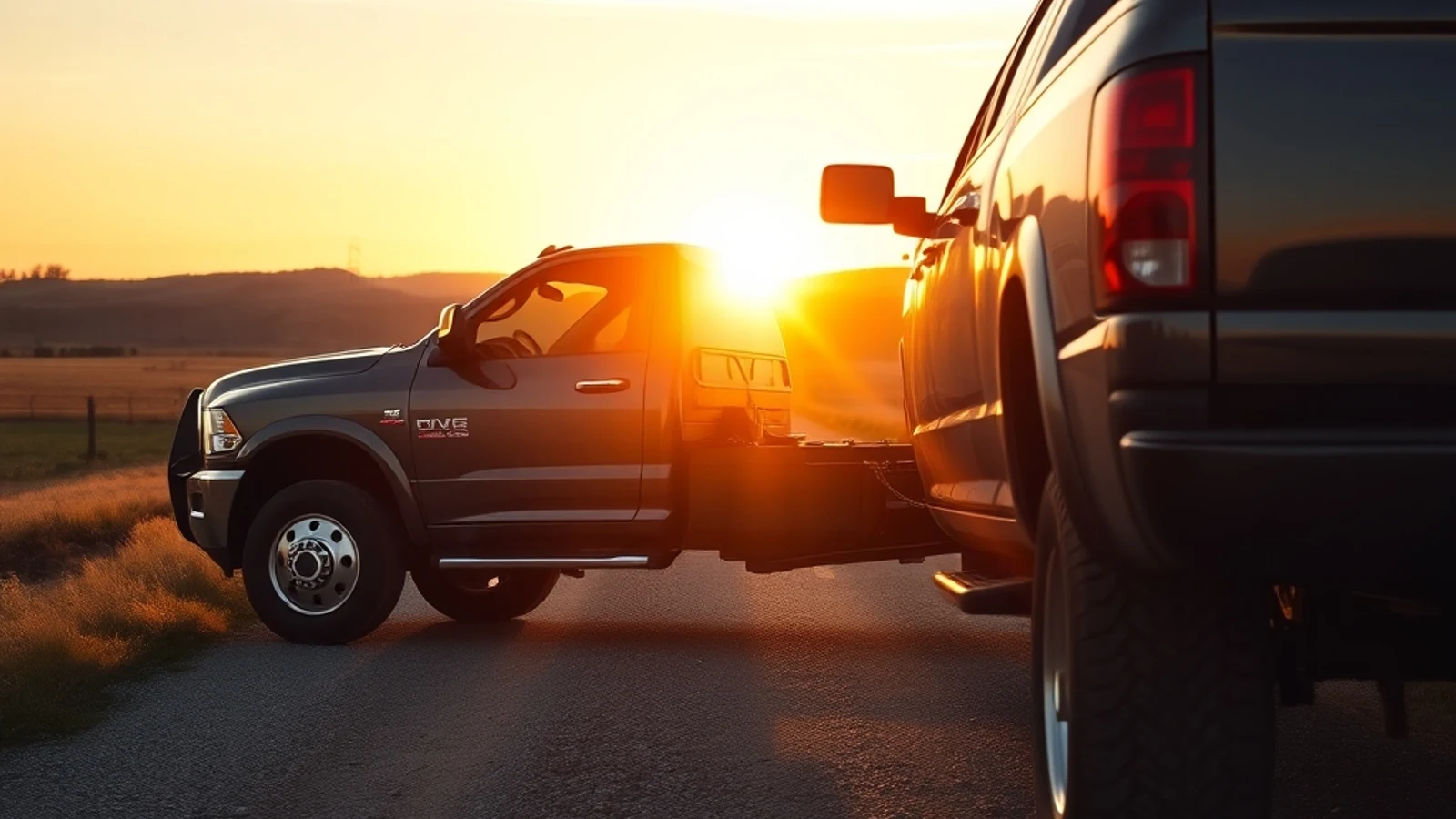
Hitch Systems for Heavy Loads
For vehicle owners who frequently tow heavy trailers such as livestock carriers, heavy-duty construction equipment, or multiple vehicle haulers, the choice of hitch is a critical factor in performance. Car and Driver reports that drivers requiring this capability often transition from standard bumper-pull setups to gooseneck hitches. This style of connection is characterized by a high arch of steel extending from the trailer's front, which clears the truck's tailgate and sides for easier maneuverability. Source
A key mechanical advantage of the gooseneck hitch is its mounting position. By placing the ball mount squarely in the center of the pickup bed, the trailer's weight is positioned directly over the rear axle. Car and Driver notes that this configuration pushes more mass downward on the truck’s rear end. This design allows for superior towing stability compared to a bumper-pull hitch, particularly when navigating under load at highway speeds. Source
Installation of a gooseneck hitch is more intensive than a standard bumper-pull system, as it requires drilling into the truck bed for the ball and safety chain points. Despite this, Car and Driver emphasizes that the process is generally manageable. The resulting setup is often described as a more robust solution for heavy tonnage, with some systems engineered to support loads exceeding 30,000 pounds, making it a standard choice in agriculture and construction. Source
While gooseneck hitches are often compared to fifth-wheel systems, the two function differently. Fifth-wheel hitches require a larger kingpin and jaw-style assembly that takes up more space in the truck bed. Car and Driver explains that the gooseneck's smaller profile ensures that a greater portion of the bed remains available for cargo storage when not towing. This balance of utility and towing capacity is a primary reason for their popularity among heavy-duty pickup users. Source
Practically speaking, fitting a gooseneck hitch to a light-duty truck is often discouraged by experts. Car and Driver suggests that because these trucks typically have lower payload and towing capacities than their heavy-duty stablemates, the investment in a gooseneck setup provides fewer functional benefits. Users looking to maximize towing performance are generally encouraged to utilize platforms specifically engineered for higher load ratings to ensure safer operation and vehicle longevity. Source
Adjustable Drop Hitch Systems
Beyond permanent in-bed mounts, owners who frequently switch between different tow vehicles or trailers may benefit from adjustable hardware. 4X4 Australia details tests conducted with the GEN-Y Mega Duty drop hitch, a system designed to adjust the coupling height vertically. This adjustability allows a trailer to remain level even when attached to vehicles with different suspension responses or ride heights, which is a common issue when mixing trucks and heavy caravans. Source
The GEN-Y Mega Duty system functions by sliding into a standard 2-inch receiver and offering multiple vertical locking positions. 4X4 Australia indicates that the device can be flipped for either drop or rise orientation, accommodating a wide range of trailer and vehicle combinations. By utilizing a simple pin-based adjustment, operators can level a caravan quickly without needing to carry multiple fixed tongues, making it a flexible tool for users with diverse fleets. Source
During recent tests reported by 4X4 Australia, the importance of maintaining a level trailer was highlighted when towing a 3300kg caravan. While the GEN-Y hitch corrected the trailer's attitude by allowing for height adjustments, the testing team noted that such hitches do not alter the underlying suspension behavior of the tow vehicle. If a truck's rear suspension compresses excessively under a 280–300kg ball load, the hitch can compensate for the angle but not the load handling. Source
The 4X4 Australia documentation provides a clear comparison of how different trucks interact with the same hitch configuration. In tests involving the Ford F-150, Ram 1500, and Chevrolet Silverado, the middle hitch position remained standard, while the Toyota Tundra required a higher setting due to its specific suspension response under load. The ability to modify these settings prevents the need to compromise trailer posture or swap expensive hardware when changing vehicles. Source
To provide a quick reference for equipment flexibility, the following table summarizes the key characteristics of the discussed hitch types as outlined by the primary and corroborating sources. Source
| Feature | Gooseneck Hitch | Adjustable Drop Hitch | Source
| :--- | :--- | :--- | Source
| Typical Capacity | Up to 30,000+ lbs | Up to 4,500 kg (model dependent) | Source
| Mounting | In-bed, above rear axle | 2-inch receiver | Source
| Primary Benefit | Heavy-duty stability, sway resistance | Vertical adjustment, vehicle compatibility | Source
For those interested in the financial investment, the specific configurations tested by 4X4 Australia start at $695, with the advanced setups reaching $770. The editorial consensus from these reports suggests that for anyone regularly swapping tow vehicles, the flexibility offered by adjustable hitches is a valuable asset. While the gooseneck remains the dominant choice for extreme agricultural tonnage, the drop hitch serves as a practical solution for general purpose towing, camping, and consumer vehicle utility. Source

