
Adaptive Headlight Certification
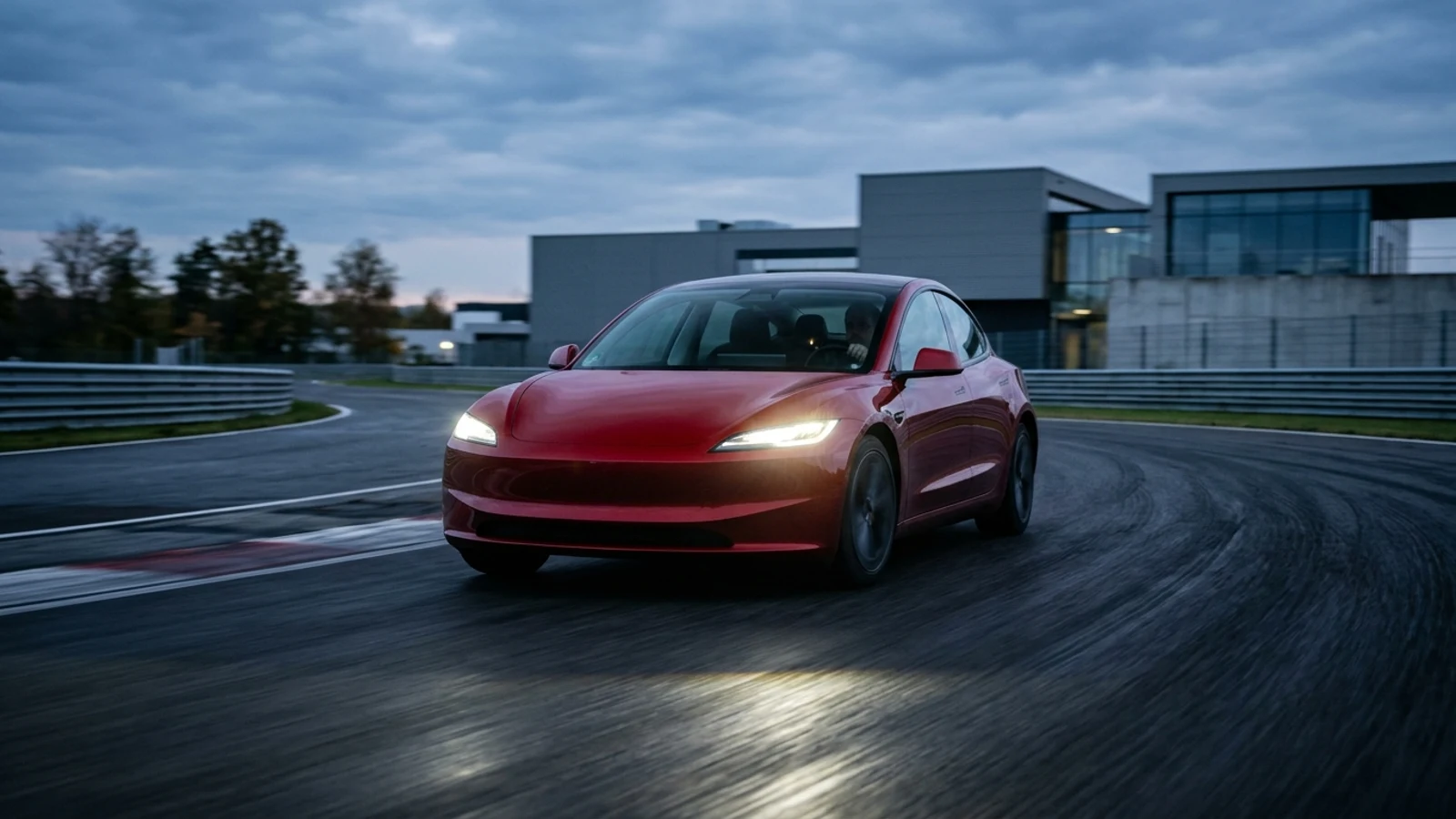
European certification documentation has recently surfaced regarding the Tesla Model 3 Highland, suggesting the vehicle is set to become the first model in the manufacturer's lineup to feature dedicated adaptive headlights. While Tesla has equipped its vehicles with LED matrix hardware since 2020, this specific functionality has remained inactive in production releases. The recent certification documents, observed on a German enthusiast forum, explicitly reference the activation of an Adaptive Main Beam system for the Highland sedan. Source
Adaptive headlight systems function by modulating light output to optimize road illumination based on variable driving conditions and vehicle speed. This technology is designed to improve visibility and overall safety for drivers. Although this feature has been standard in various European automotive applications for a significant period, it remains largely unavailable in the United States. Consequently, the regional rollout of this software-defined enhancement appears to be prioritizing the European market where regulatory clearance has already been established. Source
The certification document specifically identifies the Model 3 Highland for the Adaptive Main Beam update. Notably, it does not include the previous iteration of the Model 3 sedan or the Model Y crossover in this approval scope. Despite these limitations, industry observers suggest that since both the older Model 3 and the Model Y are equipped with similar LED matrix hardware, there is potential for the adaptive capability to be expanded to these vehicle classes at a future date via subsequent software updates. Source
The deployment of the adaptive lighting feature is expected to follow Tesla’s established practice of delivering new capabilities through over-the-air (OTA) software updates. Current production of the Model 3 Highland is centered at Gigafactory Shanghai, though manufacturers have indicated expectations that production could expand to the Fremont Factory in the United States in the upcoming year. For owners located in the United States, official documentation implies that availability remains subject to further domestic regulatory developments and future updates. Source
Software Optimization and Corporate Developments
Beyond vehicle hardware, Tesla recently addressed performance concerns regarding the Reality View feature within its Full Self-Driving version 15 suite. Following user reports of input lag and rendering delays, Elon Musk confirmed the company is developing a software-based optimization to reduce system latency. The proposed solution involves interleaving newer Universal Vision Encoder features along the layers of the diffusion transformer, a method intended to bypass the need for new hardware while improving visualization responsiveness. Source
The Reality View feature relies on a diffusion model utilizing approximately one billion parameters. It operates by processing input frames through the Universal Vision Encoder, which is also utilized by the primary driving stack. Musk estimates that the forthcoming integration of fresher encoder data into the denoising process will reduce system latency by approximately 35 percent. This adjustment is part of Tesla's ongoing efforts to refine the responsiveness of its automated driving visualization tools without replacing existing components. Source
In parallel corporate developments, Jensen Huang has been reinstated as the President, CEO, and Board Director of NVIDIA. This leadership change follows a period of transition within the chip manufacturer. Both Tesla and SpaceX have maintained a long-standing business partnership with NVIDIA, relying on the company's hardware for their AI and compute requirements. The reinstatement is viewed as a restoration of supply and delivery certainty for these technology partners, securing access to existing architecture for the foreseeable future. Source
NVIDIA has also announced the formation of a National Security and Export Control Committee to manage trade compliance and related organizational risks. While the return of Huang is viewed positively by Tesla and SpaceX leadership, external observers note that ongoing investigations and potential national security scrutiny could still present challenges for international government-related operations. The stability of the partnership remains highly contingent upon NVIDIA’s continued adherence to export controls and its ability to maintain chip production schedules. Source
The technical specifications surrounding the FSD v15 Reality View system indicate that it generates video content in short chunks, producing eight images at a rate of 36 frames per second. The system operates at UI-screen resolution and utilizes half of a single TRIP accelerator engine. By processing data at 18 Hz, the system distributes the processing load across four distinct cycles. These details underscore the complex compute requirements that necessitate the ongoing software refinements currently being implemented by the engineering team. Source
Regarding the broader automotive landscape, the push for adaptive lighting and advanced driver assistance systems remains a core focus for electric vehicle manufacturers. While the European market has clear regulatory paths for such features, North American adoption often involves different validation cycles. Tesla’s focus on software as the primary vector for feature delivery allows it to maintain a degree of consistency across its global fleet, even when specific functionalities are enabled on a staggered, regional basis according to local laws. Source
The company continues to monitor user feedback on FSD performance to drive iteration. By utilizing the existing Universal Vision Encoder architecture, Tesla avoids the immediate need to replace proprietary silicon, instead focusing on the efficiency of the diffusion model's denoising path. This approach characterizes the current development philosophy: maximizing the capability of existing hardware through advanced algorithmic updates that can be deployed remotely, thereby extending the utility of the vehicle’s onboard computer systems. Source
In summary, the transition toward active lighting systems and highly responsive AI visual feedback marks a phase of refinement for the current vehicle lineup. The certification of the Model 3 Highland’s adaptive headlights serves as a primary example of how the manufacturer synchronizes regulatory approval with software capabilities. Future advancements in these areas will likely remain dependent on successful regulatory navigation and the consistent delivery of compute-intensive updates to the vehicle's onboard processing infrastructure. Source

