
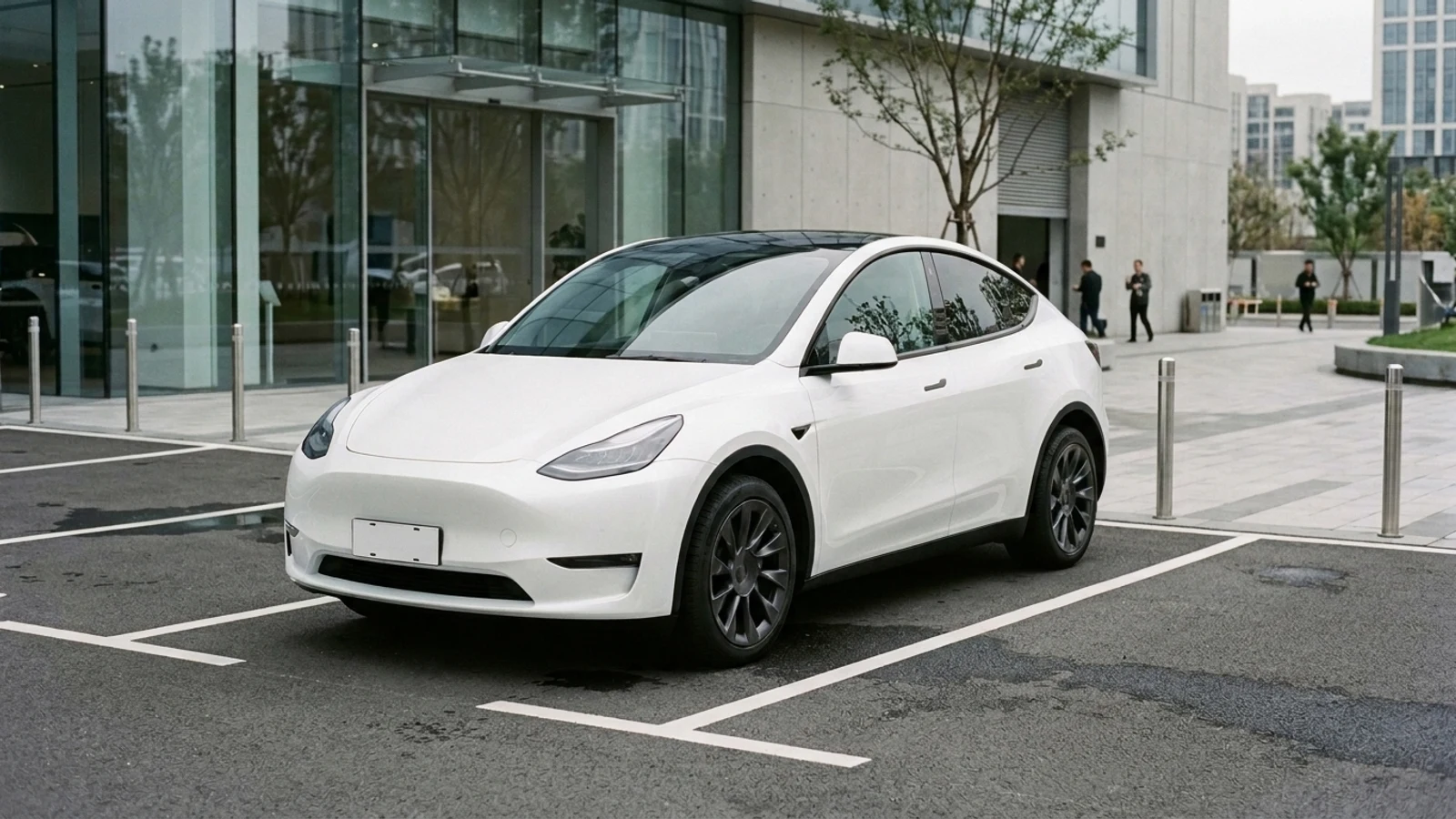
A legal complaint filed following a September 21, 2024, incident in Arlington, Virginia, highlights potential risks during electric vehicle test drives. A 59-year-old woman sustained serious injuries after the Tesla Model Y she was operating collided with a hair salon in the Pentagon City and Crystal City area. The lawsuit alleges that the vehicle was configured in an acceleration mode known as Insane Mode, and claims the operator was not adequately briefed on the characteristics of this setting or the vehicle’s regenerative braking behavior. Source
The legal action names Tesla and two associated representatives or agents as defendants, seeking $10 million in compensatory damages and an additional $350,000 in punitive damages. The plaintiff asserts that the defendants acted with recklessness by not disclosing the implications of specific driving modes prior to the test drive. While the injuries reported in the filing are severe, including fractured vertebrae and various broken bones, the claims remain allegations and have not been adjudicated by a court of law. Source
Tesla Test Drive Safety and Operational Controls
Test drive procedures and handover processes are under scrutiny following this incident. The lawsuit notes that the plaintiff arranged her test drive through Tesla’s online portal. Retailers are facing increased pressure to evaluate how they orient new drivers to high-performance electric vehicles. Because the specific instructions provided during the Arlington handover remain unconfirmed, the case emphasizes the broader challenge of managing expectations for drivers transitioning from traditional internal combustion engines to electric powertrains. Source
When newcomers operate electric vehicles, their previous experience with pedal mapping and braking systems can influence vehicle handling. Many electric cars feature regenerative braking, where the motor acts as a generator to slow the vehicle upon accelerator release. For drivers accustomed to traditional coasting, this sensation can feel like the car is actively resisting motion. When a driver attempts to adjust their input in a panic, pedal misapplication can lead to unexpected vehicle behavior in any manufacturer's car. Source
Acceleration modes allow drivers to customize power delivery through touchscreen menus, but these features require understanding. The following table summarizes the general function of common acceleration settings as reported in the context of recent test drive inquiries. Source
| Acceleration Mode | Intended Function | Characteristics |
|---|---|---|
| Chill | Controlled Acceleration | Limits power output for a smoother, less abrupt delivery. |
| Standard | Normal Acceleration | Delivers conventional performance levels for daily driving. |
| Insane | Maximum Acceleration | Provides immediate, peak power available for the vehicle configuration. |
Tesla has simultaneously refined its driver assistance software, specifically removing the Interventions Menu from its Full Self-Driving v15 release. Previously, drivers were required to select from a list of four options to explain why they had taken control of the vehicle from the FSD system. The mandatory nature of this feedback loop had become a source of annoyance for many users, who frequently provided generic inputs. By removing this requirement, Tesla aims to improve the user experience during operation. Source
FSD Interface Updates and Strategic Silicon Allocation
The company appears to be shifting its data collection strategy for FSD interventions. Instead of relying on manual driver feedback, Tesla is expected to utilize its onboard systems to analyze the causes of disengagements. The v15 update also introduces features like pothole avoidance and a new visualization tool dubbed Reality View. These updates are intended to make the software suite more robust while reducing the burden on the driver to justify manual intervention after the system has been disengaged. Source
Regarding hardware architecture, CEO Elon Musk confirmed on November 22, 2026, that Tesla will prioritize its next-generation AI5 chip for the Optimus robot project. Vehicles will continue to rely on the current AI4 computer, which Musk stated provides sufficient computational power to enable superhuman driving capabilities. This decision marks a departure from earlier expectations that future vehicle iterations might require the advanced AI5 silicon for enhanced self-driving performance. Source
The allocation of AI5 to Optimus and internal training infrastructure reflects a strategic focus on scaling humanoid robotics. AI4 remains the standard for new vehicle production, having already undergone design iterations to manage component cost fluctuations. Tesla has clarified that it does not intend to mandate AI5 for its passenger vehicles, as it believes existing AI4 architecture already meets the requirements for unsupervised self-driving, according to comments made by management earlier this year. Source
Furthermore, Tesla is adjusting its approach to federal subsidies, withdrawing from approximately $738 million in broadband grants under the BEAD program. Despite walking away from these specific funds, the company remains committed to providing Starlink services to rural locations previously identified in its contract. This shift allows Tesla to operate with fewer financial reporting requirements while continuing to expand the coverage and footprint of its satellite communication network in underserved regions. Source
The withdrawal from the BEAD subsidy underscores Tesla's independent strategy for satellite network deployment. By declining the government funds, the company removes state-level penalties and audit provisions that were previously part of the agreements. This adjustment allows the company to retain its focus on Starlink's expansion without the constraints of traditional federal infrastructure procurement models, as it continues to provide hardware at no cost to eligible households in covered locations. Source

