
Market Shift and Trade Impacts
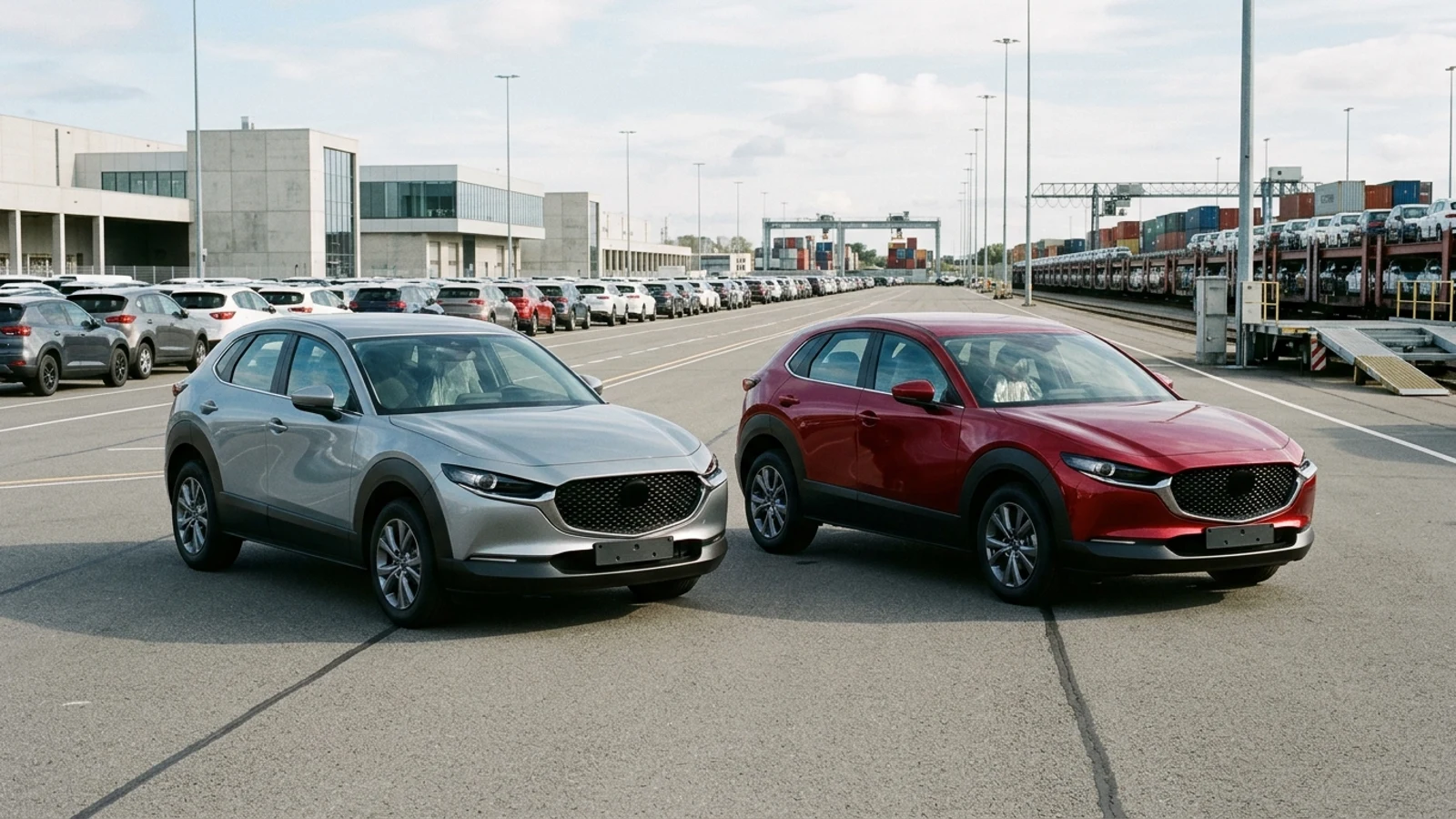
The competitive landscape for compact crossovers has been significantly altered by international trade developments during 2026. While the Mazda CX-30 and Toyota Corolla Cross previously maintained a close rivalry driven by similar base pricing, this parity has been disrupted. According to reporting by CarBuzz, a sharp divergence in sales figures emerged following 2025, as trade disputes between the United States and Mexico created a challenging environment for the Mazda vehicle, which is produced in Salamanca, Guanajuato. Source
Vehicles manufactured in Mexico are now subject to tariffs ranging from 10% to 25%, a figure determined by the proportion of parts sourced within North America. This tariff structure effectively transformed the CX-30 from a competitively priced entry-level option into a high-cost vehicle for Mazda to import and sell in the United States. Consequently, Mazda reported that 2025 and 2026 sales reached only half of their projected volume, a outcome directly linked to these international trade barriers. Source
In response to the logistical and financial difficulties surrounding the CX-30, Mazda shifted its regional strategy to prioritize its US-built CX-50 model. While the CX-30 and Corolla Cross once occupied a similar space, the reduced availability of the Mazda crossover has benefited Toyota. The Corolla Cross, which utilizes the same architecture as the Corolla sedan and hatchback, has continued to expand its presence in the market since its first full year of sales in 2022. Source
Toyota has maintained the appeal of the Corolla Cross through regular updates and the inclusion of hybrid powertrains, which were introduced for the 2023 model year. While the base gas-only Corolla Cross comes with front-wheel drive as standard, Toyota offers all-wheel-drive upgrades for $1,300 on L and LE trims, and $1,450 on the XLE trim. The hybrid SE and XSE models include all-wheel drive as a standard feature, with top-tier configurations priced below $40,000. Source
The Mazda CX-30 maintains a base MSRP of $26,375. The vehicle is powered by a naturally aspirated 2.5-liter four-cylinder engine across six of its eight trim levels, while the two highest trims utilize a 2.5-liter turbo-four. Although the CX-30 does not offer a hybrid powertrain, Mazda incorporates a full-time all-wheel-drive system as a standard feature across its lineup, a component that serves as a premium differentiator compared to the optionally available all-wheel drive on Toyota's gas-powered models. Source
Technical Specifications and Configurations
Comparative data highlights the distinct mechanical configurations and performance metrics defining these compact utility vehicles. The current 2027 Corolla Cross base trim is equipped with a 2.0-liter Dynamic Force inline-four engine paired with a 10-speed Dynamic Shift automatic or continuously variable transmission. This configuration produces 169 horsepower at 6,600 RPM and 151 lb-ft of torque at 4,400 RPM. The model achieves an EPA-estimated fuel economy of 29/31/30 MPG in city, highway, and combined driving conditions. Source
The following table outlines the key technical specifications for the 2027 Toyota Corolla Cross base trim as reported by CarBuzz. These figures reflect the manufacturer-provided performance data for the subcompact SUV segment entrant. The Corolla Cross utilizes a 2.0-liter engine architecture, maintaining a focus on fuel efficiency and utility within the competitive compact segment while distinguishing itself from the Mazda CX-30 through its optional all-wheel-drive pricing structure and available hybrid powertrain offerings. Source
| Feature | Specification |
|---|---|
| Model Year | 2027 |
| Engine | 2.0L Dynamic Force I4 |
| Transmission | 10-speed Dynamic Shift/CVT |
| Horsepower | 169 HP @ 6,600 RPM |
| Torque | 151 lb-ft @ 4,400 RPM |
| Fuel Economy (C/H/Comb) | 29/31/30 MPG |
Market observers note that the current sales disparity is not indicative of decreased consumer interest in the Mazda brand or the CX-30 model itself. Rather, the evidence suggests that international trade tensions created an artificial suppression of supply, allowing the Corolla Cross to capture a larger share of the segment. As of late 2026, the long-term outlook for the competitive balance between the two remains linked to the resolution of these trade and tariff obstacles in the North American automotive manufacturing sector. Source
While Mazda has experienced volume contraction with the CX-30, the company has seen increased success with the US-built CX-50. Interestingly, the CX-50 is produced on the same Alabama assembly line as the Toyota Corolla Cross. This shared manufacturing environment highlights the complexity of the current automotive market, where assembly location can dictate the commercial viability of a model due to fluctuating trade policies and regional component sourcing requirements affecting final vehicle pricing and dealer availability. Source
The Corolla Cross continues to be a central volume contributor for Toyota, leveraging the brand's established sedan architecture to provide an accessible crossover utility option. The addition of hybrid options in 2023 was a calculated move that has helped boost annual sales figures. As Toyota looks toward the 2027 model year, the emphasis remains on maintaining the price-to-value ratio that initially propelled the Corolla Cross to prominence after its 2022 debut, even as the broader cost of new vehicle ownership increases. Source
Ultimately, the divergence between the CX-30 and Corolla Cross serves as a case study in how political and economic factors impact vehicle availability and consumer choice. CarBuzz emphasizes that while the CX-30 provides a more driver-focused experience with its standard all-wheel-drive system and premium interior features, these attributes have been overshadowed by the supply chain disruptions caused by current trade disputes. Recovery of the market balance remains dependent on future adjustments to international trade policies and manufacturing strategies. Source

