
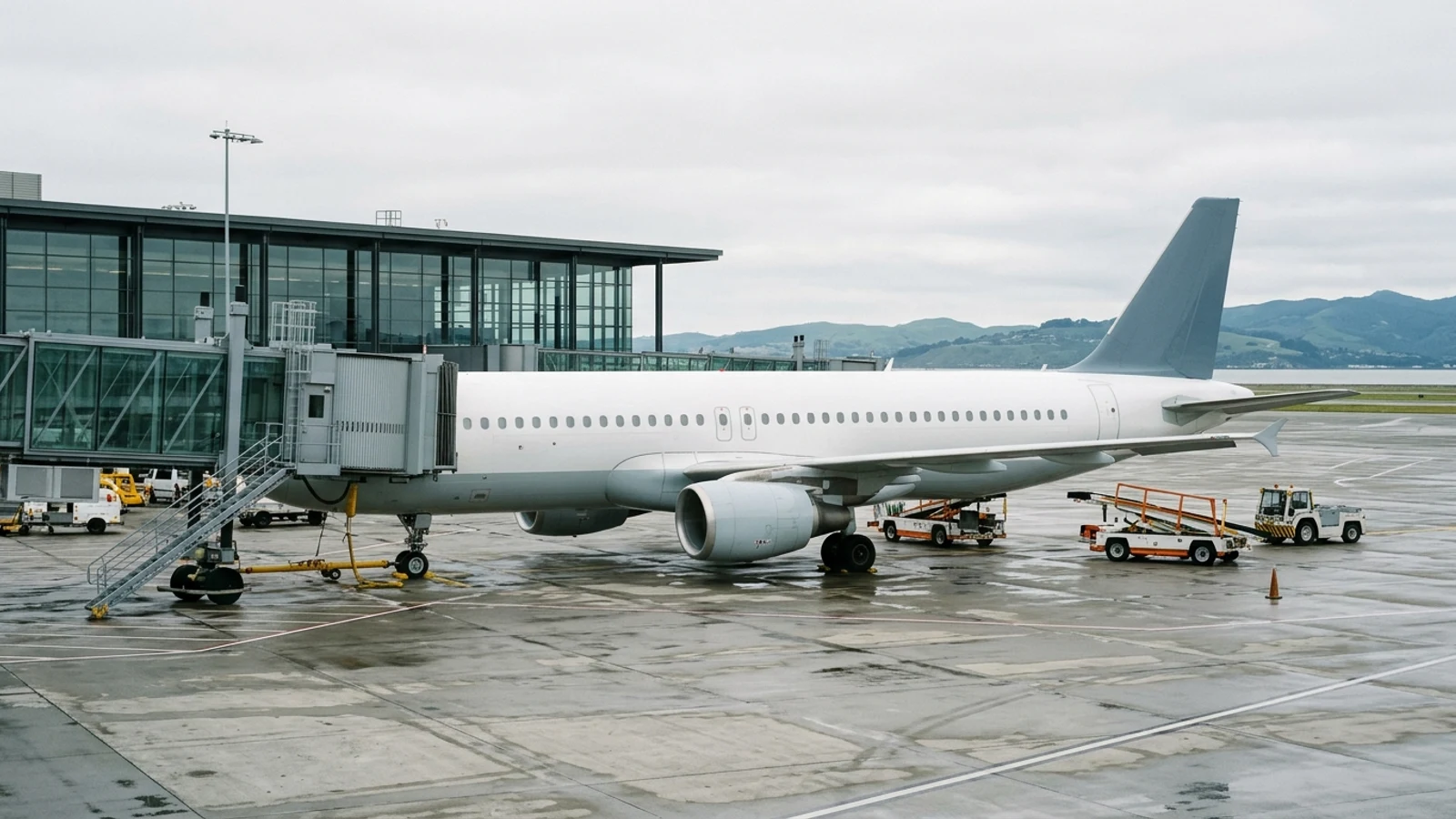
Passengers aboard United Airlines Flight UA1271, operating a Boeing 737-8 with registration N17285 from San Francisco to Mexico City, experienced a 96-minute ground delay on Friday, November 20, 2026. While subsequent viral social media posts suggested the delay was linked to an aborted takeoff due to crossing runway traffic, official databases from the Federal Aviation Administration and the National Transportation Safety Board show no preliminary incident notices or runway incursion reports regarding this specific flight. Source
Verified flight-tracking logs, as documented by Travel And Tour World Aviation Discovery, confirm the aircraft arrived at San Francisco from Indianapolis on the morning of November 20, 2026. The flight, which is also marketed under Air Canada codeshare AC3479 and Air New Zealand codeshare NZ9821, pushed back from Terminal 3 at 10:59 PST, slightly behind its scheduled 10:45 PST departure. The jet remained on the airfield for one hour and 36 minutes before taking off at 12:35 PST. Source
Once airborne, the aircraft completed its flight to Mexico City International Airport, landing at 18:03 CST. The resulting delay cascaded to the return journey, where flight UA1272 departed Mexico City 107 minutes behind schedule. According to industry records, commercial flight trackers are excellent for recording push-back and arrival times but do not reliably capture low-speed surface movements without specialized telemetry, which explains why reports of an aborted takeoff speed of 30 knots remain unverified. Source
Federal guidelines under 49 CFR Part 830 and FAA Order JO 7210.632A clarify that low-speed rejected takeoffs without damage or injury do not trigger immediate public NTSB dockets. The FAA’s system relies on internal quality assurance, including radar and voice recording reviews, before classifying events. As of November 25, 2026, no record exists in the FAA Newsroom Accident and Incident Statements archive or the NTSB CAROL repository for the flight or its registration number N17285. Source
San Francisco International Airport utilizes a complex runway layout featuring four intersecting runways managed by Runway Status Lights. These automated lights operate independently of air traffic control to prevent collisions during crossing maneuvers. The use of these systems is routine for managing traffic flows, and operational continuity for aircraft like N17285 remains high, as the same airframe continued its scheduled rotations without any maintenance-related withdrawal following the November 20, 2026 event. Source
Regarding passenger rights for such delays, neither United States nor Mexican statutes provide cash compensation for delays caused by air traffic control or safety-related runway holds, which are classified as force majeure. Under the US Department of Transportation Tarmac Delay Rule, airlines are required to provide water and snack service after two hours on the ground and must offer a chance to disembark on international flights at the four-hour mark, a threshold not reached during this event. Source
Beyond current incidents, United Airlines has confirmed adjustments to its network, including the decision to end all service to Tulum International Airport shortly after the upcoming holidays. The airline cited regular schedule adjustments based on seasonality and demand. This trend of reduced service to the newer Mexican airport is echoed by other carriers who previously scaled back their offerings due to demand that did not meet original projections, as noted in reports by The Points Guy. Source
Simultaneously, the airline is expanding its presence at San Francisco International Airport. On March 28, United will launch twice-weekly service to Richmond International Airport on Thursdays and Sundays, and Norfolk International Airport on Wednesdays and Saturdays. This follows an announcement of a trio of new domestic routes from the Bay Area hub, as the airline also prepares to open a new United Club at the airport later this year featuring an outdoor terrace. Source
Passenger service remains a priority at SFO, where the airline handles significant traffic. United has recently hired 300 staff members at the airport over a three-month period to bolster its ground operations. To streamline the passenger experience, the airline has implemented an app-based baggage check-in system that allows travelers to bypass kiosks. These infrastructure updates are designed to pressure-test the terminal’s capacity ahead of the high-volume summer travel season. Source
For travelers flying United First, the service remains a premium option on routes within the United States, including flights to Canada and the Caribbean. While it differs from the carrier's Polaris and business class products, passengers receive benefits such as priority boarding in Group 1, two free checked bags, and complimentary alcoholic beverages. It is important to note that United First does not typically include lounge access, except for certain international routes. Source
Travelers should be aware of the differences in fare classes when booking. The base option, while lower in price, carries restrictions similar to basic economy, such as reduced baggage allowances and fees for changes. For flights over 900 miles, United typically offers full meal service, whereas shorter flights may only offer snack service. Preordering meals is recommended for eligible flights to ensure availability of preferred dining options. Source
Comparing route statuses and cabin offerings helps passengers manage expectations during periods of network transition. The table below outlines upcoming route changes announced from San Francisco International Airport. Source

