
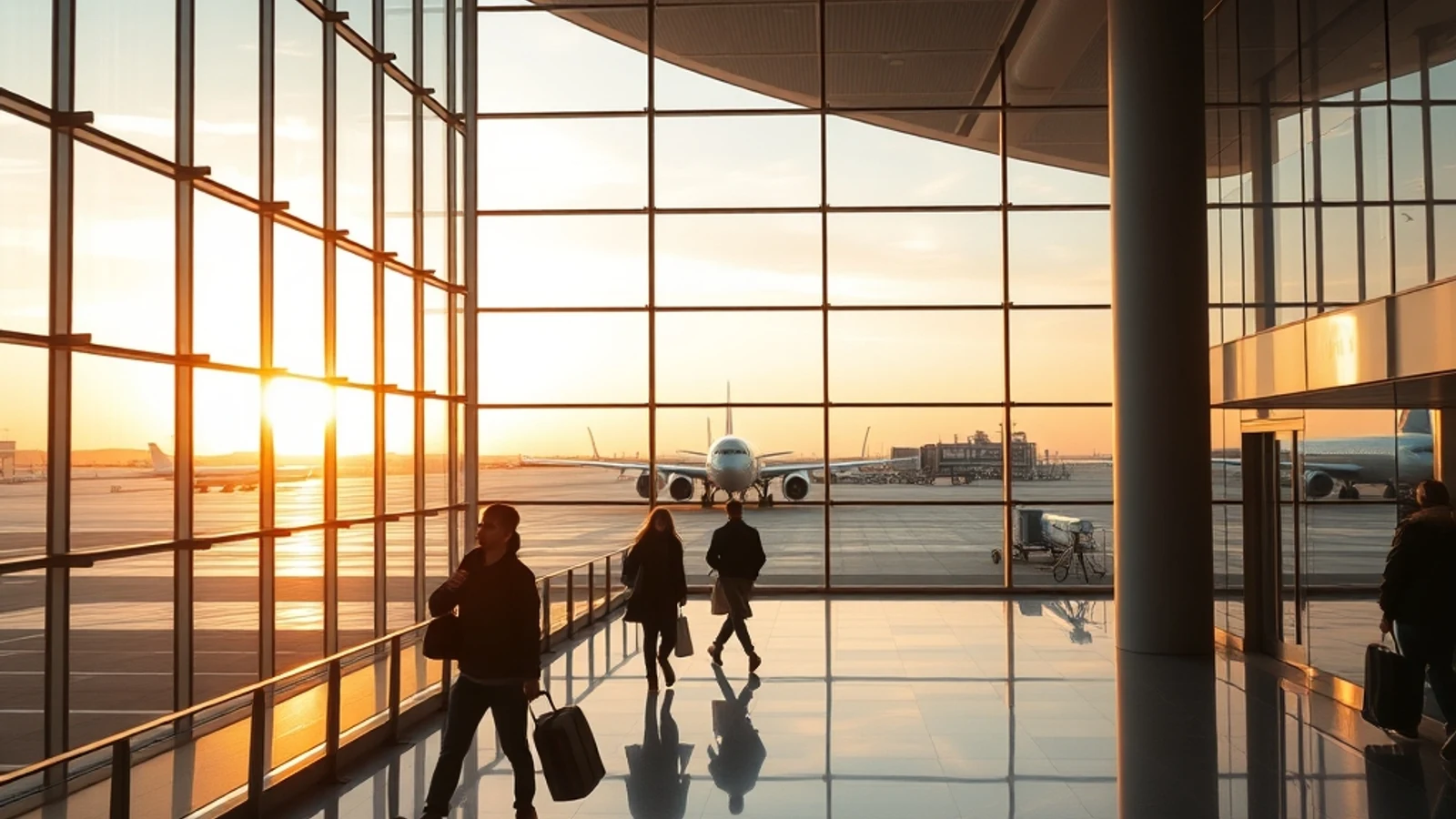
The landscape of US commercial aviation will undergo a distinct transformation on November 26, 2026, as passenger service schedules adjust for the upcoming Thanksgiving holiday. Industry data indicates that the United States will operate a total of 14,993 scheduled passenger services on that specific date. This represents a substantial contraction in activity compared to the preceding Thursday, with approximately 11,568 scheduled flights removed from the network, according to flight data provided by OAG. Source
Domestic travel within the United States bears the primary burden of this scheduling reduction. Industry analysis confirms that domestic capacity has declined by 47% for the holiday, whereas international operations face a more modest reduction of 11%. This variance is attributed to international carriers maintaining more stable schedules, with major operators like Air Canada reporting a flight reduction of only 7% for the period. The domestic-heavy focus of many US carriers has necessitated deeper cutbacks in response to the holiday demand profile. Source
American Airlines, typically the global leader in total aircraft movements, is seeing a significant decrease in its operational footprint. Its holiday schedule reflects a 57% reduction in movements compared to the previous Thursday, dropping to 3,102 planned flights across 322 airports globally. Due to this aggressive scaling, American Airlines will shift to the third position among global carriers for that day, as the reduction exceeds the industry average observed across other major airlines. Source
United Airlines has emerged as the largest carrier for November 26, as its flight activity decreased by 44%, a smaller contraction than its primary competitors. The Star Alliance carrier plans to execute 3,102 movements serving 335 global airports. Among its operational hubs, Houston Intercontinental has overtaken both Chicago O’Hare and Denver to become the airline’s most-served location. Despite the overall reduction in flights, this hub management allows the airline to maintain its ranking for that specific date. Source
Other carriers have implemented even more drastic schedule adjustments. Allegiant Airlines has reduced its operations by 68%, planning only 154 movements for November 26 compared to 484 the previous week. This decline is largely attributed to its domestic-only model, which experiences greater volatility during holiday shifts. The carrier will serve 56 airports across 30 states, marking a notable decrease from the 113 airports and 41 states served the week prior to the holiday. Source
Breeze Airways has also recorded a significant schedule reduction of 59%, with planned movements falling to 126 from 311. The airline will service 40 airports on November 26, down from 67 previously. While Raleigh-Durham remains the airline’s primary point of service, the scale of this reduction highlights the operational consolidation smaller carriers undertake during peak travel holidays. These figures reflect the broader industry trend of adjusting capacity to match projected passenger demand for the Thanksgiving period. Source
Separately, United Airlines recently addressed a technical issue that impacted departing flights across its network. The carrier confirmed that it resolved the technology-related breakdown, which occurred on Monday, although it did not disclose the total number of delayed flights or affected passengers. The airline advised travelers to check their status before arriving at airports, noting that while some departing flights faced disruption, regional United Express services and flights already in progress remained functional. Source
This technical incident follows wider concerns regarding the resilience of national aviation infrastructure. Earlier in the week, the industry was impacted by a nationwide ground stop ordered by the FAA, which disrupted more than 20,000 commercial flights. Federal officials identified the root cause of that stoppage as a faulty telecommunications router installed during routine maintenance. These infrastructure vulnerabilities, which occasionally affect legacy copper-to-fiber transitions, remain a concern for the US Department of Transportation. Source
United Airlines is simultaneously focusing on long-term competitive advantages, specifically the integration of Starlink satellite connectivity across its fleet. CEO Scott Kirby has described the technology as a major differentiator, noting that in-flight Wi-Fi is a primary factor for modern travelers. As of mid-November 2026, 694 aircraft—approximately half of the United fleet—are equipped with the service. The airline expects coverage to reach 87% of its flights by June 2027, with full installation slated for completion by the end of 2027. Source
The strategic focus on connectivity has led to public disagreements between major carriers. United leadership has explicitly criticized Delta Air Lines for its choice of Amazon’s Leo satellite network over Starlink, suggesting the decision is a strategic error. Delta, meanwhile, has defended its partnership, with plans to begin installing Amazon technology on 500 aircraft starting in 2028. This divergence underscores the growing investment airlines are making in digital infrastructure to capture premium passengers and increase customer loyalty. Source
In a broader industry context, aviation operators are balancing thin margins with high operational costs. According to IATA reports, total industry fuel costs are expected to reach $351 million for 2026, representing a significant portion of operating expenditures. To mitigate these pressures, airlines are increasing ancillary revenue from seat selection and luggage fees, while larger carriers are increasingly competing on premium cabin offerings to improve yields on transatlantic and transcontinental routes. Source
The aviation landscape in 2026 remains affected by shifting geopolitical factors and supply chain constraints. Despite these challenges, major carriers are optimizing flight schedules and investing in fleet upgrades to maintain operational performance. The scheduled movements for Thanksgiving 2026 represent a unique moment where traditional market leaders are supplanted in volume due to the specific timing and scale of holiday schedule adjustments, offering insight into how carriers calibrate their networks against fluctuating demand. Source

